




Sporting Dog Statue
A sporting dog statue captures the energy and poise of gundogs, hounds and setters in bronze, earthenware and porcelain.
Sporting Dog Statue
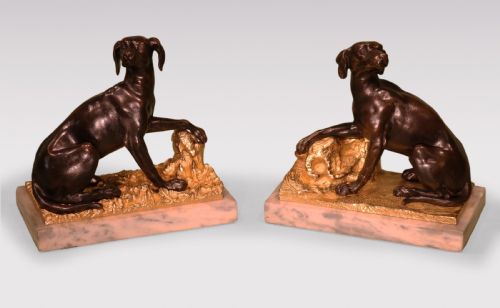
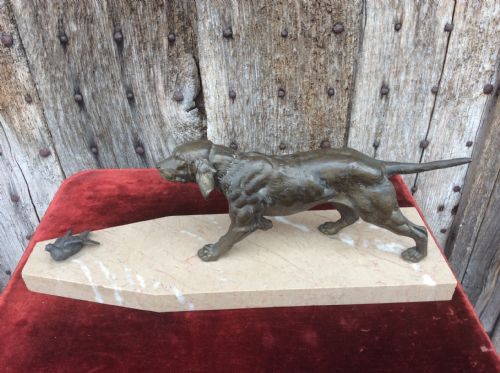
A sporting dog statue represents working dogs such as setters, greyhounds, hounds and gundogs in sculptural form. These pieces emerge primarily from the nineteenth century, including Victorian works and French Animalier productions.
The physical forms span sculptures, decorative figures and fireside statues. Most examples portray the animals in active poses, often depicted alongside birds like pheasants and rabbits or mounted on marble plinths.
How they were made
Foundry cast bronze forms the core of the metal pieces, frequently enhanced by cold painting or ormolu highlights. Artists utilised detailed chasing to define the coat and musculature of each hound.
Ceramic examples employ earthenware with lead glaze, Parian ware and biscuit porcelain. These fired bodies allow for smooth surface textures and fine detail in Victorian animal figures.
The selection includes works from the nineteenth century and the nineteen-twenties, using bronze, Parian ware, earthenware and marble.
What varies in quality
The definition in the casting and chasing sets the better bronzes apart from simpler work. Clean lines in the rendering of fur and anatomical precision show the hand of a skilled foundry.
Surface finish and patination alter the visual depth of a sculpture. Original cold painting or rich patination adds character that heavy cleaning or inferior repainting obscures.
Jules Moigniez·Delabrierre·Auguste Nicholas Cain
The Sporting Dog Statue Glossary
- Animalier
- A nineteenth-century artistic movement dedicated to the realistic portrayal of animals. Sculptors in this style focused closely on anatomical accuracy and natural movement.
- Parian ware
- A type of biscuit porcelain resembling white marble, developed in the nineteenth century. It suited smooth figures and small decorative sculptures.
- Cold painted
- Metalwork painted with non-heat-set paints after casting. This technique added naturalistic colour to bronze sculptures.
- Ormolu
- Gilded bronze used for mounts and decorative highlights. It brings a bright metallic contrast to darker patinated bronzes.
Sporting Dog Statue: Frequently Asked Questions
What materials are used for a sporting dog statue?
These pieces appear in cast bronze, earthenware with lead glaze, Parian ware and biscuit porcelain. Some bronze examples incorporate marble plinths and ormolu details.
Metal sculptures often feature cold painted finishes to render the natural colours of the dogs and their quarry.
How do I identify a nineteenth-century piece?
Look for the characteristic styles of the period, such as French Animalier or Victorian animal sculpture. The casting methods, patination and materials like Parian ware typically point to this era.
Many pieces bear signatures or foundry marks associated with prominent nineteenth-century animal sculptors.
Where were these statues placed originally?
Many bronze sculptures served as decorative table ornaments or library pieces in nineteenth-century homes. Larger works functioned as fireside figures or salon statues.
Earthenware and porcelain figures often decorated mantlepieces and display cabinets in Victorian parlours.
What subjects appear alongside the dogs?
Sculptures frequently depict gundogs and hounds interacting with game. Common pairings include pheasants, birds and rabbits.
These scenes reflect the sporting interests of the period, capturing dogs on the point or retrieving quarry.