


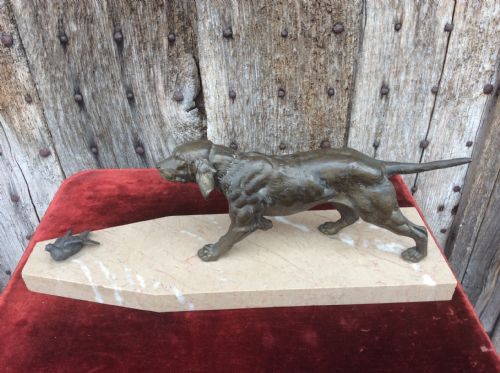

20th Century Bronze Dog
These pieces of 20th century bronze dog sculpture capture hounds and working breeds in solid metal, prized for their lively animalier character.
20th Century Bronze Dog
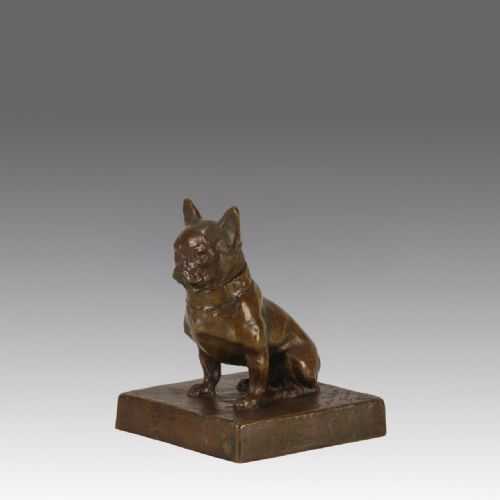
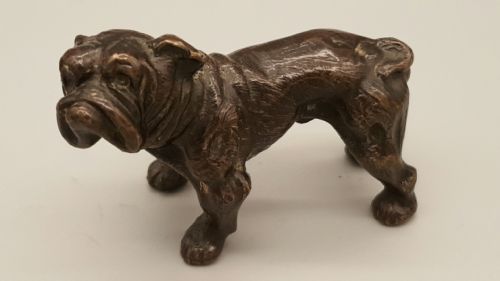
When you search for 20th century bronze dog, you encounter sculptural studies and functional pieces depicting terriers, bulldogs, and shepherds. These figures date primarily from the early decades of the century, spanning the Edwardian period and the 1920s.
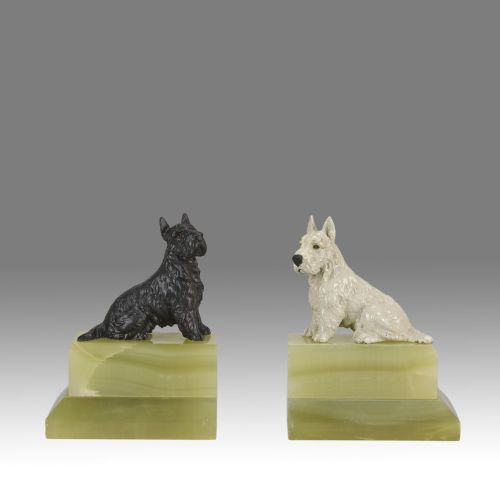
The objects take several distinct forms, ranging from free-standing animalier sculptures to bookends and car mascots. Many are mounted on heavy plinths of marble or onyx to give the cast figures stability and presence.
Originating from British, French, and Austrian workshops, the pieces reflect diverse regional tastes in animal representation. You find both naturalistic studies of working dogs and whimsical Vienna bronzes designed for desktop use.
How they were made
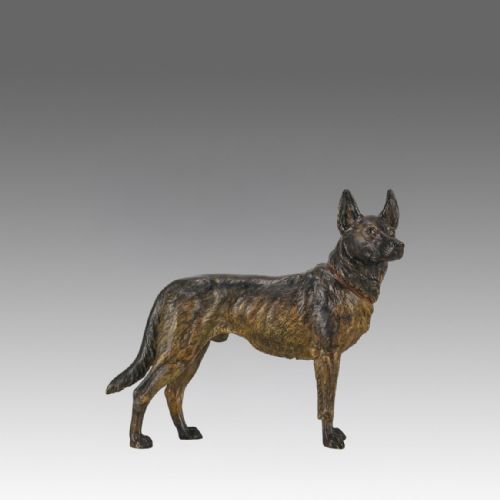
The makers cast these figures using traditional metalworking methods, pouring molten bronze into moulds to capture fine anatomical details in the fur and muscle. Many pieces receive a surface treatment of cold-painting, where polychrome pigments are applied by hand over the metal.
Gilt bronze versions utilise a gold-toned finish to highlight the contours of the canine subjects. Sculptures are frequently mounted onto bases of carved marble, onyx, or brass to complete the composition.
Subject matter ranges from working terriers and alsatians to decorative bookends and automobile mascots.
What varies in quality
The refinement of the casting process dictates the crispness of detail in the dog's coat and expression. Superior examples display careful chiselling and chasing after the metal leaves the mould, preserving the sharpness of the sculptor's original model.
In cold-painted and gilt pieces, the preservation and skill of the original surface finish determine the visual appeal. The quality of the supporting stone plinth, whether veined marble or heavy onyx, also contributes to the overall substance of the piece.
Franz Bergman·Dora Heber·Louis Riche·Edith Parsons
The 20th Century Bronze Dog Glossary
- Animalier
- A nineteenth and twentieth-century artistic movement focusing on the realistic portrayal of animals. Sculptors in this tradition studied animal anatomy closely to capture movement and behaviour accurately.
- Vienna bronze
- Small, highly detailed metal figures produced in Austrian foundries around the turn of the twentieth century. These pieces are typically characterised by meticulous cold-painted polychrome surfaces.
- Cold-painted bronze
- A technique where metal sculptures are painted by hand with unfired oil paints. The pigment adheres directly to the bronze or to an underlying electroplated coating.
- Car mascot
- An ornamental sculpture mounted on the radiator cap of a motor vehicle. In the early twentieth century, small bronze figures were frequently adapted for this purpose.
- Gilt bronze
- Metalwork coated with a thin layer of gold to give a bright metallic sheen. This finish protects the underlying alloy and accentuates sculptural details.
20th Century Bronze Dog: Frequently Asked Questions
What is a Vienna bronze dog?
A Vienna bronze dog is a small, intricately cast metal figure produced in Austrian workshops during the early twentieth century. These pieces are usually finished with hand-applied cold-painted colours.
They were often designed for decorative desk use as inkwells, paperweights, or small ornaments rather than large display sculptures.
How do I identify animalier bronzes?
Animalier bronzes focus specifically on realistic depictions of animals in natural poses or action. You look for detailed musculature, texture in the fur, and a sense of movement.
Many of these sculptures bear the signature of the artist or foundry cast directly into the metal base.
Where were these sculptures made?
These bronze dogs originated across Europe, with significant production centres in France, Austria, and Britain. French studios specialised in naturalistic animal studies, while Austrian makers excelled in small painted novelties.
Asian export pieces, such as Tibetan gilt bronze temple lions, also appear within the broader category of twentieth-century metalwork.
How should I display a bronze dog?
Most bronze dogs are self-supporting or mounted on heavy stone plinths of marble or onyx. They sit well on bookshelves, desks, or mantelpieces where the detail can be appreciated at close range.
You should keep them away from direct moisture and clean them gently with a dry, soft cloth to protect the original surface finish.