


Bronze Fox Figure
These bronze fox figure pieces capture wildlife with enduring character, bringing nineteenth- and twentieth-century animalier artistry straight to your desk.
Bronze Fox Figure
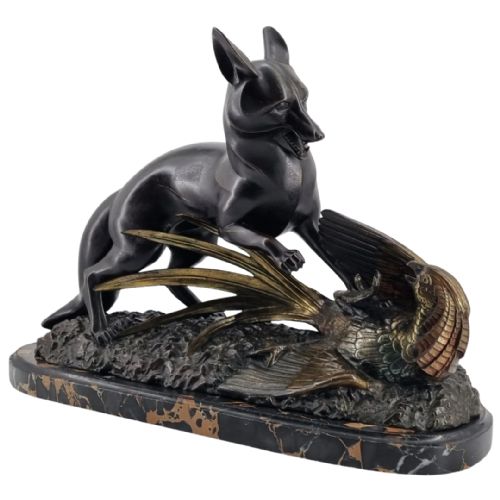
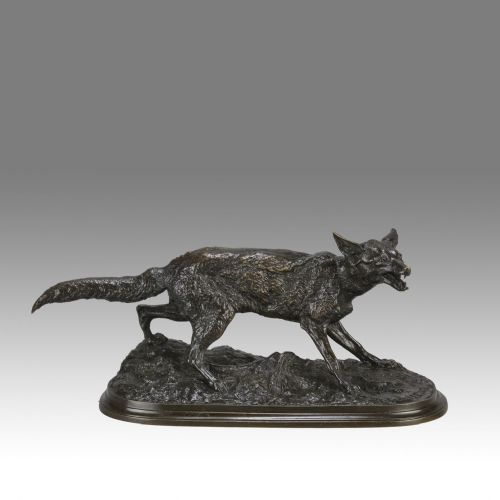
When you search for a bronze fox figure, you are looking at small-scale animal sculptures that range from naturalistic nineteenth-century studies to whimsical novelty desk pieces. The versions you are most likely to meet on this page sit upon bases of marble, green onyx, or wood, capturing the animal in postures of walking, stalking, or resting.
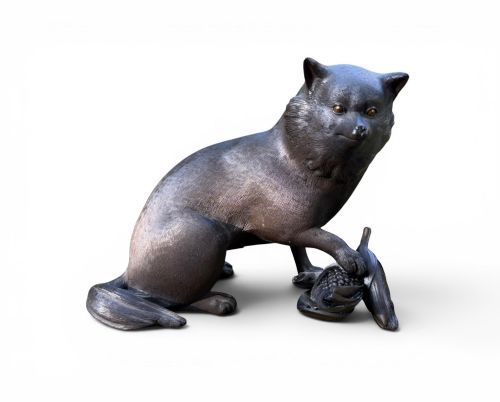
Makers produced these works during the Victorian, Edwardian, and Art Deco periods, drawing heavily on the Animalier school of sculpture. You will encounter European foundry casts alongside Japanese Meiji period okimono, each reflecting distinct regional attitudes toward natural form.
The scope includes functional objects such as inkwells alongside pure sculptures and hunting scenes. Certain pieces present individual foxes, while others depict complex groups involving rabbits or mounted huntsmen.
How they were made
Foundries utilised traditional lost-wax or sand-casting techniques to shape the molten bronze before applying patinas ranging from dark tones to cold-painted polychrome finishes. Some examples incorporate specialist treatments like silvering or gilding to highlight texture and detail.
Sculptors mounted the finished metal figures onto heavy plinths of green onyx, polished marble, or turned timber to provide stability and visual contrast. In certain instances, fine details such as bristles were added to enhance the realism of the study.
Materials appearing across these entries range from standard dark patinated bronze and silvered finishes to gilt work and attached bristles.
What varies in quality
The selection and finishing of the mounting base contribute significantly to the overall presence of the piece, with dense marbles and rich onyx stones elevating the presentation. Original cold-painted surfaces or carefully preserved patination retain greater visual integrity than altered finishes.
P J Mêne·Clovis Masson·Isidore Bonheur·Shosai
The Bronze Fox Figure Glossary
- Animalier
- A nineteenth-century artistic movement dedicated to the realistic portrayal of animals, particularly in bronze sculpture. Practitioners focused on capturing creatures in motion or repose with anatomical precision.
- Cold painted
- A technique where paint is applied to unheated bronze, commonly associated with Viennese workshops. This method allowed for intricate multicoloured finishes on small figures.
- Okimono
- A Japanese decorative figurine designed for display on a shelf or tabletop. These pieces emerged in large numbers during the Meiji period for both domestic and export markets.
- Patina
- The surface coloration and texture developed naturally over time or applied chemically by the foundry. It protects the metal while defining the tonal qualities of the sculpture.
Bronze Fox Figure: Frequently Asked Questions
What is an animalier bronze?
An animalier bronze is a nineteenth-century sculpture focused specifically on the realistic representation of animals. These works capture creatures in natural poses, often emphasising musculature and movement.
Artists within this tradition studied live specimens in menageries to achieve high levels of anatomical accuracy.
How were cold painted bronzes made?
Cold painted bronzes were produced by applying layers of pigment to a cast metal figure without firing the piece in a kiln. This method preserved delicate surface details while introducing vibrant colour.
Vienna workshops specialised in this technique, creating lifelike wildlife studies.
Where should I place a bronze fox figure?
These figures suit display surfaces where their detailed patination and mounting materials can be appreciated up close. Desks, mantelpieces, and bookcases provide stable environments away from excessive moisture.
Functional variants like inkwells also serve well as desktop focal points.
How do I identify a Meiji period piece?
Meiji period Japanese bronzes often take the form of okimono designed for decorative display. They display distinct casting methods and cultural motifs separate from European animalier traditions.
These works frequently feature naturalistic poses on carved wooden bases.