




19th Century Novelty Inkwell
These 19th century novelty inkwell examples bring humour and character to a desk, shaped as animals, sports gear, and everyday objects.
19th Century Novelty Inkwell
A 19th century novelty inkwell takes the form of animals, footwear, and travel gear, transforming a standard desk accessory into a sculptural object. The pieces on this page span the Victorian era, including specific years such as 1880 and 1890 alongside broader nineteenth century datings.
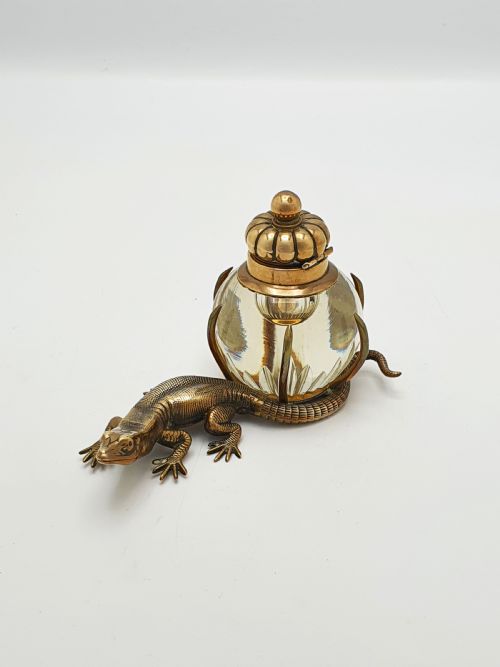
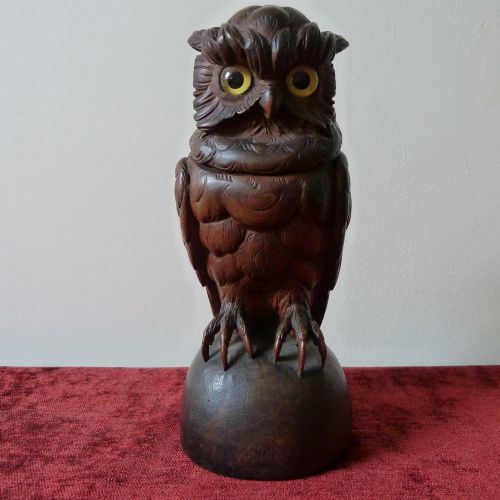
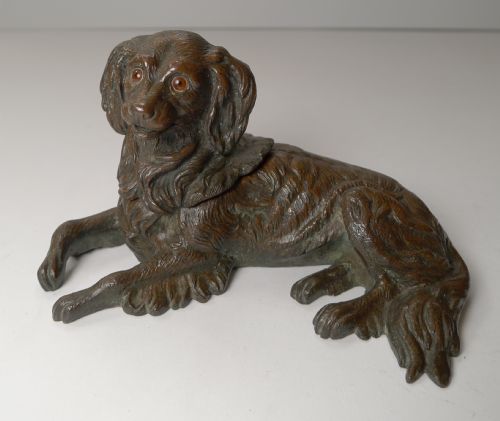
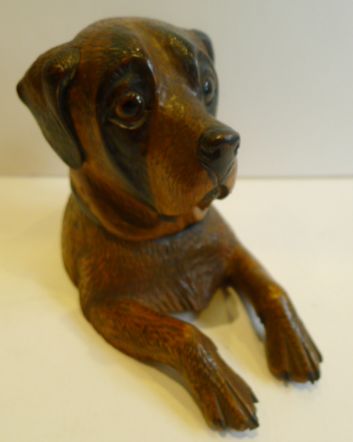
Subjects range from domestic pets and wildlife to sporting items and Gladstone bags. Common representations include dogs like King Charles Spaniels, foxes in nightgowns, owls, and cats, alongside unusual forms such as rugby balls, armadillos, and pith helmets.
Materials and construction methods
Metalwork dominates the construction of these pieces, utilising bronze, gilded bronze, ormolu, silver plate, and brass. Founders often incorporated functional glass inserts to hold the ink safely within the metal or carved wooden housings.
Carved linden wood defines the Black Forest style pieces, capturing detailed animal forms with textured fur and inset glass eyes. Bronze and brass examples employ casting techniques to render animals such as lizards, emus, dolphins, and stags with realistic surface detail.
The listings here combine carved linden wood, cast bronze, brass, and silver plate across the Victorian period.
Distinctions in execution and detail
The degree of anatomical realism and expression separates standard desk accessories from superior sculptural pieces. Fine examples display careful chasing in the metalwork or precise hand-carving in wood, giving life to subjects like the feathered detail of an owl or the texture of a dog's coat.
The survival of original components, such as fitted glass ink inserts and glass eyes, influences the integrity of the piece. Superior items retain their complete assembly, from the hinged lids to the matching desk stands and trays.
The 19th Century Novelty Inkwell Glossary
- Novelty inkwell
- An inkwell shaped to represent an animal, human figure, or inanimate object rather than a traditional vessel. These pieces combine utility with whimsical or decorative sculpture.
- Black Forest
- A style of wood carving originating from the mountainous region of Central Europe during the nineteenth century. It is known for highly realistic representations of animals, particularly dogs and bears.
- Ormolu
- Gilt bronze produced by applying a finely ground high-carat gold mercury amalgam to a bronze object. This technique imparts a rich golden finish to decorative metalwork.
- Animalier
- A nineteenth century artistic movement focused on the realistic depiction of animals in sculpture. Works in this style capture creatures in dynamic or characteristic poses.
- Inkstand
- A desk stand holding one or more inkwells along with space for pens and other writing implements. These desk accessories form a coordinated set for correspondence.
19th Century Novelty Inkwell: Frequently Asked Questions
What were 19th century novelty inkwell pieces used for?
These vessels held liquid ink for dip pens during the Victorian period, serving as functional stationery items on desks and writing tables.
Beyond utility, their whimsical designs provided a conversation piece and reflected the owner's personal tastes or humour.
How do I clean a 19th century novelty inkwell?
Dust gently with a soft, dry brush to preserve the patination on bronze, brass, or carved linden wood surfaces.
Avoid liquid cleaners or chemical polishes, particularly on silver plated or gilded areas, as these can strip the historic finish.
Where should I place an inkwell in a room?
Display these pieces on a desk, bureau, or bookshelf where the sculptural details can be appreciated at close range.
Keep them away from direct sunlight and strong heat sources to protect wood and original glass components.
How can I tell a Black Forest inkwell from other styles?
Black Forest pieces are distinguished by their carved linden wood construction and realistic animal subjects such as dogs and owls.
Other styles typically rely on cast metals like bronze, brass, or silver plate rather than carved timber.