


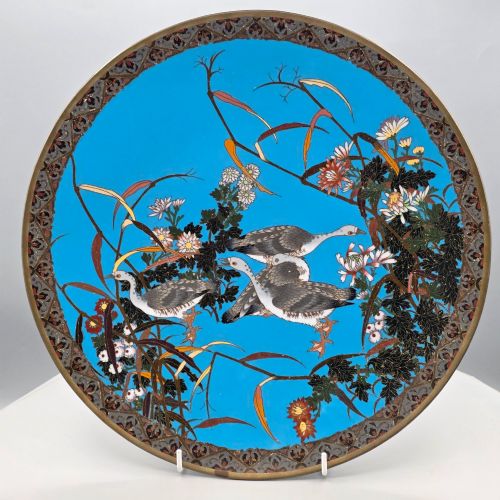



Bronze Cloisonne Plate
A bronze cloisonne plate brings intricate metalwork and vibrant enamel into any room, offering a tangible piece of historical Japanese artistry.
Bronze Cloisonne Plate
When you search for a bronze cloisonne plate, you are looking at decorative chargers, dishes, and wall plates originating primarily from Japan. These pieces span the nineteenth century, including the Meiji and Edo periods.
The most common version you will meet on this page is a large Japanese charger or plate decorated with motifs such as dragons, geese and flowers, chrysanthemums, and auspicious symbols.
Originating from skilled workshops, these metal and enamel items function primarily as decorative wall plates or chargers, designed to command attention in a room.
How they were made
Artisans constructed these items using a metal base of bronze, copper, or brass, shaping the vessel into a plate or charger.
They applied thin strips of wire, often brass or silver wire, to the metal surface to create intricate cellular compartments known as cloisons.
These compartments were then filled with enamel paste and fired repeatedly before the surface was polished smooth.
Bronze Cloisonne Plate Retail Price Guide 2026
Typical asking prices for bronze cloisonne plate among the pieces listed under this phrase on Sellingantiques today, from the lower quarter to the upper quarter. They describe what is for sale here now, not the wider market.
Listings feature items from the Meiji and Edo periods, utilising copper, brass, and bronze bases with silver and brass wire.
What varies in quality
The distinction between tiers of these items lies in the precision of the wirework and the complexity of the enamel design. Finer examples display meticulous control over the thin wire lines, forming crisp boundaries for the coloured enamel.
Signatures by recognised makers or studios elevate a piece, indicating a higher standard of workshop execution. The depth of the imagery, such as detailed dragons or natural scenes, also separates standard production from superior artistry.
Kinkozan
The Bronze Cloisonne Plate Glossary
- Cloisonne enamel
- A technique where metal wires form small compartments on a base, which are then filled with vitreous enamel paste and fired. This method creates detailed, multicoloured designs across the face of the plate.
- Charger
- A large decorative plate intended for display rather than for serving food. These items often feature complex pictorial scenes and substantial diameters.
- Meiji Period
- A historical era in Japan lasting from eighteen sixty-eight to nineteen twelve, marked by intense artistic production and opening to international trade. Many surviving decorative metalwares date from this prolific time.
- Totai Shippo
- A specific Japanese technique involving porcelain bases decorated with cloisonne enamel, simulating traditional metal vessels. It demonstrates the versatility of enamel work across different core materials.
- Wire
- Thin metal strips, commonly brass or silver, soldered onto the plate base to outline individual motifs. The fineness of this wire dictates the sharpness of the final pictorial design.
Bronze Cloisonne Plate: Frequently Asked Questions
How do I hang a heavy charger?
Displaying a large plate safely requires a robust wall-mounted bracket specifically designed for heavy ceramic or metal vessels. Ensure the weight is distributed evenly across the rim without putting pressure on the enamel surface.
Position the plate away from direct sunlight and moisture to protect the metal and coloured enamel over time.
What motifs appear on these plates?
Common decorative themes include fierce dragons, leaping koi, birds among flowers, and various auspicious symbols. These subjects reflect traditional Japanese artistry and iconography from the nineteenth century.
Specific plates might also feature natural textures such as tree bark or intricate floral arrangements like chrysanthemums.
How do I clean a bronze plate?
Dust the surface gently with a soft, dry cloth to remove particles without scratching the delicate enamel or wirework. Avoid chemical cleaners, water, or abrasive polishes that can damage the metal and enamel finish.
Professional conservation advice should be sought if deeper cleaning is required for antique metalwork.
Are these plates signed?
Certain pieces bear artist signatures or workshop marks, often stamped or inscribed on the reverse or base. These signatures provide valuable clues regarding the origin and maker of the item.
Unsigned examples are also common, representing standard production from various Japanese workshops of the period.