


Bronze Cherub Figurine
A bronze cherub figurine brings the playful spirit of classical mythology into a room through enduring cast metal.
Bronze Cherub Figurine
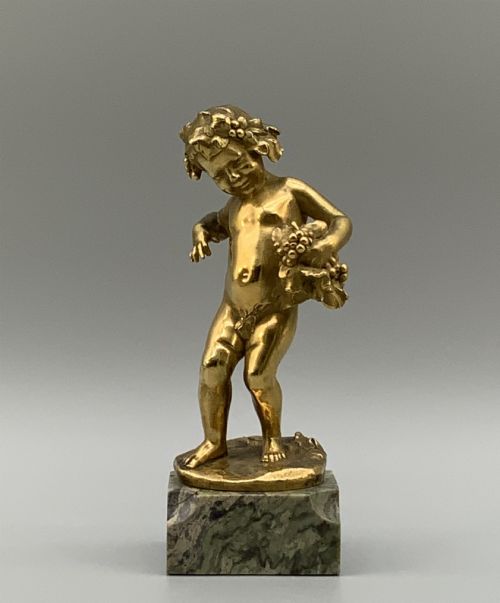
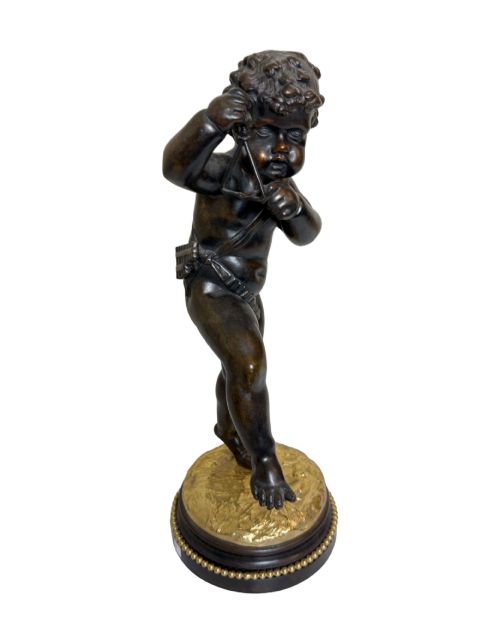
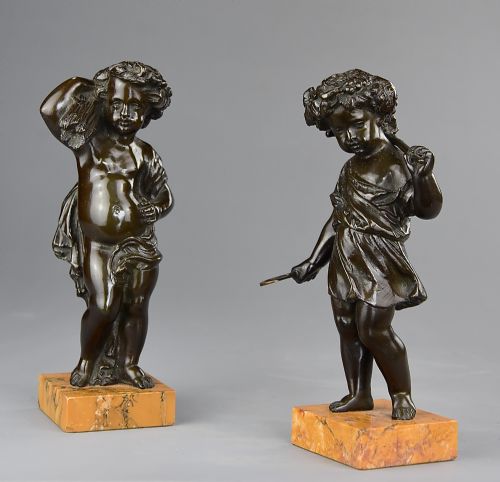
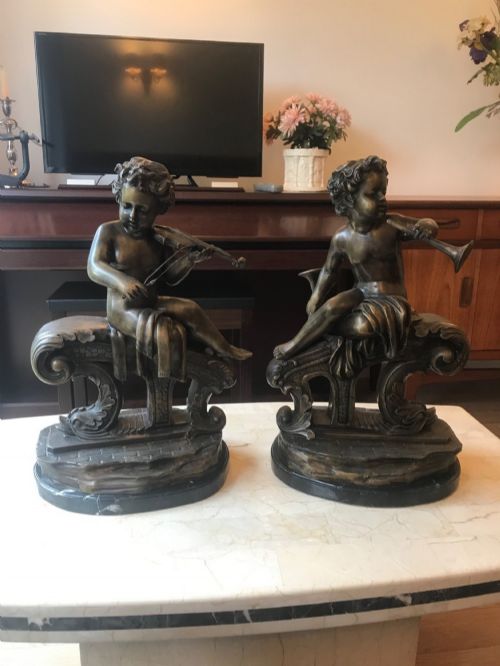
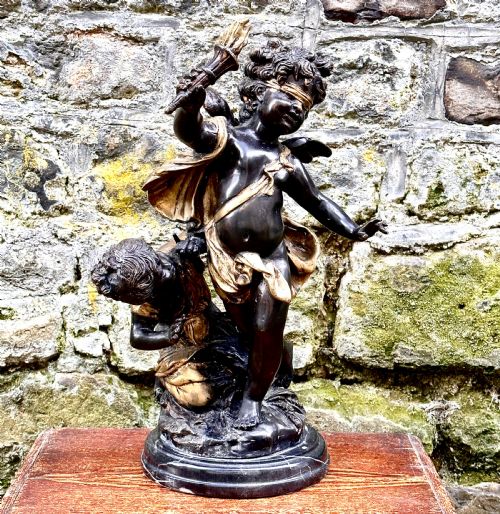
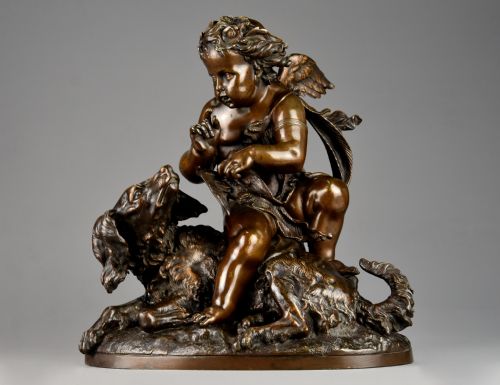
A bronze cherub figurine represents winged mythological youths, putti or amorini engaged in musical, agricultural or domestic pursuits. You will frequently encounter nineteenth-century French and Italian examples shaped as standalone statuettes or incorporated into mantel clocks and table lamps.
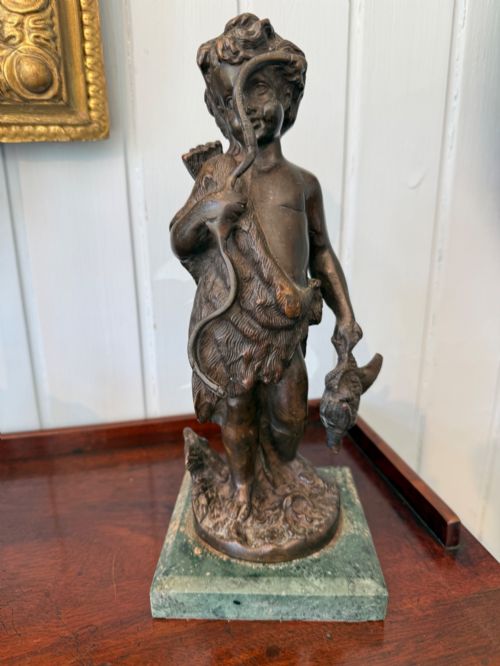
The designs draw heavily on Neoclassical and Rococo Revival styles, depicting figures with bows, grapes, musical instruments or animals. These works range from small cabinet pieces to large sculptural groups mounted upon marble bases.
How they were made
Foundries produced these figures primarily through the lost-wax method or sand casting, allowing for intricate detail in the hair, wings and drapery. Artisans then finished the raw metal by hand, applying rich patinas, fire gilding or ormolu to highlight the contours.
Many figures integrate secondary materials such as white or variegated marble bases, enamel dials, porcelain plaques or wooden bodies. These combinations reflect the diverse decorative arts workshops of nineteenth-century Europe.
Several cherubs are caught mid-mischief, stretching eagerly for birds in a tree or dozing off after harvesting grapes.
What varies in quality
The refinement of the chiselling and chasing after casting distinguishes superior examples from standard production pieces. Master casters retained crisp feather definition in the wings and subtle facial expressions rather than relying on heavy lacquer to mask soft details.
The integration of the figure with its mount, such as a fitted marble plinth or a functional clock movement, indicates the original ambition of the piece. Signatures from recognised sculptors or founders further elevate the standing of a work.
Charles Louis Malric·Susse Frères·Claude Michael Clodion·Louis Auguste Moreau·Achille Brocot·Delettrez·Ferrand
The Bronze Cherub Figurine Glossary
- Putto
- A plump, often winged male child figure frequently seen in classical art. These cherubic motifs became especially popular during the Renaissance and nineteenth-century revivals.
- Ormolu
- Finely ground high-carat gold applied to a bronze base using a mercury amalgamation technique. This process yields a deep, enduring yellow lustre found on luxury French clocks and mounts.
- Patinated bronze
- Metal treated with chemical solutions to produce a controlled surface colour ranging from warm brown to deep green. This treatment protects the bronze while enhancing sculptural depth.
- Grand Tour
- A cultural journey undertaken by nineteenth-century Europeans to collect classical antiquities and souvenirs. Figures acquired on these travels often depict mythological subjects cast in bronze.
- Chasing
- The manual finishing of a cast metal object using small punches and hammers to sharpen details and remove casting imperfections. High-level chasing separates artist-signed bronzes from commercial factory output.
Bronze Cherub Figurine: Frequently Asked Questions
What is a putto?
A putto is a representation of a chubby, winged infant derived from classical art and Renaissance sculpture. In nineteenth-century bronzes, they frequently appear as playful attendants holding grapes, musical instruments or bows.
These figures embody allegorical themes such as harvest, music or love. They serve as the central motif for both standalone statuettes and decorative table lamps.
How do I identify French bronzes?
French bronzes from the nineteenth century typically display sophisticated patination, precise hand-chasing, and sophisticated integration with marble bases or clock movements. Many pieces carry foundry stamps or signatures from prominent Parisian makers.
Stylistic cues include Neoclassical restraint or elaborate Rococo Revival asymmetry. The quality of the metal finishing usually points directly to the standards of French workshops of the period.
What was a Grand Tour souvenir?
Grand Tour souvenirs were portable artworks and antiquities purchased by travellers touring the cultural sites of Italy and France. Bronze figures of mythological youths and classical statues were favourite acquisitions for wealthy collectors.
These pieces were valued for their classical subject matter and functioned as tangible reminders of European education and travel. They often feature characteristic dark patinas and simple stone plinths.
How should I clean bronze?
Bronze requires minimal maintenance, needing only gentle dusting with a soft, dry cloth to prevent the accumulation of grit. Avoid using water, abrasive cleaners or chemical polishes, which can strip away the historical patina.
Applying a very light coat of microcrystalline wax can protect the metal surface from atmospheric moisture. This preserves the original finish without altering the colour of the bronze.