


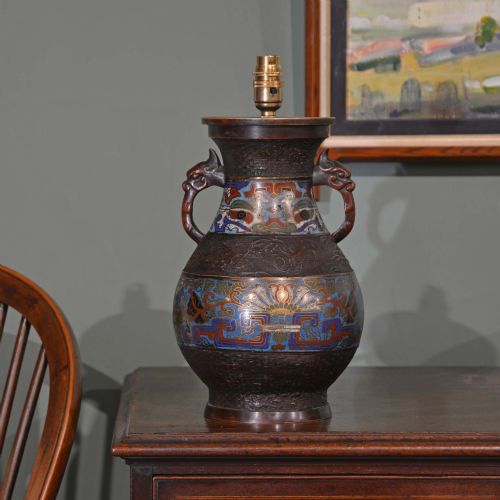


Bronze Champleve Urn
When you handle a bronze champleve urn, you hold an object where molten glass settles permanently into carved metal cells.
Bronze Champleve Urn
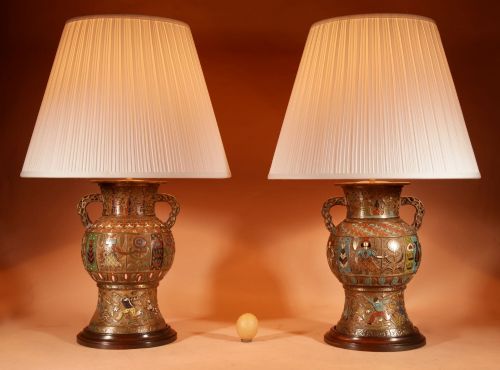
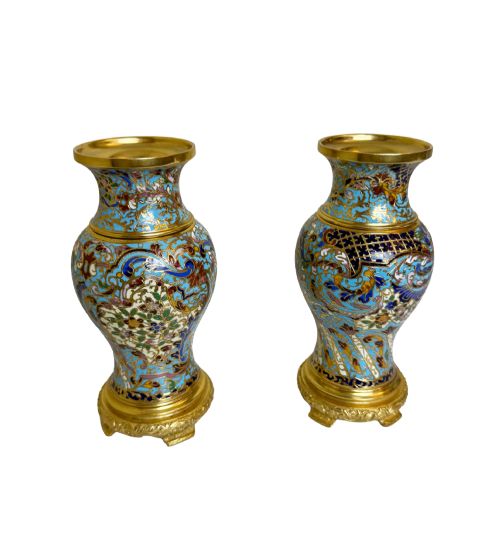
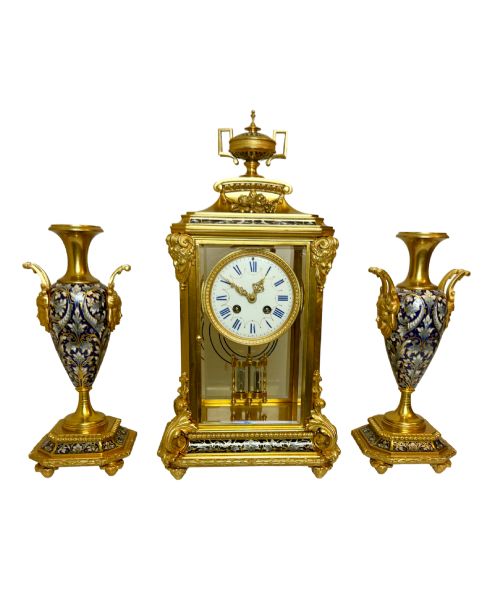
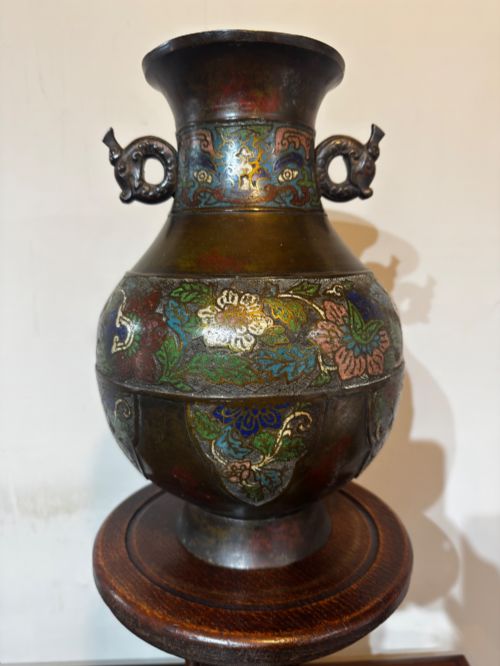
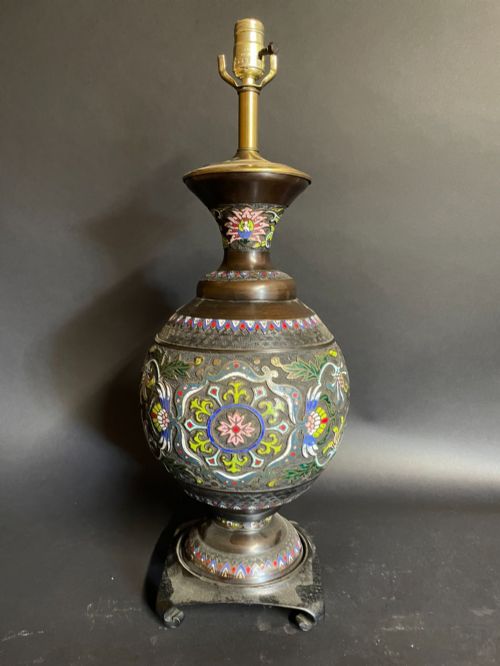
A bronze champleve urn combines cast metal forms with vibrant recessed enamel work, spanning origins from 19th century France to Meiji period Japan and Chinese export studios. You will regularly encounter decorative vases, mantel clocks, and table lamps adapted from these vessels.
The objects reflect global taste exchanges, shifting between French rococo revival designs, Chinese Qing styles, and Japanese export aesthetics. These pieces served primarily as decorative garnitures, centrepiece bowls, and candelabra within refined domestic interiors.
Materials and construction
Craftsmen cast the primary bodies in bronze, gilt bronze, or spelter before carving depressions directly into the metal surface to hold the decoration. Enamel paste is packed tightly into these hollowed channels and fired at high temperatures until fused.
Makers integrated supporting elements such as green onyx, porcelain, wood, and fabric mounts to complete large cachepots, lidded vases, and lamp bases. Gilt highlights and precise chasing finish the exposed metal borders around each enamel cell.
Materials appearing across the inventory include bronze, gilt bronze, champleve enamel, green onyx, porcelain, and carved wood.
Assessing quality
Quality rests in the crispness of the cast bronze and the depth of the hand-carved channels that receive the vitreous enamel. Superior examples show seamless grinding where enamel meets metal, with minimal pitting and rich colour saturation across the decorative fields.
The refinement of the chasing and the weight of the underlying bronze distinguish master workshops from commercial production pieces. Integrated elements like heavy ormolu mounts and balanced proportions further elevate a piece above standard decorative wares.
The Bronze Champleve Urn Glossary
- Champleve
- A technique where troughs or cells are hollowed out of a metal surface and filled with enamel powder before firing. This method contrasts with cloisonne, where wires form the surface pattern.
- Gilt Bronze
- Bronze metal treated with a thin layer of gold or gold-coloured alloy to impart a bright, reflective finish. It appears frequently on nineteenth-century French garnitures and mounts.
- Cachepot
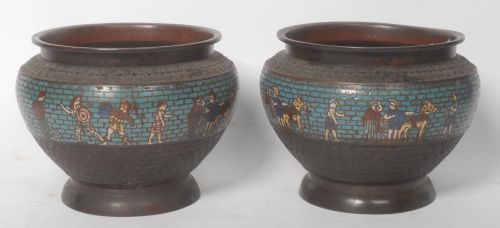
- An ornamental flowerpot container designed to conceal a plain inner pot. In these listings, they often feature classical Greco-Roman forms rendered in bronze and enamel.
- Garniture
- A set of matching decorative objects, typically comprising a clock flanked by vases or candelabra for a mantelpiece. These groupings display unified enamel palettes and cast metal motifs.
- Spelter
- A zinc-based alloy used as a less expensive alternative to bronze for casting figures and candelabra. It takes patination well but lacks the heavy density of true bronze.
Bronze Champleve Urn: Frequently Asked Questions
How do I clean a bronze champleve urn?
Dust the surface gently with a soft, dry brush to prevent accumulation in the enamel channels. Avoid abrasive commercial metal polishes that can strip the gilt highlights or scratch the glass enamel.
Keep these vessels away from direct moisture and strong sunlight, which can affect the stability of older bronze patinas and mounted organic elements like onyx or wood.
Were these urns used for actual flowers?
Many cachepots and lidded vases served decorative display functions rather than holding water and fresh botanicals. Their internal structures and delicate enamel interiors meant they were predominantly placed on tables, mantels, and pedestals.
When liners are present, they are often later additions intended to protect the original bronze and enamel body from damp soil and moisture.
How can I tell French from Japanese pieces?
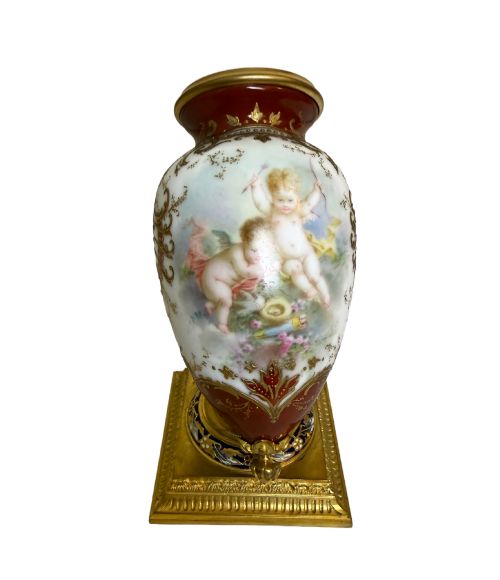
French pieces frequently draw upon rococo revival motifs, incorporating gilt bronze mounts, green onyx, and Sevres porcelain elements. Their designs often align with nineteenth-century salon aesthetics and clock garnitures.
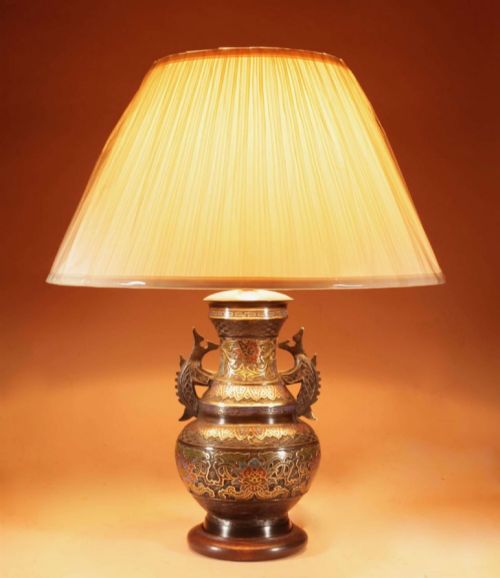
Japanese examples from the Meiji period typically display archaic forms, stylized flora, and dragon motifs executed with distinctive bronze patination and dense polychrome enamel work.
Why are some pieces mounted as lamps?
Many decorative vases and urns were converted into table lamps during the late nineteenth or early twentieth centuries to suit changing domestic lighting needs. This adaptation utilised the substantial height and decorative presence of the original vessel.
Such conversions were often executed professionally, integrating wiring through the base while preserving the integrity of the antique bronze and enamel body.