




Dragon Motif Urn
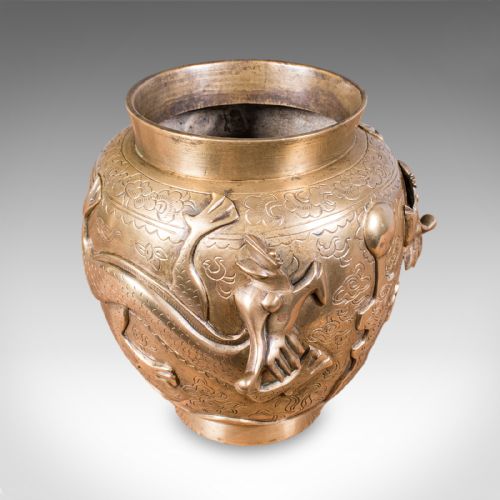
A dragon motif urn brings extraordinary presence to a room, cast in heavy bronze or formed in enamel.
Dragon Motif Urn
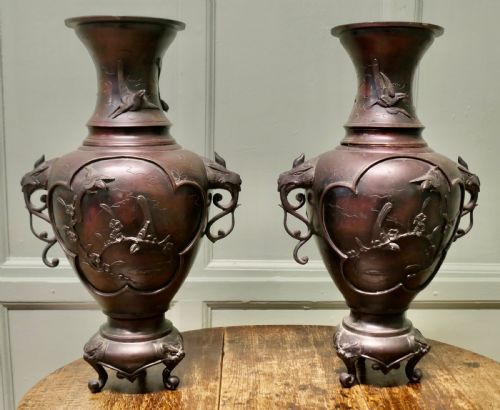
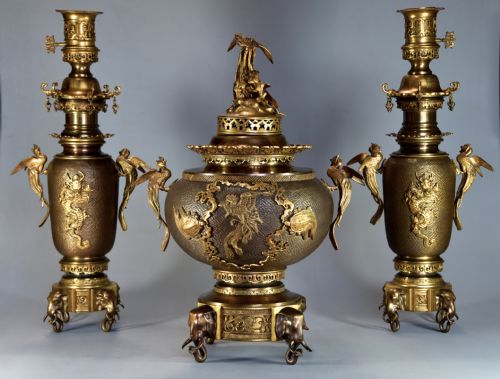
A dragon motif urn encompasses large decorative vessels, garden temple vases, and incense burners originating from nineteenth-century Japanese and Chinese workshops. Buyers seeking a dragon motif urn encounter striking bronze and cloisonné enamel forms shaped during the Meiji period and the nineteenth century.
The selection on this page centres heavily on Japanese Meiji bronzes and Chinese export pieces. These substantial vessels range from tall baluster vases to monumental garden urns and altar vases.
Originating largely from the late nineteenth century, these pieces combine traditional Asian iconography with the dramatic scale favoured by Victorian collectors. The dragon motif remains the dominant visual element across these diverse forms.
Materials and construction
Metalworking dominates the physical evidence, utilising bronze, patinated bronze, and gilt bronze shaped through casting. Artisans also employed copper and brass to build substantial vessels.
Enamelwork forms another primary technique, seen in cloisonné and champlevé enamel applied to bronze or ceramic cores. Gold leaf accents frequently enhance the surface detail of these pieces.
Dragon Motif Urn Retail Price Guide 2026
Typical asking prices for dragon motif urn among the pieces listed under this phrase on Sellingantiques today, from the lower quarter to the upper quarter. They describe what is for sale here now, not the wider market.
Listings feature 19th-century and Victorian periods, spanning from 1880 to 1910.
Judging quality in dragon motif urn
The definition and depth of the cast dragon motif separate the finer examples from standard production. Crisp detailing in the scales and claws reflects superior workshop output.
Weight and scale indicate quality, with monumental garden vessels and heavy bronze pairs demonstrating greater ambition. Surface treatments such as patination and enamel integration also determine the calibre of the piece.
The Dragon Motif Urn Glossary
- Cloisonné
- An enamel technique where thin metal wires are soldered to a metal base to create compartments for coloured paste. This method produces vibrant, patterned surfaces on temple vases.
- Patinated Bronze
- Metal treated with chemicals to produce a stable surface finish in various tones. This treatment protects the bronze while enriching the visual depth of the vessel.
- Japonisme
- The influence of Japanese art on Western design during the late nineteenth century. European makers adopted these aesthetic principles for decorative bronze incense burners.
- Champlevé
- An enamelling process where troughs are gouged into a metal surface and filled with enamel. The remaining metal forms the visible outlines of the design.
Dragon Motif Urn: Frequently Asked Questions
How were dragon motif urns used?
These vessels served primarily as decorative display items in grand nineteenth-century interiors. Some forms functioned specifically as incense burners or water dispensers in temple settings.
Larger examples were designed for gardens or prominent reception rooms to project scale and exotic luxury. Their robust construction allowed them to function both indoors and outdoors depending on the material.
How do I identify a Meiji period piece?
Meiji period pieces typically date between 1868 and 1912, aligning with the Victorian era in Britain. They are frequently characterised by Japanese bronze casting and intricate surface decoration.
Look for the characteristic dynamism in the dragon motifs and the distinctive patination associated with Japanese workshops of this time. The styling often bridges traditional Asian forms with pieces made specifically for Western export.
Where should I place an urn at home?
Substantial bronze and enamel urns require stable surfaces due to their significant weight. They suit entrance halls, drawing rooms, or garden settings where their vertical proportions command attention.
Pair them symmetrically on sideboards or mantelpieces if they belong to a matched set. Ensure adequate clearance around the piece to appreciate the relief work of the dragon motif.
What is the difference between bronze and cloisonne?
Bronze pieces rely on metal casting, patination, and surface carving to bring out the dragon motif. The visual impact comes from the weight and tone of the metal itself.
Cloisonne incorporates coloured enamel held within wire compartments fused to a base. This technique introduces vibrant colour and complex patterns alongside the metallic structure.