



Enameled Brass Urn
An enameled brass urn brings rich colour and heavy metalwork into a room, catching the light across centuries of Asian and European craft.
Enameled Brass Urn
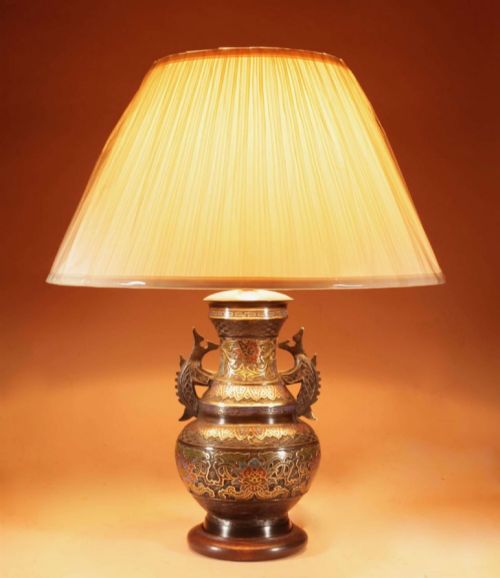
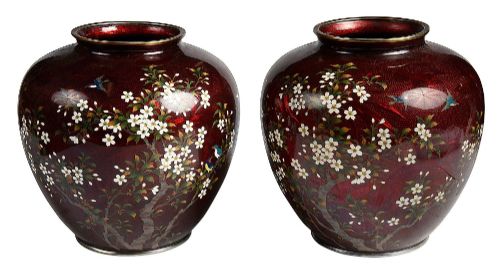
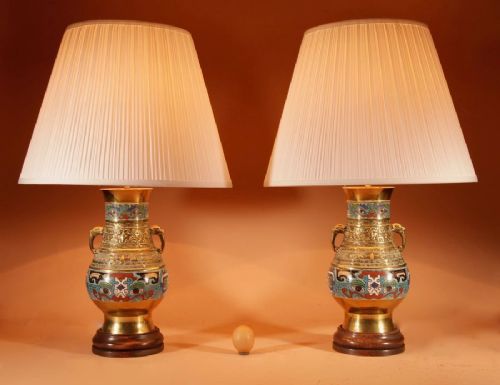
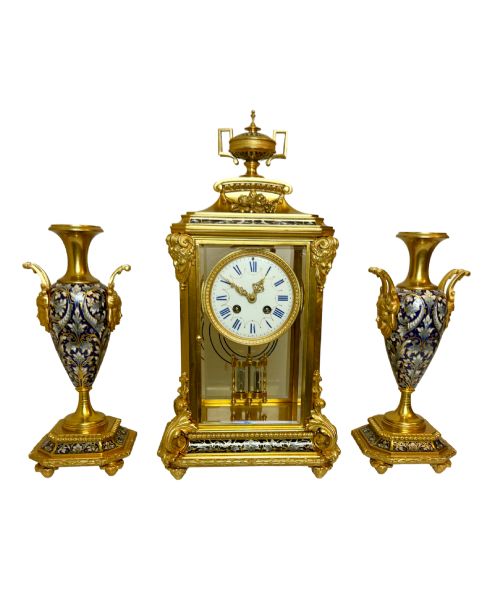
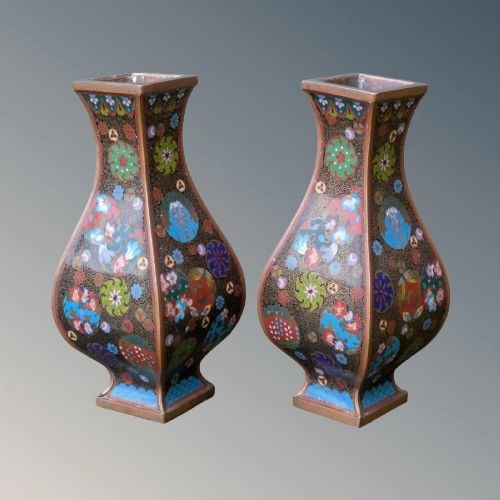
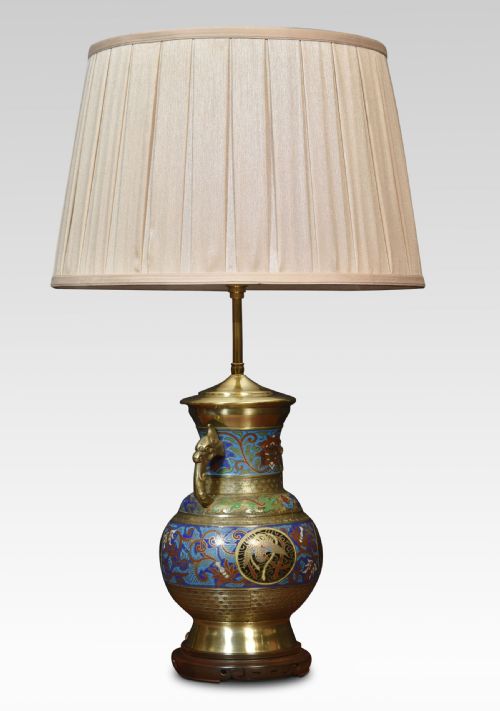
When you search for an enameled brass urn, you encounter vessels that bridge ornamental display and practical adaptation, often crossing over into lamps or clock garnitures. The listings show a strong presence of Asian craft, particularly Japanese Meiji period pieces and Chinese Qing dynasty styles, alongside European interpretations.
The forms span from large jardinières on stands to pairs of decorative vases and twin-handled lamp bases. You are most likely to meet pieces dated across the nineteenth and early twentieth centuries, reflecting both Eastern export wares and Western revival movements.
Many of these objects combine metal vessels with detailed surface decoration, shifting between standalone decorative vases and electrified table lights. Their origins cross traditional boundaries, bringing together oriental cloisonné and French ormolu influences.
Materials and construction methods in the evidence
Makers built these vessels using brass, bronze, and gilt metal foundations, applying enamel work such as cloisonné and champlevé directly to the metal surface. These techniques involve soldering thin wire partitions to form cells, which are then filled with coloured glass paste and fired.
Supporting materials include marble, wood, and glass, providing sturdy bases or clock housings that elevate the central metal urns. Gilt bronze and ormolu often accent the primary structures, adding metallic contrast to the coloured enamel details.
Listings feature items spanning the 18th century to the 1940s, combining Asian export wares with French revival pieces.
Distinctions in craftsmanship and finish
The separation between standard production and exceptional work rests on the precision of the wirework and the depth of the enamel surface. Finer examples display immaculate cell boundaries and an even, polished finish across the entire metal body.
Proportion and decorative harmony also set the better pieces apart, particularly in matched pairs where symmetry dictates visual balance. Superior items maintain crisp detail in the cast mounts and vibrant, consistent tones within the enamel fields.
Sacre
The Enameled Brass Urn Glossary
- Cloisonné
- A decorative metalwork technique where thin metal wires form raised cells to hold coloured enamel paste. This method creates intricate patterns across the surface of vases and urns.
- Champlevé
- A technique where troughs or cells are hollowed out of a metal surface and filled with enamel before firing. It produces bold designs with distinct metal outlines.
- Garniture
- A set of ornamental objects, typically comprising a central clock flanked by vases or candelabra, designed to sit on a mantelpiece.
- Jardinière
- A large ornamental pot or stand, often made of metal or ceramic, intended to hold plants or floral arrangements.
- Ormolu
- Gilt bronze ornamentation applied to furniture, clocks, and decorative vessels, popular in French decorative arts.
Enameled Brass Urn: Frequently Asked Questions
How were these urns originally used?
These vessels served primarily as decorative ornaments within domestic interiors, displayed on mantelpieces, tables, or specialised stands.
Over time, many were later adapted into table lamps or integrated into clock garnitures while retaining their original aesthetic form.
How do I distinguish Japanese from Chinese pieces?
Japanese items frequently date from the Meiji period and often showcase refined flora and fauna motifs within tight cloisonné cells.
Chinese pieces often reflect Qing dynasty styles, featuring heavier cast bronze or brass bodies with distinct geometric or traditional pictorial designs.
Are these pieces electrified?
Several listings indicate that urns and vases have been converted into table lamps or twin-handled lamp bases.
This conversion process combined the decorative body of the original vessel with modern electrical fittings.
What periods are most common?
The majority of pieces date from the nineteenth century, including Victorian and late nineteenth-century examples.
Early twentieth-century items, spanning the Edwardian era through the 1930s, also appear frequently.