


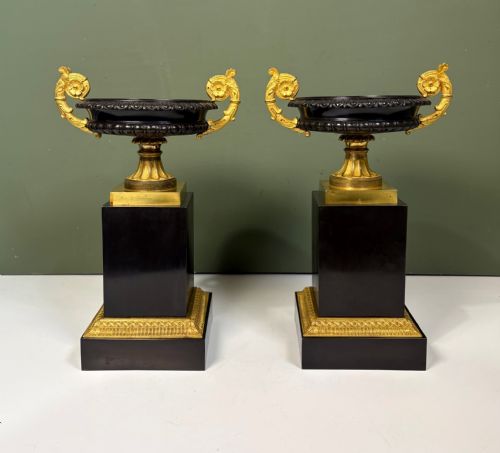


Bronze Centrepiece Urns
Bronze centrepiece urns bring classical gravity to a table, combining heavy cast metal and marble to anchor a room.
Bronze Centrepiece Urns
When you search for bronze centrepiece urns, you encounter formal table garnitures, classical tazzas, and decorative vessels designed to command the middle of a room. Most examples on this page date from the nineteenth century, reflecting French Empire, Regency, and Grand Tour aesthetics.
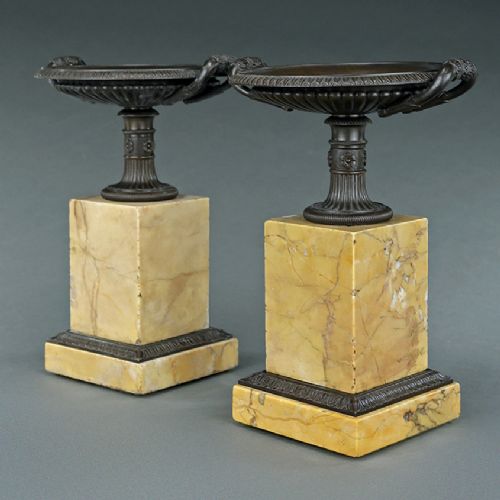
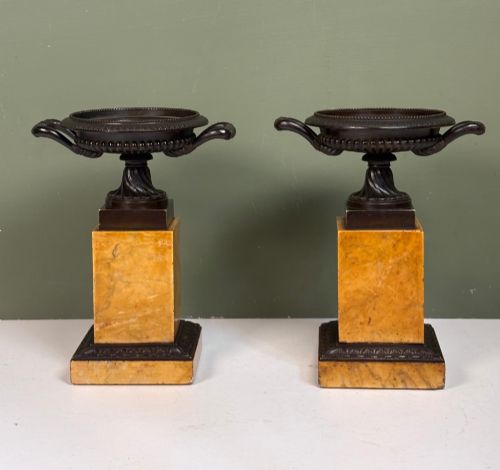
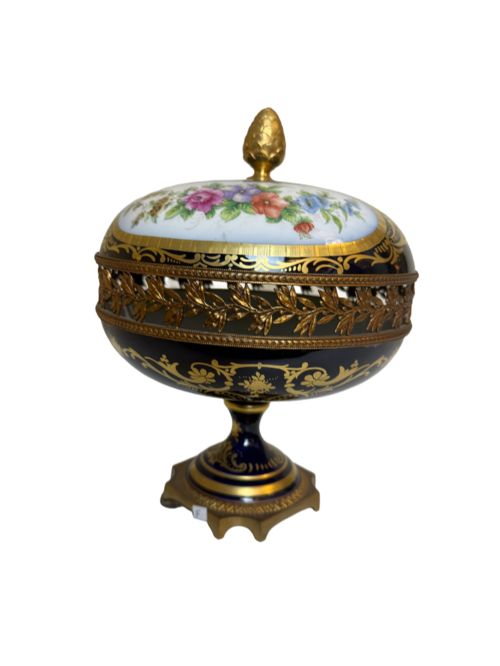
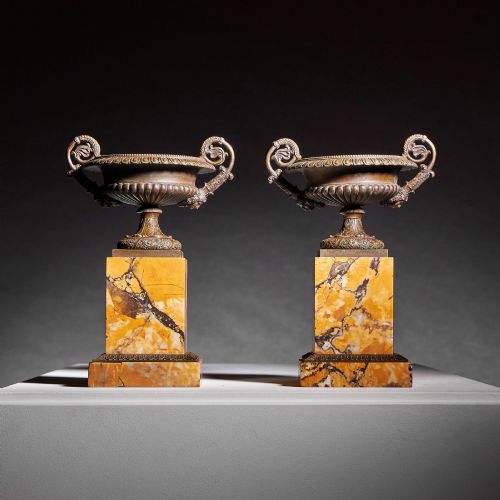
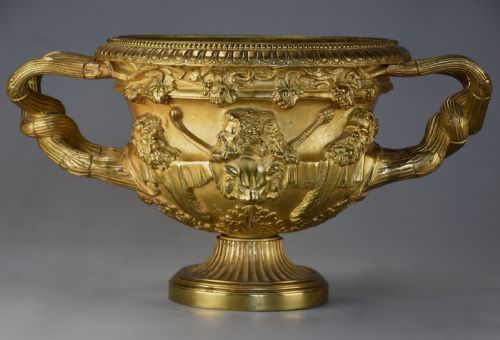
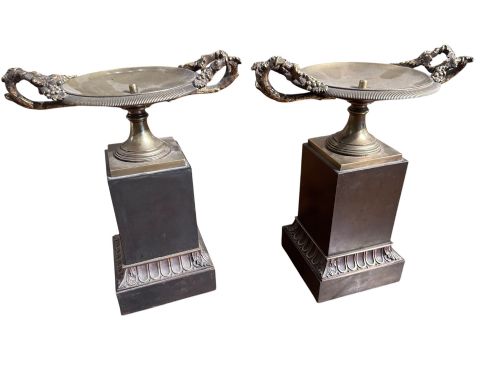
The forms draw directly on classical antiquity, presenting twin-handled cups, low tazzas on heavy plinths, and wide centrepiece bowls. Makers combined patinated or gilt bronze with contrasting materials like marble, porcelain, and onyx to create focal points for formal dining rooms and libraries.
While many pieces originate from French workshops following neoclassical or rococo revival designs, Italian Grand Tour souvenirs and English Regency designs also appear frequently. These items served primarily as decorative centerpieces or display vessels rather than functional containers.
How they were made
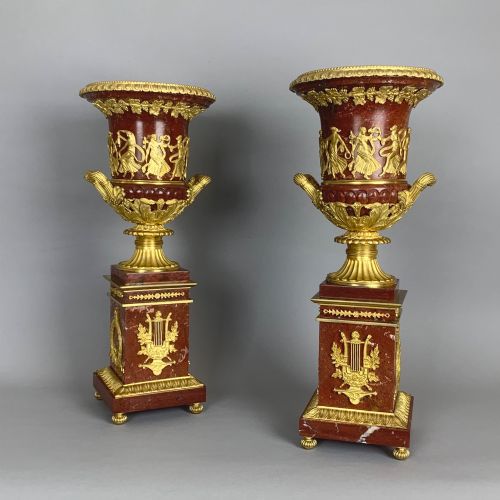
Foundries cast these pieces using traditional methods, combining patinated and gilt bronze or ormolu mounts with natural stone bases. Artisans turned rouge marble, green onyx, and alabaster on lathes to form sturdy plinths and column bodies that supported the heavy metal work.
Surface decoration involved meticulous hand-chasing after casting, alongside specialised techniques like champlevé enamel inlay and silvering. Porcelain elements, including Limoges and Sevres style sections, were fired separately before being secured within intricate bronze mountings.
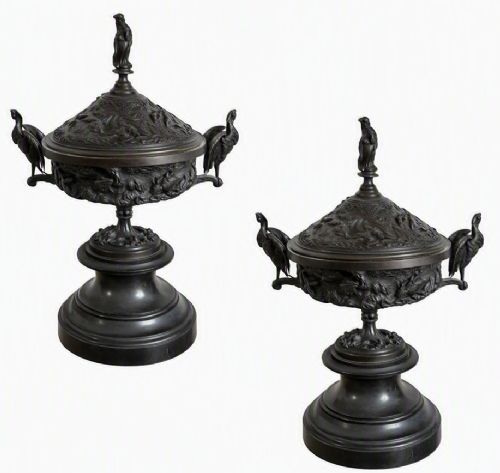
Some nineteenth-century French founders cast graceful bronze storks onto the sides of their drinking cups.
What varies in quality
The sharpness of the cast bronze ornament separates ordinary foundry output from exceptional work, as finer pieces display crisp leaf tips and deeply undercut foliage. Hand-chasing after casting defines the best examples, removing casting seams and adding microscopic detail to hair, drapery, and plumage.
The integration of mixed materials also signals quality, seen in the tight joins between bronze mounts and turned marble bases. Heavy gauge metal and rich, even mercury gilding or patination indicate a maker who spared no expense on materials.
Jules Moigniez·Lerolle Fres·Henry Dasson
The Bronze Centrepiece Urns Glossary
- Ormolu
- Gilt bronze produced by applying a mercury and gold amalgam to cast bronze before heating to drive off the mercury. This technique creates a deep, durable golden lustre characteristic of nineteenth-century French garnitures.
- Tazza
- A shallow bowl or cup mounted on a stem and foot, originating in classical antiquity. These vessels often served as centrepieces or fruit dishes on formal tables.
- Grand Tour
- A cultural journey undertaken by wealthy young Europeans to view continental antiquities. Souvenirs purchased on these trips included miniature bronze vases and tazzas modelled on ancient Roman and Greek artefacts.
- Champlevé
- An enamelling technique where troughs or cells are hollowed out of the metal surface and filled with vitreous enamel powder before firing. The resulting coloured patterns sit flush with the surrounding bronze framework.
- Garniture
- A set of three or more matching decorative objects, typically comprising a central urn flanked by vases or candlesticks. They were designed to sit symmetrically on a mantelpiece or sideboard.
Bronze Centrepiece Urns: Frequently Asked Questions
What is a bronze centrepiece urn?
A bronze centrepiece urn is a decorative vessel cast in metal, often paired with marble or porcelain, designed to sit in the middle of a table or sideboard as a focal point.
These pieces draw on classical forms and historical revivals, functioning primarily as ornamental displays rather than utility items.
Where were these urns made?
Most pieces originate from nineteenth-century French workshops in Paris, following Empire, Rococo Revival, or Neoclassical styles. Other common origins include Italian foundries producing Grand Tour souvenirs and English Regency makers.
French ateliers dominated the production of gilt bronze and porcelain garnitures during this period.
How do I style a bronze urn?
Place a centrepiece urn in the middle of a large dining table, a heavy mahogany sideboard, or a library mantelpiece where its weight and height can command the space. Because of their strong classical presence, they work best when given breathing room away from cluttered displays.
Pair matching tazzas or garniture vases symmetrically to recreate nineteenth-century interior arrangements.