
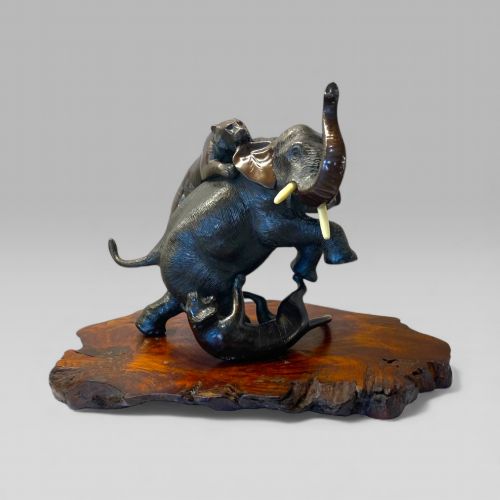


Bronze Animal Okimono
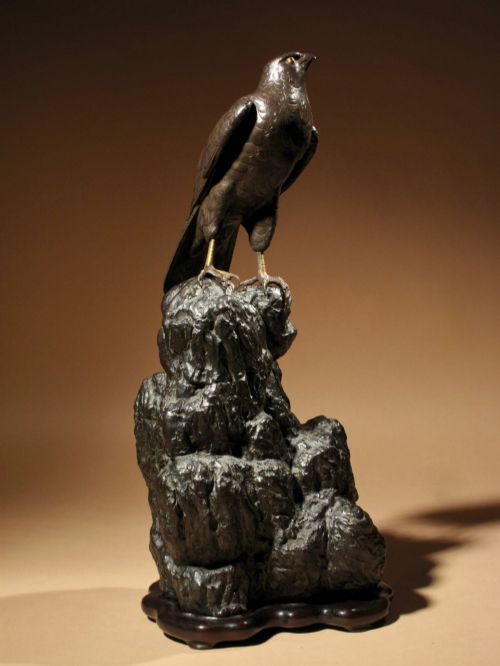
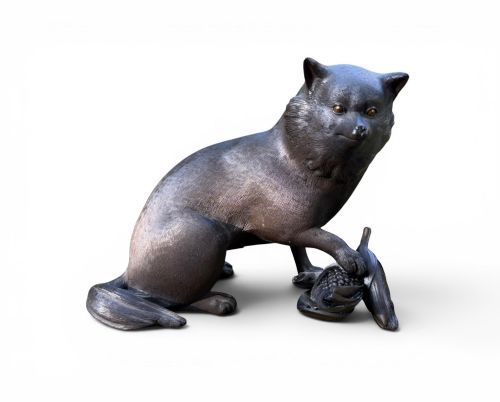
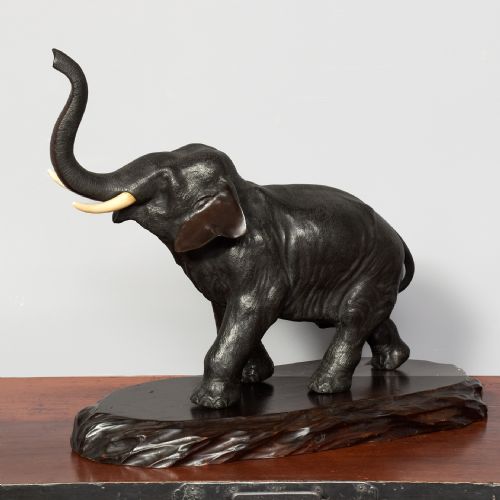
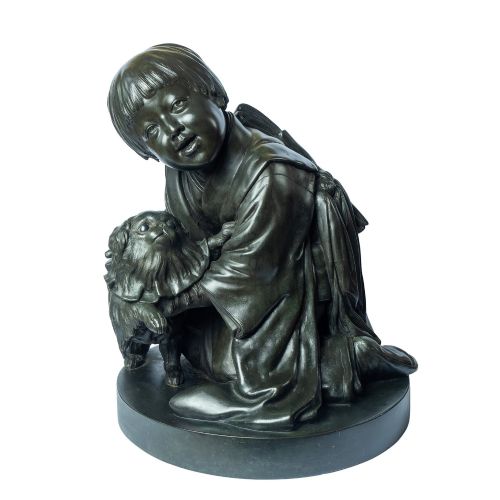
These bronze animal okimono are Japanese sculptures spanning the Meiji and Showa periods, capturing creatures from monkeys to elephants with remarkable detail.
Bronze Animal Okimono
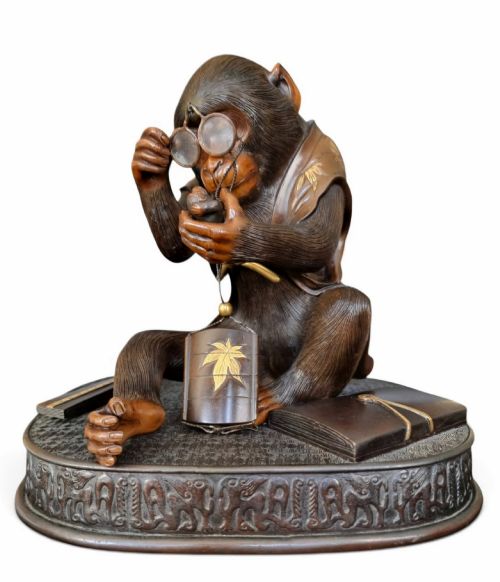
A bronze animal okimono is a Japanese sculptural object designed for display, representing creatures ranging from domestic puppies and rats to wild tigers, wolves, and elephants.
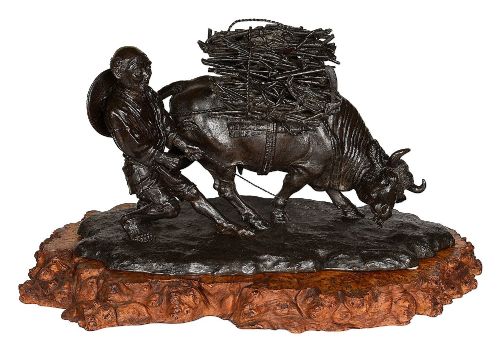
The pieces on this page are predominantly from the Meiji period and the 19th century, featuring subjects like the tanuki, hawk, monkey, and buffalo.
Many examples combine bronze with other materials such as ivory tusks or gold inlay, frequently set upon naturalistic bases or carved wooden stands.
Materials and construction
These works utilise bronze as the primary medium, often enriched through mixed metals and gold inlay to highlight specific surface details.
Certain sculptures incorporate organic elements like ivory, bone, and wood, particularly for tusks or companion naturalistic bases.
Foundries and artists applied patination techniques to the metal surfaces to achieve realistic coloration and tonal depth across fur, feathers, and skin.
Listings feature works from the Meiji and Showa periods, utilising bronze, wood, ivory, and gold inlay.
Distinctions in quality
Quality depends upon the nuance of the casting and the naturalism of the animal's posture, separating standard decorative figures from works of high artistry.
Signature work by identified makers demonstrates a superior level of anatomical precision and textural command in the metal.
The integration of mixed metals and secondary materials like ivory or burr wood influences the visual complexity of the finished sculpture.
Tsunemitsu·Shosai·Masaaki·Kaniya Kuniharu·Seiunsai Miyamoto Sei
The Bronze Animal Okimono Glossary
- Okimono
- A Japanese term for a decorative object or sculpture intended for display in an alcove or on a shelf. These pieces focus on natural subjects and animals.
- Meiji Period
- The era of Japanese history lasting from 1868 to 1912. Much of the metalwork sculpture originates from this culturally transformative time.
- Mixed-Metal
- The combination of different metallic alloys within a single object, such as bronze with gold inlay, to create contrasting colour and detail.
- Tanuki
- The Japanese raccoon dog, frequently depicted in folklore and represented in traditional okimono sculpture.
- Patination
- The chemical treatment or natural ageing process that colours the surface of bronze. It provides the deep browns, blacks, and greens seen on these figures.
Bronze Animal Okimono: Frequently Asked Questions
What is a bronze animal okimono?
A bronze animal okimono is a decorative Japanese sculpture created for interior display, portraying subjects from domestic puppies to wild elephants.
These pieces date primarily from the 19th century and the Meiji period, reflecting a high standard of metalworking skill.
How do I identify a Meiji period piece?
Meiji period sculptures are characterised by their 19th-century origin, specific Japanese artistic motifs, and often the use of bronze combined with mixed metals or ivory.
Many bear signatures from known makers or workshops active during this historical era.
What animals are commonly depicted?
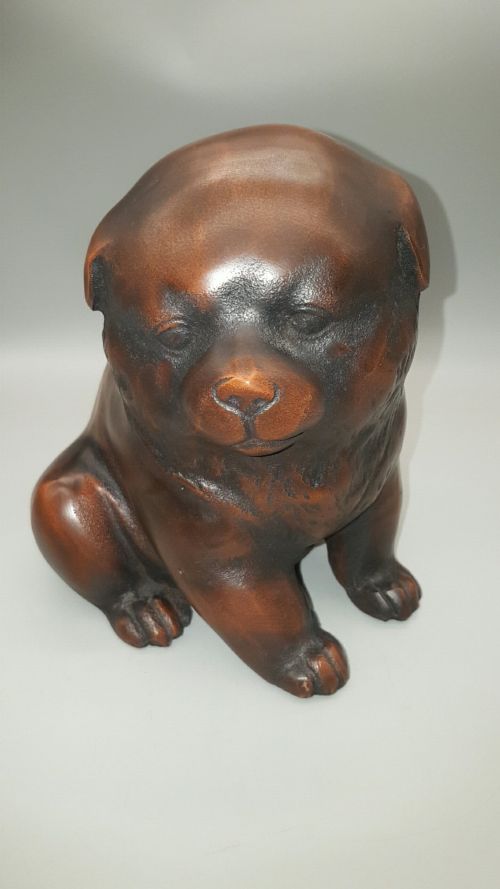
The available pieces show a wide range of fauna, including elephants, tigers, monkeys, wolves, bears, rats, and domestic dogs like Akita puppies.
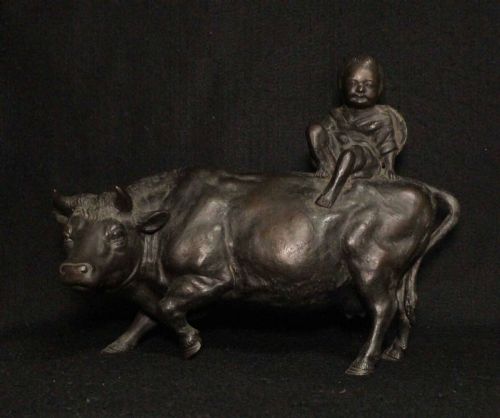
Some sculptures feature narrative scenes, such as an elephant fighting tigers or a boy riding a cow.
How should I display these sculptures?
These sculptures suit placement on flat surfaces where their detail and naturalistic bases can be appreciated from multiple angles.
Care should be taken with pieces that incorporate delicate mixed-metal inlays or ivory components.