





Broad Rim Pewter Plate
A broad rim pewter plate brings the quiet weight of seventeenth and eighteenth century dining straight to the modern table.
Broad Rim Pewter Plate
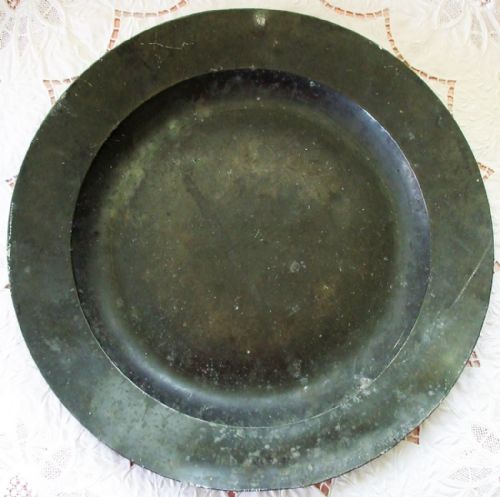
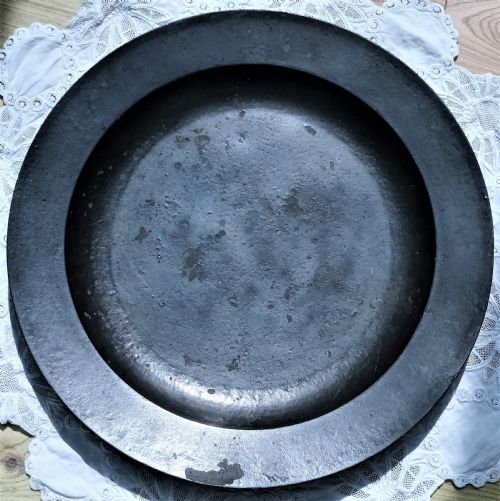
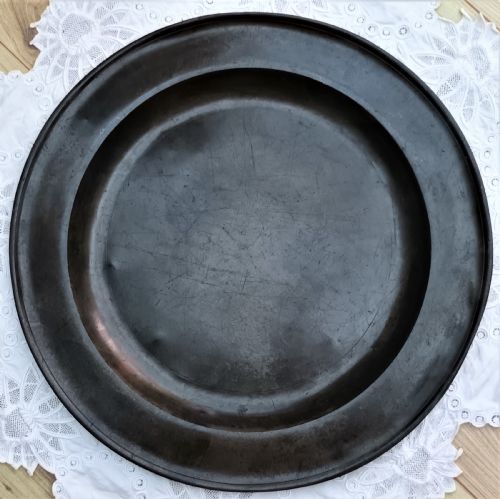
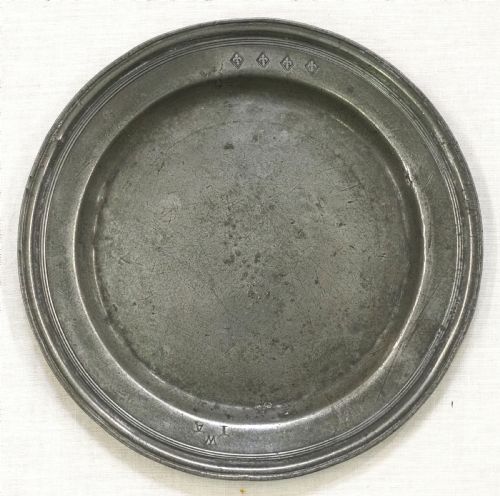
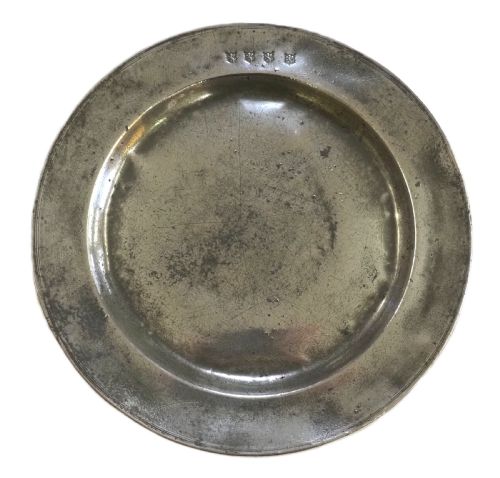
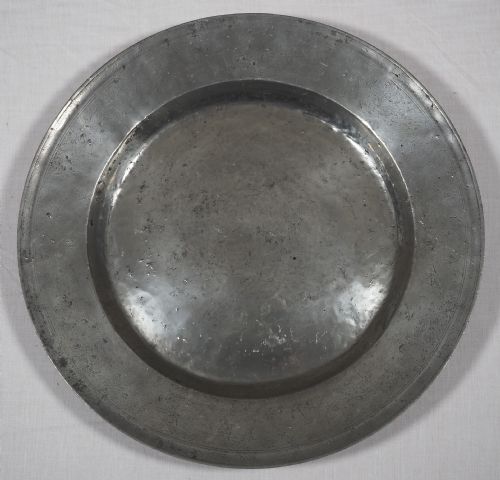
A broad rim pewter plate sits comfortably between domestic utility and display, taking the form of large chargers, dishes, and plates across this selection. Most examples encountered here belong to the seventeenth and eighteenth centuries, reflecting the height of English metalwork from the Stuart, William and Mary, and Georgian periods.
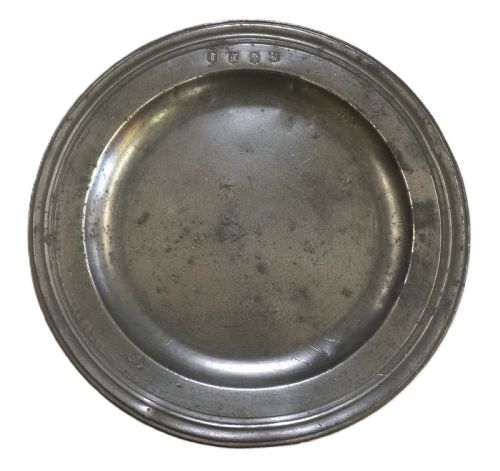
The defining characteristic is the generous, expansive rim that frames the central well, often finished with reeded borders or incised decoration. These generous proportions served practical functions at high-status dining tables before transitioning into decorative chargers displayed on walls or dressers.
How they were made
These pieces are fashioned from traditional pewter, an alloy composed primarily of tin with additions of lead or copper to achieve durability and lustre. Craftsmen cast the metal into flat discs before hammering the surface by hand to strengthen the material and shape the characteristic broad rims.
Detailing was achieved through cold-working techniques such as triple reeding along the rim or cutting crisp linear incisions into the metal. Makers often stamped their touchmarks directly into the alloy, leaving a permanent record of their workshop.
Broad Rim Pewter Plate Retail Price Guide 2026
Typical asking prices for broad rim pewter plate among the pieces listed under this phrase on Sellingantiques today, from the lower quarter to the upper quarter. They describe what is for sale here now, not the wider market.
The listings span from the seventeenth century through the Georgian period, executed entirely in traditional pewter.
What varies in quality
Quality in a broad rim pewter plate rests upon the crispness of the reeding, the depth of the hand-hammering, and the survival of makers' marks. Superior examples retain their original heavy gauge metal without excessive wear or thinning to the central well.
Provenance and ornamentation elevate certain pieces, particularly those bearing period family crests or scarce incised rim decoration attributed to known master pewterers. The balance and heft of the metal dictate the tactile appeal of each dish.
John Duncomb·Samuel Smith·John Trapp II·John Tubb·Robert Moulins II·Lawrence Dyer·Thomas Haward·Thomas Powell·Edward Leapidge I
The Broad Rim Pewter Plate Glossary
- Broad rim
- A wide, flat or gently sloping border surrounding the central well of a plate or charger. This generous surface provided ample space for armorial engravings and maker touchmarks.
- Charger
- A large ornamental or serving plate, typically exceeding sixteen inches in diameter. These substantial pieces formed the centrepiece of early dining arrangements.
- Reeded
- A decorative moulding consisting of parallel convex ridges carved or cast into the rim. Triple reeded variations feature three distinct parallel lines.
- Touchmark
- A proprietary stamp impressed into pewter by the maker to denote quality and workshop origin. These marks allow researchers to identify individual craftsmen.
- Incised rim
- A border decorated with fine, hand-cut linear grooves rather than raised mouldings. This technique creates subtle geometric patterns around the circumference.
Broad Rim Pewter Plate: Frequently Asked Questions
How were broad rim pewter plates used?
These large plates served both functional dining roles and display purposes in wealthy households during the seventeenth and eighteenth centuries. Chargers held large joints of meat at the table before moving to sideboards for visual impact.
Over time, many examples transitioned entirely into wall-hung decorative pieces to showcase their gleaming metallic surfaces and maker marks.
How do I care for antique pewter?
Antique pewter requires minimal intervention and should be kept dry to prevent environmental oxidation. Gentle dusting with a soft cloth is usually sufficient for maintenance.
Avoid modern metal polishes, as they can strip away the historic grey patina that collectors value so highly.
What does a touchmark tell me?
A touchmark acts as the maker's signature, stamped into the soft metal before the piece left the workshop. These small punches often record the craftsman's initials or guild symbols.
Consulting pewter reference books helps match these symbols to specific seventeenth and eighteenth century makers.
How do I distinguish seventeenth century plates?
Seventeenth century examples typically feature wider rims, heavier gauges of metal, and simpler hammered textures without later neoclassical refinements. Stylistic cues like Stuart reeding and early touchmarks help separate them from Georgian pieces.
Plates from this earlier era often display the deep patination accumulated over three hundred years of handling.