
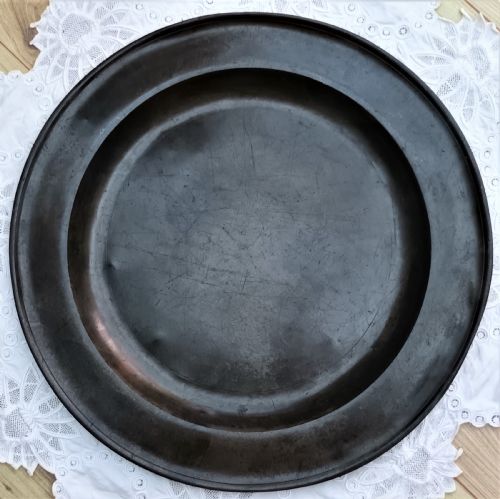
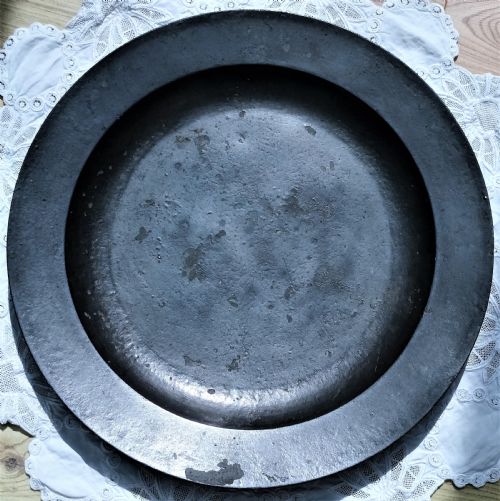
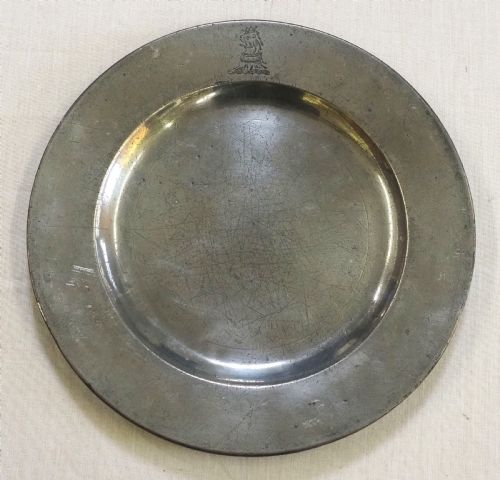
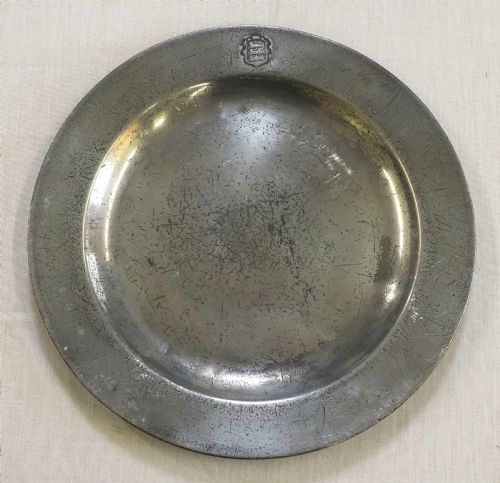
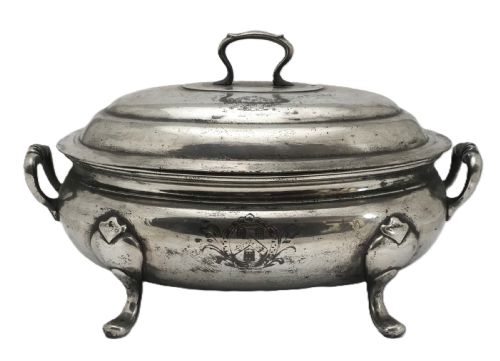


Georgian Metalware Dish
These georgian metalware dish examples offer robust utility and age, prized by collectors for their honest weight and historic craftsmanship.
Georgian Metalware Dish
When you search for a georgian metalware dish, you encounter utilitarian and display vessels shaped by eighteenth-century smiths and founders. The selection centres heavily upon pewter platters, chargers and plates, alongside bronze roasting pans and silver Old Sheffield Plate service items.
Most entries originate from English workshops operating across the seventeen-hundreds and the opening years of the nineteenth century. Forms range from plain rim plates and wavy edge designs to deep chargers and specialised cookware.
Collectors find pieces bearing engraved armorial bearings, lion crests, and maker hallmarks that tie the metal directly to historic guilds and provincial towns.
How they were made
Pewter items rely on an alloy of tin combined with lead or copper, cast in moulds and subsequently hammered or turned on a lathe to finish the surface. Makers then polished the metal or applied touchmarks to verify the composition and workshop origin.
Bronze and copper vessels demonstrate distinct casting and hammering techniques suited to heavy culinary use, such as roasting pans and preserving dishes. Old Sheffield Plate combines a thin sheet of silver fused to a copper core, creating durable tableware with precious metal surfaces.
Listings feature items predominantly from the eighteenth century, spanning pewter, bronze, copper, and Old Sheffield Plate.
What varies in quality
The distinction between ordinary and superior pieces rests upon crispness of cast detail, thickness of the remaining metal, and clarity of touchmarks or crests. Plates that retain their original gauge without excessive wear from centuries of scouring command greater regard.
Engraved heraldry, such as family crests or civic coats of arms, elevates a simple service dish into an object of specific historical record. The integrity of the edge, whether plain, reeded, or wavy, indicates the care taken during initial production and subsequent handling.
John Duncomb·Samuel Smith·James Spackman·Wood & Michell·William Wright
The Georgian Metalware Dish Glossary
- Charger
- A large large plate or platter, typically used for serving food at the table or as a base under smaller courses. These substantial vessels form the core of early metalware collections.
- Touchmark
- An official stamp struck by a pewterer into the metal to identify the maker and workshop. These marks serve as primary evidence for dating and attributing individual pieces.
- Old Sheffield Plate
- A composite material made by fusing a thin layer of silver onto a copper base under heat and pressure. This technique preceded modern electroplating and produced durable tableware.
- Armorial
- A design displaying heraldic arms, crests, or coats of arms engraved or cast onto metal surfaces. Such engraving often indicates ownership by prominent families or livery companies.
- Wavy edge
- A rim contour shaped with gentle undulations rather than a straight circle or standard moulding. This decorative flourish appears on eighteenth-century European plates.
Georgian Metalware Dish: Frequently Asked Questions
What is a pewter charger used for?
In eighteenth-century households, large chargers served as central platters for meat or communal dining before individual plates became standard.
Today, collectors utilise them primarily for decorative wall display or tabletop presentation to highlight their aged surface patina.
How do I clean antique pewter?
Historic pewter requires minimal intervention, usually limited to gentle washing with warm water and mild soap followed by thorough drying.
Harsh commercial metal polishes remove the historical patina and should be avoided to preserve the character of the piece.
What is Old Sheffield Plate?
Old Sheffield Plate is an early composite material created by fusing silver sheets onto a thick copper foundation.
This method produced durable items that mimic solid silver while remaining accessible for functional diningware.
How can I date an eighteenth-century dish?
Dating relies heavily upon maker touchmarks, rim styles, and any engraved armorial crests that link to historical records.
The weight and thickness of the metal also offer clues regarding the manufacturing period.