



British River Landscape Paintings
British river landscape paintings capture waterways from rural streams to bustling city bridges through the eyes of artists working across several centuries.
British River Landscape Paintings
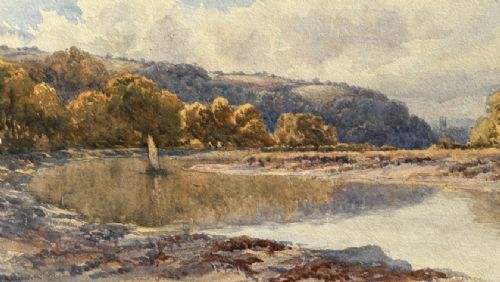
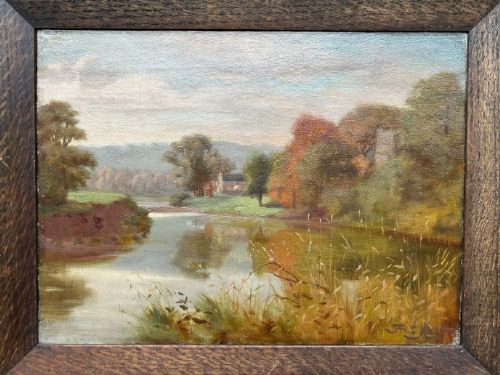
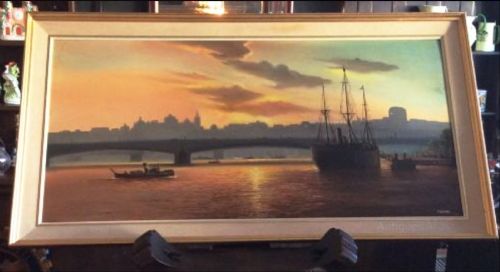
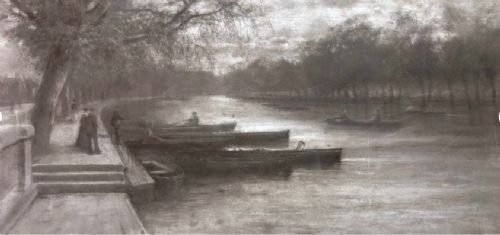
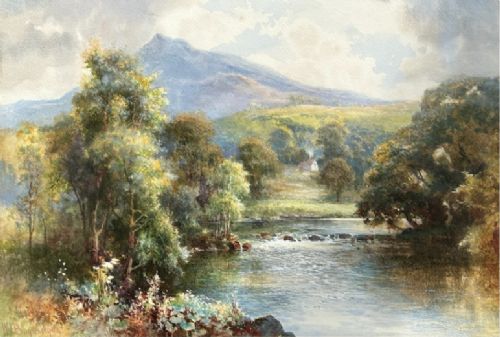
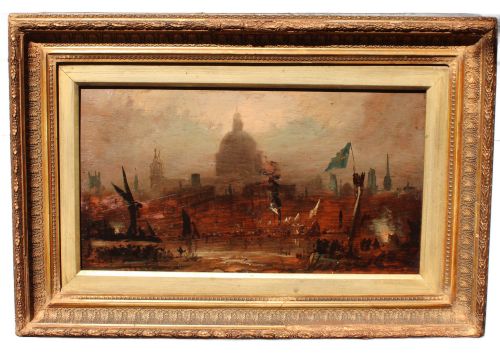
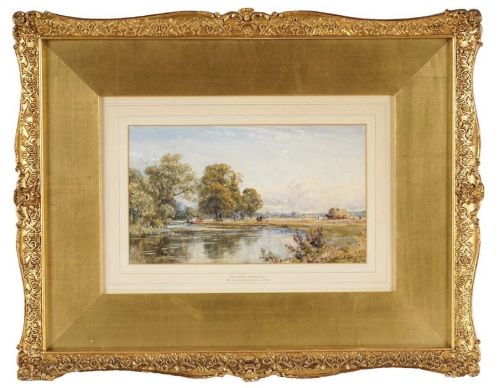
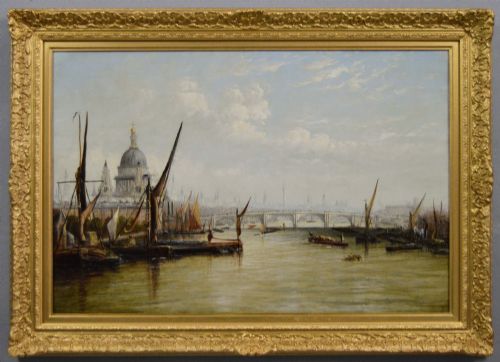
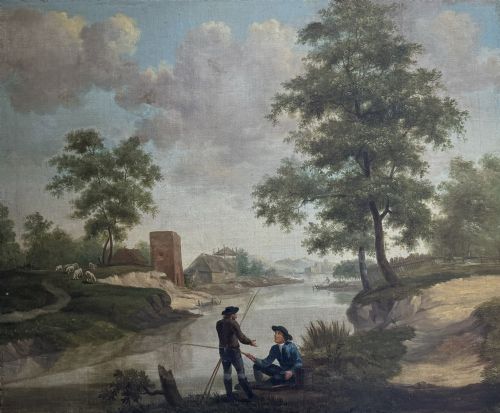
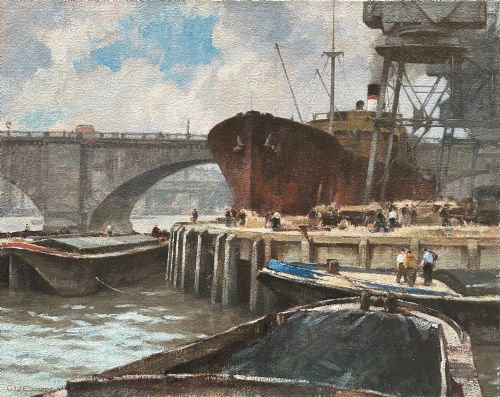
British river landscape paintings encompass oils on canvas or panel and watercolours on paper depicting watercourses, estuaries, and bridges across England, Wales, and Scotland. These works range from rural scenes featuring willow trees and fishing figures to urban panoramas along the Thames with maritime traffic and historic architecture.
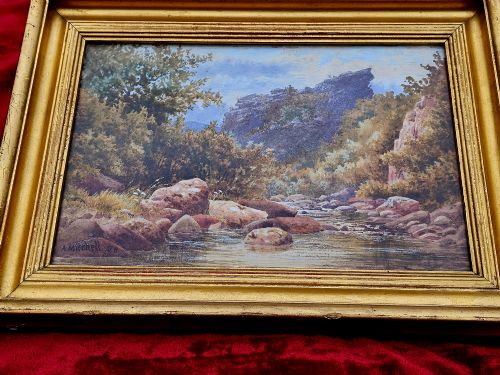
Buyers browsing this selection will most frequently encounter late nineteenth-century and early twentieth-century examples, spanning the Victorian and Edwardian eras through to the mid-twentieth century. Works executed in oil and watercolour dominate the selection, often housed in period giltwood frames.
The subjects extend from quiet country rivers like the Teme and the Kennet to industrial ports and city landmarks such as London Bridge, St Pauls, and Durham Cathedral. Artists working in these periods recorded both the natural topography and the human activity along the banks.
How british river landscape paintings were made
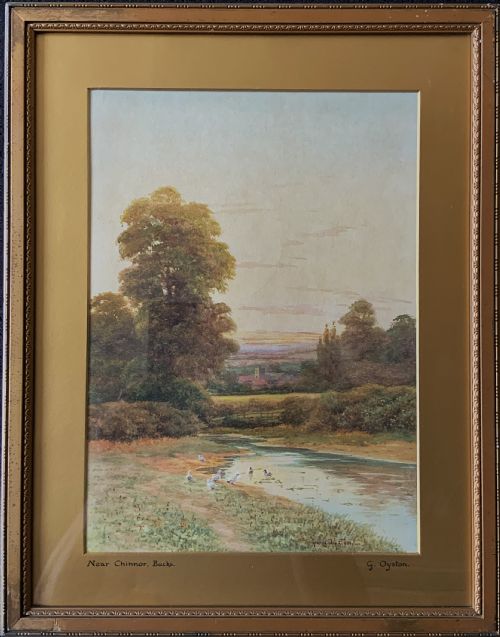
Painters working on these subjects utilised oil paints on primed canvas, wood panel, or board, building up rich textures and capturing atmospheric light effects. Watercolours on paper offered a fluid medium well suited to depicting reflective water surfaces, damp riverbanks, and hazy atmospheric conditions.
Framing played an integral role in presentation, with many pieces retained in their original gesso and giltwood frames that complement the tonal palette of the artwork. Charcoal and mixed media works on paper also appear, demonstrating preparatory drafting techniques alongside finished studio watercolours.
Listings feature works spanning the eighteenth century through to the mid-twentieth century, executed in oil, watercolour, and charcoal.
What varies in quality
Quality in these works rests upon the artist's command of light, atmosphere, and water reflection, distinguishing competent topographical records from evocative artistic interpretations. Works by established Royal Academy exhibitors or recognised regional painters display superior handling of perspective and atmospheric depth.
Condition and originality also govern the standing of a piece, particularly the preservation of the pigment, the stability of the canvas or panel support, and the retention of the period frame. Signed and dated examples with clear provenance offer greater insight into the artist's oeuvre.
George Graham·Alfred Young Nutt·Frederick Marriott·William Joseph Boyes·Robert Thorne Waite·Francis Moltino·George Oyston·Herbert Royle·Florence Adelina Hess·Henry H Parker·Frederick Hines·John Horace Hooper·John Ferneley Senior·Hubert Wellington·William Frederick Settle·Alfred George Morgan·Charles William Wyllie·Cornelius Pearson·Sir David Murray·Thomas Baker of Leamington
The British River Landscape Paintings Glossary
- Oil on Canvas
- A traditional painting medium where ground pigments are suspended in a drying oil, applied to a stretched woven fabric support. This combination allows for deep colour saturation and impasto texture.
- Watercolour Painting
- An artwork created using water-soluble pigments on paper, valued for its luminous transparency and delicate washes. Artists frequently utilised this medium for plein-air sketching along riverbanks.
- Giltwood
- Wood carved and coated with a thin layer of gold leaf or metallic powder, commonly used for nineteenth-century picture frames. These frames often feature ornate gesso ornamentation.
- British Impressionism
- A painting style influenced by the French movement, focusing on natural light, loose brushwork, and contemporary outdoor subjects. Practitioners applied these techniques to British rivers and coastal estuaries.
- Gesso
- A plaster-like material applied to wooden panels or frame mouldings as a smooth base for gilding or painting. It provides a stable surface for decorative details.
British River Landscape Paintings: Frequently Asked Questions
How do I identify the date of a British river landscape painting?
Dates are often established through artist signatures, exhibition records, costume details of figures on the banks, and framing styles characteristic of periods like the Victorian era.
Comparative study of an artist's known working lifespan and stylistic evolution further helps narrow the execution date.
Where were these river scenes typically painted?
Artists painted locations across Britain, with the River Thames in London and rural waterways in Wales and Yorkshire appearing frequently in the records.
Many works were executed en plein air before being completed in studio settings.
How should I care for a nineteenth-century oil painting?
Keep paintings away from direct sunlight, high humidity, and rapid temperature fluctuations to protect both the canvas and the oil pigments.
Dust the surface gently with a soft, dry brush and avoid using chemical cleaning agents on the paint or frame.
What is the difference between oil and watercolour river paintings?
Oil paintings utilise opaque pigments on canvas or panel, offering rich textures and deep colour layering suited to dramatic atmospheric effects.
Watercolours employ translucent washes on paper, capturing bright light and fluid reflections with a lighter visual weight.