


Framed River Watercolour Art
Framed river watercolour art captures the gentle movement of nineteenth and early twentieth century waterways through delicate pigment on paper.
Framed River Watercolour Art
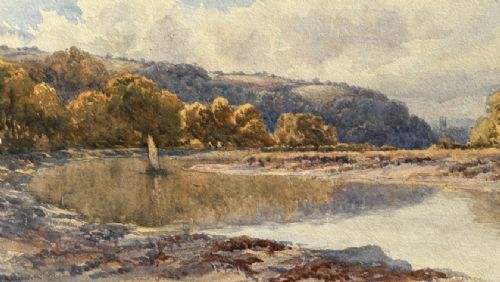
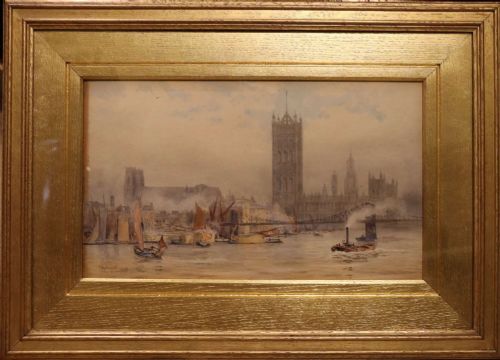
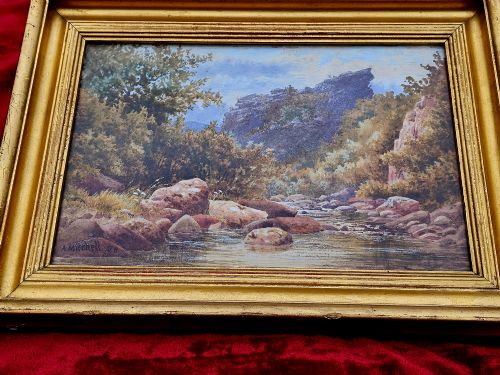
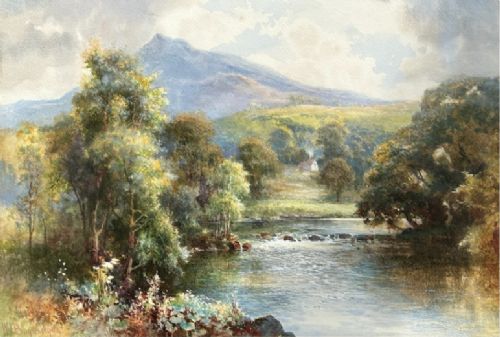
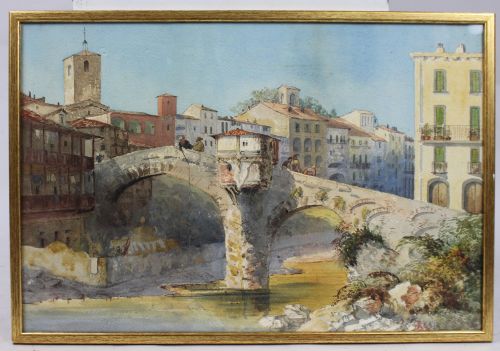
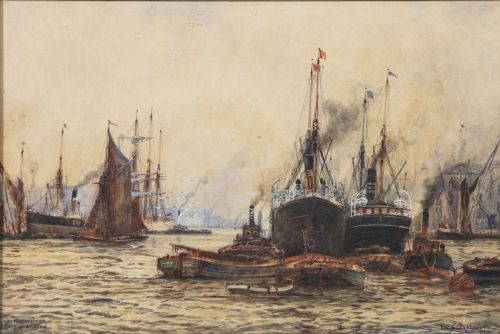
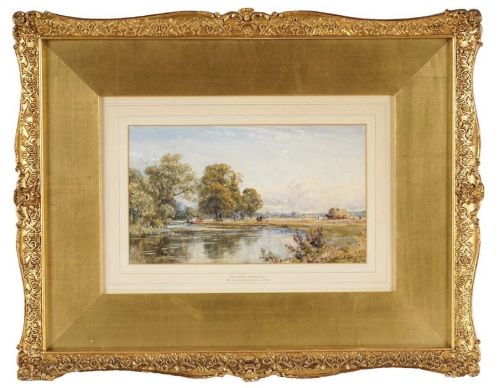
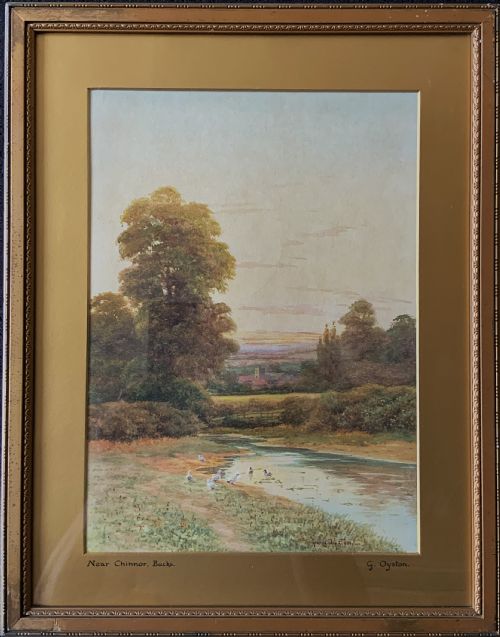
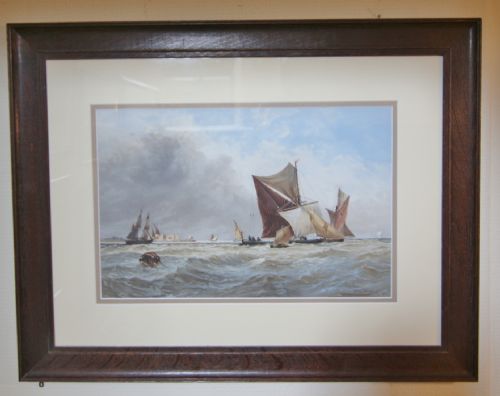
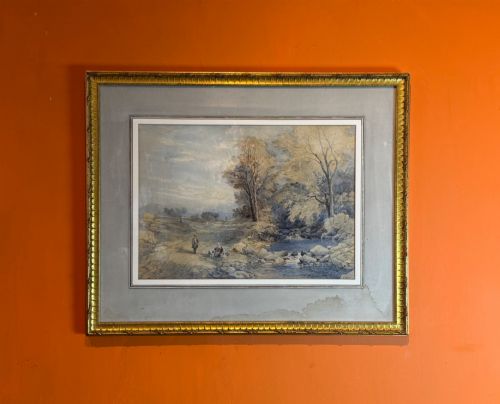
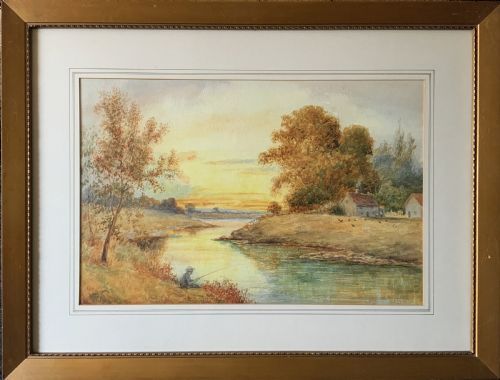
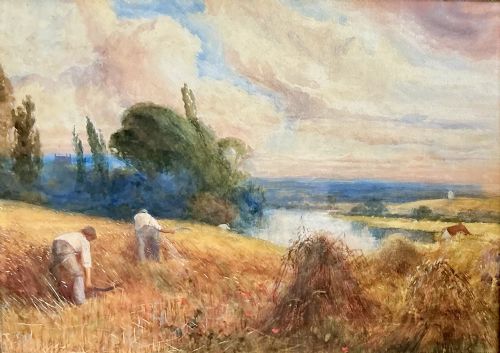
When you search for framed river watercolour art, you enter a traditional category dominated by Victorian and Edwardian British school paintings. These works typically depict pastoral river valleys, bustling estuaries, and quiet backwaters captured by regional artists.
The pieces on this page span from the mid-nineteenth century through the early twentieth century, showing a strong preference for naturalism and British Impressionism. Most examples arrive preserved behind protective glass within traditional wood and gilt frames.
Subjects range from Welsh mountain streams and Yorkshire rivers to continental ports and Thames towpaths, reflecting a period when landscape painting engaged directly with the topography of the countryside.
Materials and execution
Artists built these watercolours using finely ground pigment suspended in water, applied directly onto absorbent paper sheets to create transparent washes and opaque gouache highlights. This technique required swift precision, as watercolour allows very little room for correction once applied to paper.
Paper supports were frequently mounted on boards or stretched before painting to prevent buckling under moisture. Protective glass glazing was added during framing to shield the fragile water-soluble pigments from humidity and atmospheric pollutants.
Many Victorian river scenes tuck tiny painted cattle into the background reeds simply to make the peaceful pastoral scale feel complete.
Distinctions in quality
Superior works demonstrate confident brushwork and a subtle control of light that creates atmospheric depth across the river surface. Weaker examples often rely on rigid outlines and flat washes that fail to capture natural movement.
The integrity of the paper and the preservation of original pigments set better pieces apart from faded or heavily browned sheets. Framing that complements the period without masking the edges of the original sheet also elevates the overall standard.
H. Medlycott·William Joseph Boyes·Frank William Scrabrough·Robert Thorne Waite·George Oyston·Thomas Bush Hardy·Frederick Hines·Alfred George Morgan·Cornelius Pearson·Edwin Lord Weeks·Henry John Kinnaird·Stuart Lloyd·Thomas Hunn·David Cox Jnr·J Laporte·Colin H Greenwood·Robert Winchester Fraser·Alfred Grey RHA·George Arthur Fripp·Walter Follen Bishop·Percy Lancaster·Thomas James Lloyd·Frederick Williamson·Samuel Palmer·William Tatton Winter RBA
The Framed River Watercolour Art Glossary
- Watercolour pigment
- Finely ground colour particles mixed with a water-soluble binder. These substances settle into the fibres of the paper to create translucent layers.
- Gilt wood
- Timber framing coated with a thin layer of gold leaf or metallic paint. This finish enhances the warm tones within nineteenth-century landscape paintings.
- Wash
- A semi-transparent layer of diluted colour spread evenly across the paper. This technique establishes the expansive skies and reflective river surfaces characteristic of these scenes.
- Gouache
- An opaque watercolour paint containing added white pigment. Artists utilise this medium to add highlights of light on water and cattle.
- Provenance
- The documented history of ownership attached to an artwork. This trail helps confirm the attribution of signed nineteenth-century landscapes.
Framed River Watercolour Art: Frequently Asked Questions
How do I date an antique river watercolour?
Dating relies primarily on artist signatures, exhibition labels on the reverse, and stylistic markers typical of the nineteenth century. Costume details on figures and the specific style of the wooden frame provide further chronological clues.
Paper watermarks and inscriptions written on the backboard often confirm the exact year or decade of execution.
Are these watercolours original paintings?
Every piece listed is a unique, hand-painted original work on paper rather than a mechanical print or reproduction. Brush textures and pigment pooling remain visible under close examination.
Artists applied the paint directly by hand, making each river scene an individual artistic creation.
How should I hang watercolour art at home?
Watercolours require protection from direct sunlight to prevent the fragile pigments from fading over time. Position them on interior walls away from moisture sources like kitchens and bathrooms.
Maintain stable room temperatures to protect both the paper support and the antique wooden frame from warping.
Why are some watercolours framed under glass?
Glass acts as an essential barrier against dust, atmospheric pollutants, and physical contact that would damage the exposed paper surface. Watercolour pigment lacks the protective varnish layer found on oil paintings.
Glazing preserves the delicate paper fibres and prevents moisture from causing mould growth across the artwork.