


Framed Thames River Pictures
Framed Thames River Pictures capture the changing moods and historic architecture of London's great waterway through oils and watercolours.
Framed Thames River Pictures
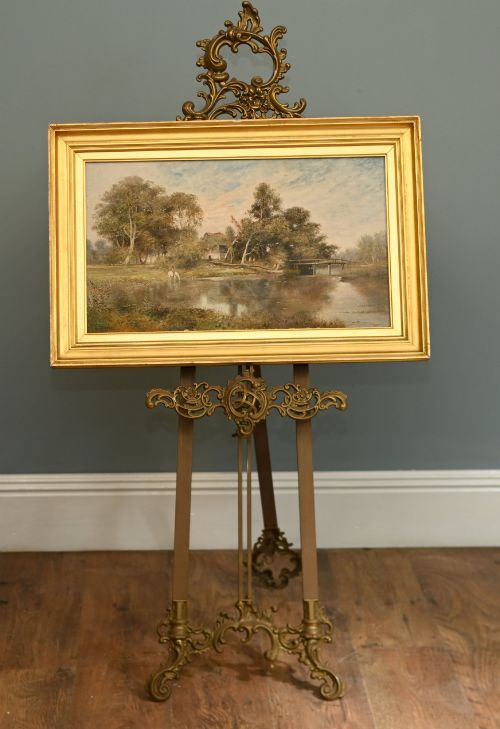
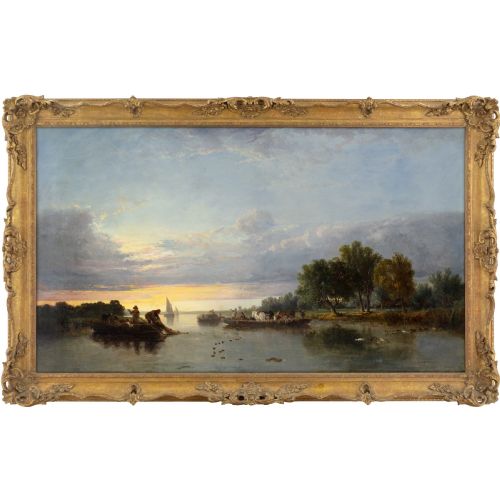
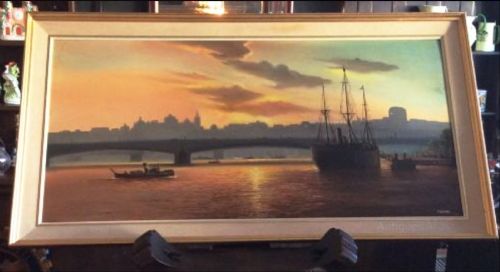
Framed thames river pictures encompass original oil paintings and delicate watercolours recording the river scenes, bridges, and castles of the capital and surrounding reaches. You will encounter works spanning the Victorian and Edwardian eras alongside mid-century interpretations.
The selections on this page centre upon maritime art, British school landscapes, and impressionistic views of locations such as Waterloo Bridge, the Tower of London, and Windsor Castle. These pieces range from expansive panoramic oils to intimate painted paper studies preserved behind glass.
Makers and artists represented include named painters of the British school working across the late nineteenth and early twentieth centuries. Each piece arrives ready to hang within its period wooden or giltwood frame.
How they were made
Artists painted these works primarily using oil on canvas or watercolour pigment on paper, applying fluid brushwork to capture river light and atmospheric haze. The resulting compositions rely on the interplay of water, sky, and stone architecture.
Protective framing utilises traditional wood constructions, often finished with gold leaf or giltwood mouldings to complement the palette of the artwork within.
Listings feature works spanning from the Victorian era through the Edwardian period and into the mid twentieth century.
What varies in quality
Quality depends upon the artist's ability to render light and movement on water, distinguishing confident, expressive brushwork from stiff or formulaic execution. The strength of the composition and the accurate depiction of architectural detail elevate certain works.
The condition and period authenticity of the accompanying frame also influence the overall standard, alongside the survival of the paper or canvas without extensive restoration.
Charles William Wyllie·Robert Winchester Fraser·Thomas Whittle the Younger·E W Haslehurst·Frank Wasley·Frank William Scarbrough·R Allan·Gordon Meadows
The Framed Thames River Pictures Glossary
- Oil on Canvas
- Pigment mixed with drying oil applied to a stretched fabric support. This technique allows for rich colour depth and textured impasto marks.
- Watercolour on Paper
- Pigments suspended in a water-soluble vehicle applied to paper. It produces translucent washes of colour particularly suited to atmospheric river scenes.
- Giltwood
- Wood carved and coated with gold leaf or metallic powder. It provides a reflective decorative border designed to frame and enhance fine art.
- Maritime Art
- Artistic works depicting ships, harbours, and coastal or river scenes. This genre focuses heavily on maritime history and nautical architecture.
Framed Thames River Pictures: Frequently Asked Questions
How do I hang heavy oil paintings?
Heavy oil paintings require sturdy picture hooks fixed directly into wall studs or secured with appropriate masonry plugs. Ensure the hanging wire and frame fixings are strong enough to support the weight.
Position the centre of the picture at eye level, typically around eye height from the floor, to achieve proper visual balance in the room.
Where should I display watercolours?
Watercolours on paper are sensitive to direct sunlight, which can fade pigments over time. Hang them on interior walls away from intense, direct rays.
Keep them away from damp areas like unventilated kitchens or bathrooms to protect the paper and the surrounding mount board from moisture damage.
How do I clean antique frames?
Dust giltwood and wooden frames gently with a soft, dry ostrich feather duster or a clean microfibre cloth. Avoid using water or chemical sprays, which can strip delicate gold leaf.
Take care not to let cleaning cloths snag on carved wooden ornaments or flaking gesso surfaces.
Can I reframe these historical artworks?
Original period frames often contribute historical context and aesthetic value to the piece. Removing an artwork from its contemporary frame should be done with caution.
Consult a professional framer if conservation-grade materials or repairs are needed to preserve the integrity of the canvas or paper.