







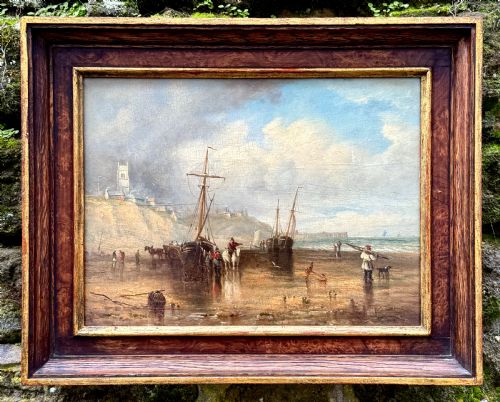
British Maritime Landscape Artwork
British maritime landscape artwork captures coastal harbours, tidal rivers and open seas through historical oils and watercolours.
British Maritime Landscape Artwork
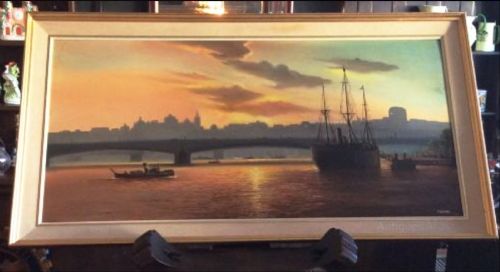
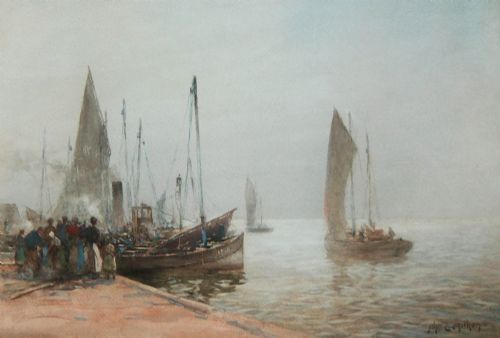
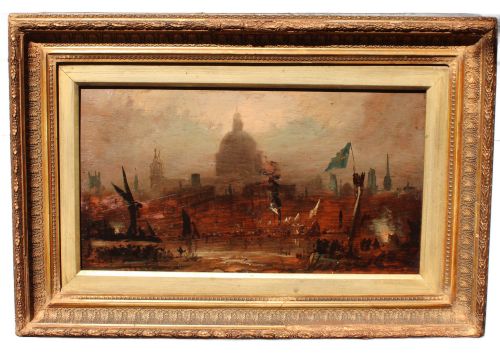
When you search for british maritime landscape artwork, you encounter painted scenes focusing on coastal views, harbours, and tidal rivers. These pieces record maritime life, shipping, and coastal topography across Britain.
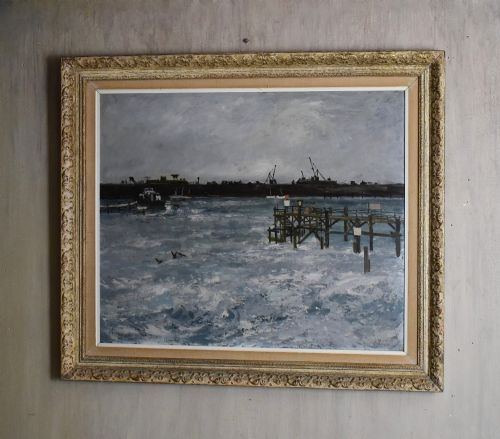
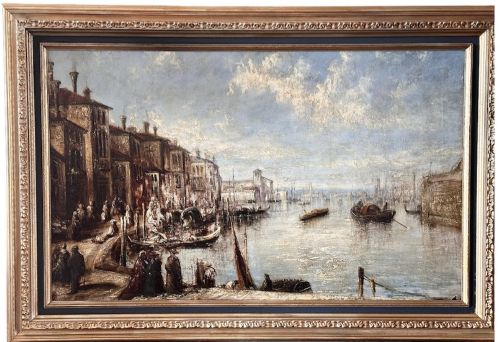
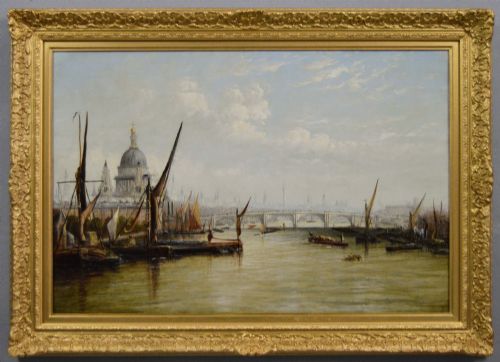
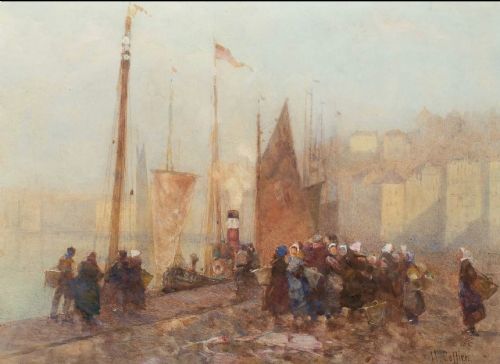
The selections available lean heavily toward nineteenth-century watercolours and oils on canvas or board. Common subjects include Cornish fishing ports, Thames river scenes, and busy northern harbours.
Works span from the early nineteenth century through the mid-twentieth century, encompassing Victorian marine art, Edwardian coastal watercolours, and later Post-War interpretations.
How They Were Made
Artists worked primarily with oil on canvas or board, and watercolour pigment on paper. Gilt wood frames frequently house these paintings, sometimes complemented by glass protection for works on paper.
Techniques range from smooth, detailed nineteenth-century brushwork to looser impasto applications and the atmospheric washes typical of traditional British watercolours.
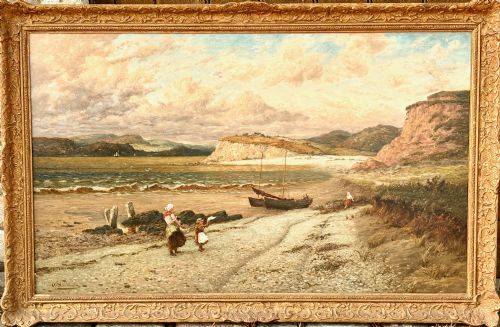
A massive six-foot Victorian canvas captures the Norfolk coast in microscopic detail.
What Varies in Quality
Quality rests upon the artist's command of light, water movement, and atmospheric perspective within the coastal setting. Stronger works capture the specific grit and atmosphere of a working harbour or open sea with assured brushwork.
Condition of the medium and the framing also divide examples, with well-preserved watercolours retaining their original pigment vibrancy and nineteenth-century oils showing stable surfaces free from excessive restoration.
James Orrock·James E. Aitken·William Banks Fortescue·Francis Moltino·Bernard Benedict Hemy·Thomas Creswick·Lucy Pratt·Donald McIntyre·John Wilson Carmichael·Abraham Cooper·William Henry Williamson·George Stanfield Walters·Henry Barlow Carter·William Frederick Settle·Charles William Wyllie·Charles William Adderton·Edward Matthew Elliott
The British Maritime Landscape Artwork Glossary
- Impasto
- Paint applied thickly to a canvas, leaving visible brush or palette knife marks that stand proud of the surface. This technique adds tactile depth and texture to water or stormy skies.
- Seascape
- A painting or other work of art that depicts the sea. It forms a primary category within maritime landscape artwork.
- Watercolour
- A paint consisting of colour suspended in a water-soluble vehicle, typically applied to paper. It was widely utilised by British artists for coastal and harbour views.
- Provenance
- The chronological history of the ownership of a piece. It helps establish authenticity and historical context for older paintings.
British Maritime Landscape Artwork: Frequently Asked Questions
What periods do these paintings cover?
The works span from the early nineteenth century through the Edwardian era and into the mid-twentieth century. Many examples originate from the Victorian period.
Later pieces extend into the nineteen-fifties and sixties, showing shifts toward Modern British and Post-War styles.
How do I care for antique watercolours?
Watercolours on paper require protection from direct sunlight to prevent fading of the pigments. Keeping them in stable humidity environments avoids paper degradation.
Glazing with appropriate conservation glass further safeguards the painted surface from atmospheric pollutants.
Where were these coastal scenes painted?
Artists painted locations all around the British coastline, with particular concentrations in Cornwall, Yorkshire, and London. Popular spots include St Ives, Whitby, and the River Thames.
Other works record scenes from Scotland, Wales, and the Isle of Man.
What is the difference between marine art and maritime landscapes?
Marine art traditionally focuses on ships, naval battles, and open water navigation. Maritime landscapes place greater emphasis on the coastal scenery, harbours, and land-based views alongside the water.
Many listed pieces bridge both categories by combining shoreline topography with active shipping.