




Original Maritime Artwork
Original maritime artwork brings together coastal views, harbour scenes and open water rendered by hand in oil, watercolour and pastel across the nineteenth and twentieth centuries.
Original Maritime Artwork
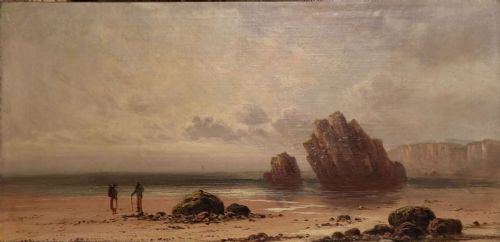
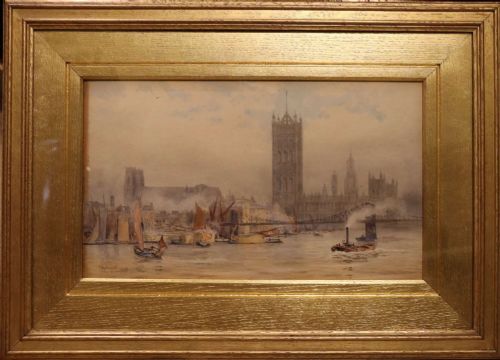
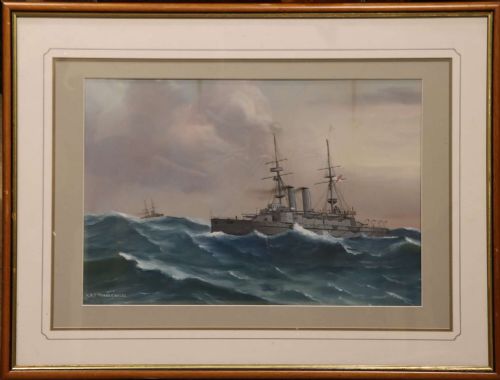
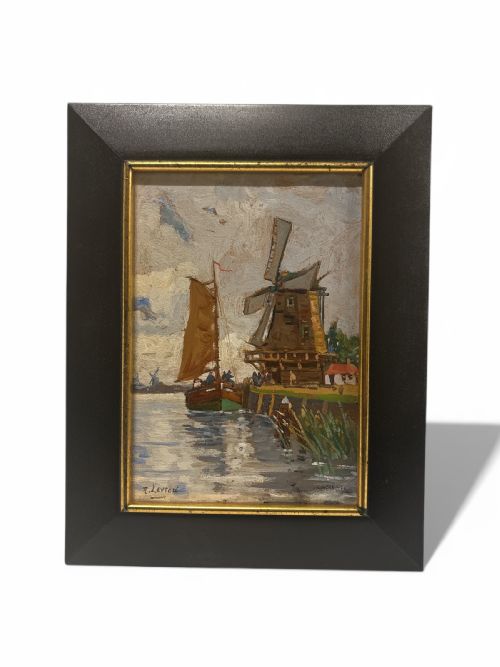
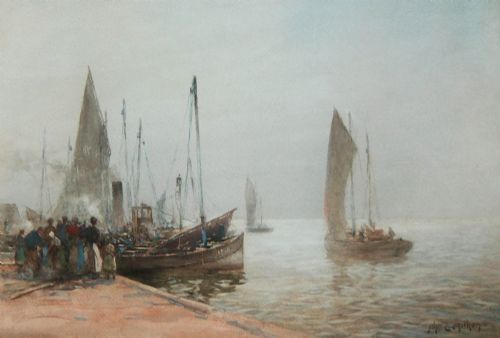
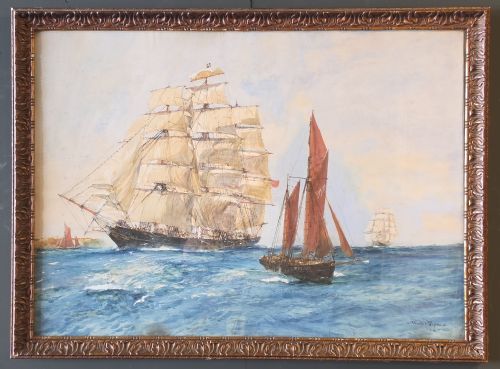
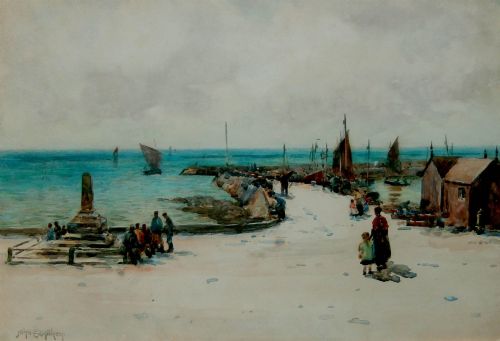
Original maritime artwork spans traditional coastal watercolours and textured oil paintings depicting fishing boats, harbours, and open seas. Collectors browsing this category encounter works from the nineteenth century through the mid twentieth century, capturing changing coastal light and maritime activity.
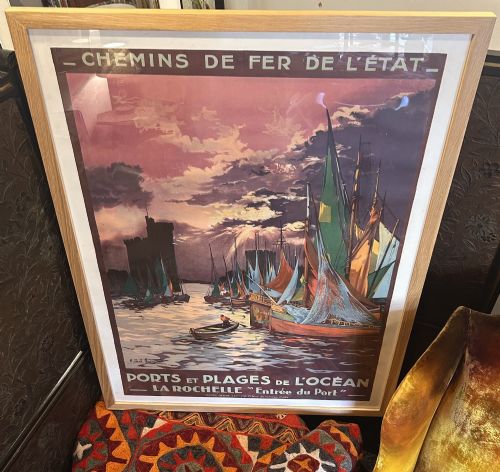
The prevailing examples on this page are British and European watercolours and oil paintings on canvas or board. These pieces range from detailed depictions of shipping vessels in northern havens to impressionistic scenes of southern beaches and French ports.
Works originate from distinct artistic movements including Victorian marine art, British Impressionism, and Post-Impressionism. Each piece records a specific coastal topography or seafaring vessel using the medium favoured by the artist of that period.
Materials and Techniques
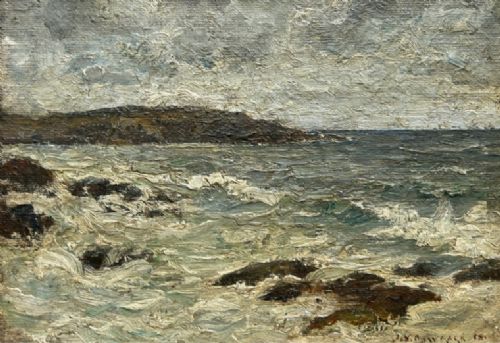
Painters applied oil and watercolour onto traditional supports such as canvas, heavy paper, wood panels, and board. Oil on canvas and board allowed artists to build thick impasto layers for rough seas, while watercolours captured transparent washes of coastal light and sky.
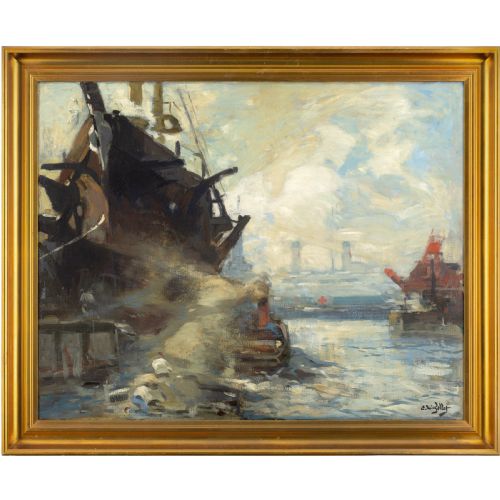
Framing often complements the composition, with many period works housed in gilt wood frames that enhance the tonal depth of the painting. Etchings and woodblock prints utilise inked plates pressed onto paper to achieve fine linear detail in shipping scenes.
The selection includes coastal views from British harbours, European ports, and international waters.
Factors That Distinguish Quality
Quality rests upon the artist's ability to handle light, atmosphere, and proportion within the maritime environment. Superior works demonstrate confident brushwork and precise draughtsmanship in rigging, hulls, and coastal architecture.
The preservation of the pigment and support determines the integrity of the piece over time. Works maintained away from excessive moisture retain the original vibrancy of watercolours and the stable surface of oil paintings.
James Orrock·Eugène-Louis Gillot·Charles Edward Dixon·William Lionel Wyllie·Francis Moltino·Bernard Benedict Hemy·Abraham Hulk I
The Original Maritime Artwork Glossary
- Impasto
- Paint applied thickly to a canvas or board, creating a textured surface that stands out from the plane. This technique gives physical weight to crashing waves and turbulent skies.
- Watercolour
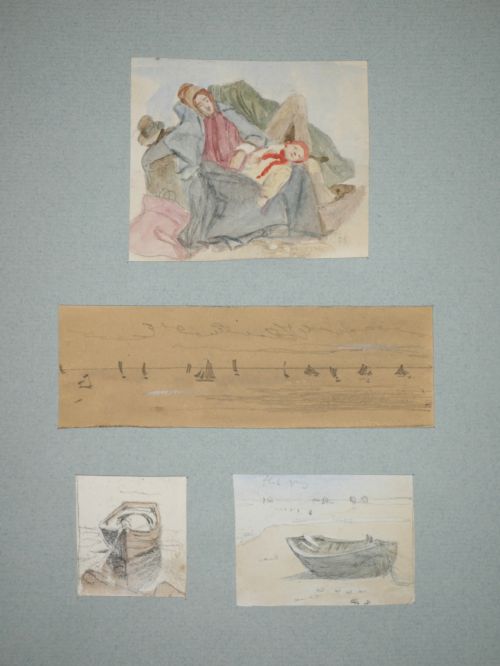
- A paint consisting of pigment suspended in a water-soluble vehicle, typically applied to paper. It allows for luminous, translucent washes that capture coastal atmospheres.
- Oil on Canvas
- Pigment mixed with drying oil applied to a stretched woven fabric support. This traditional medium offers rich colour depth and longevity.
- Etching
- A printmaking process where lines are incised into a metal plate with acid before ink is applied and pressed onto paper. It produces fine, detailed lines suited to nautical rigging.
Original Maritime Artwork: Frequently Asked Questions
What subjects appear in maritime art?
These works typically depict sailing vessels, fishing boats, harbour activities, and coastal landscapes. Artists recorded specific ports, naval engagements, and daily maritime life.
Scenes range from calm inland river traffic to stormy coastal seascapes executed in oil or watercolour.
How do I date a maritime painting?
Dating relies on the costume of figures, the type of watercraft depicted, and stylistic markers of the period such as Victorian or Post-Impressionist techniques. Signatures, artist biographical dates, and framing styles also provide chronological clues.
Many works include artist inscriptions or gallery labels on the reverse that record the exact year of creation.
How should I frame and display these works?
Original paintings and watercolours require protective framing behind glass or in stable wooden mouldings to prevent environmental damage. Acid-free mounts preserve works on paper from discolouration.
Display the artwork away from direct sunlight and high humidity to protect the pigments and paper supports.
What is the difference between oil and watercolour marine paintings?
Oil paintings utilise pigment bound in drying oil on canvas or board, offering rich textures and deep tones suitable for dramatic seascapes. Watercolours use water-soluble pigments on paper, producing lighter, translucent effects.
Oils are generally more resilient, whereas watercolours require careful protection from light and moisture.