





British Coastal Landscape
When seeking a british coastal landscape, you are looking at paintings that capture shores, harbours and seas through centuries of changing light.
British Coastal Landscape
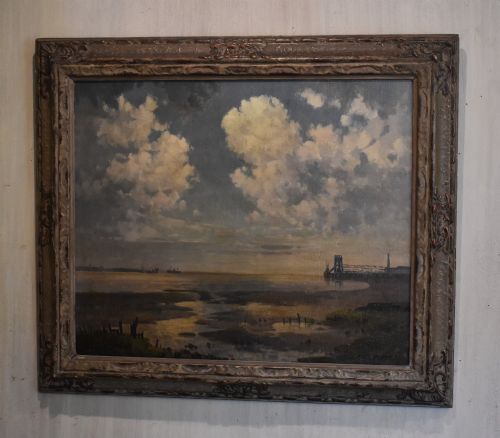
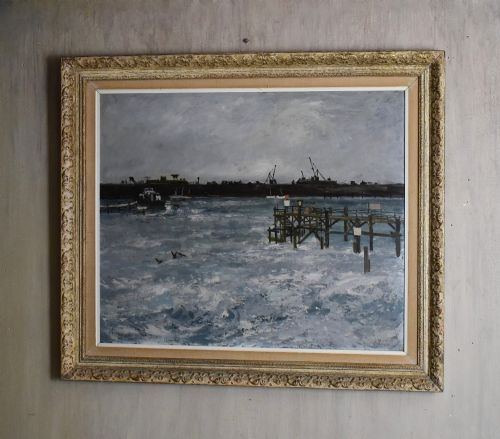
A british coastal landscape records the shifting moods of the shore, from tranquil estuaries to crashing waves against rocky cliffs. The works span from the nineteenth century into the mid-twentieth century, capturing familiar ports, fishing boats and quiet bays.
Most pieces you encounter here emerge from Victorian marine art traditions, Edwardian watercolours or mid-century British modernism. Painters worked en plein air or in studios, translating the maritime geography of Cornwall, Yorkshire, Wales and Scotland onto canvas, board and paper.
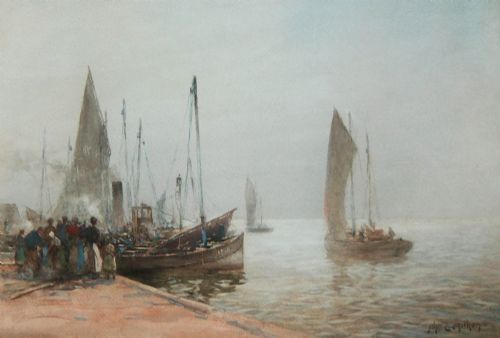
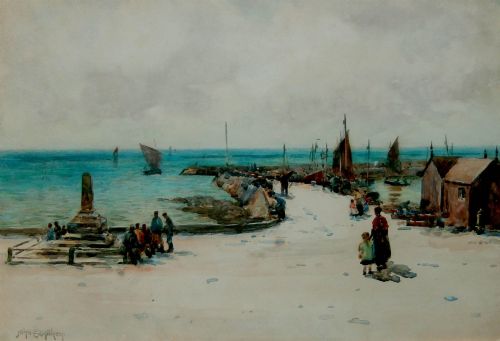
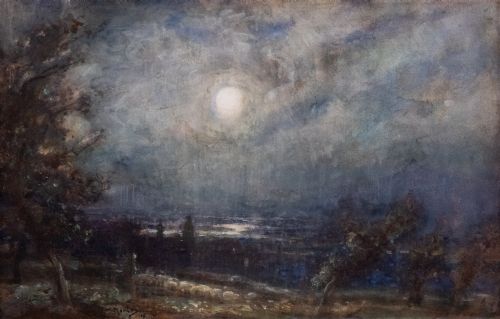
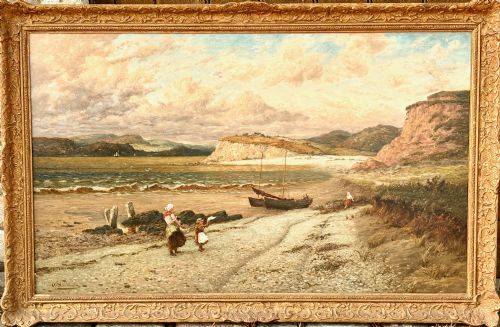
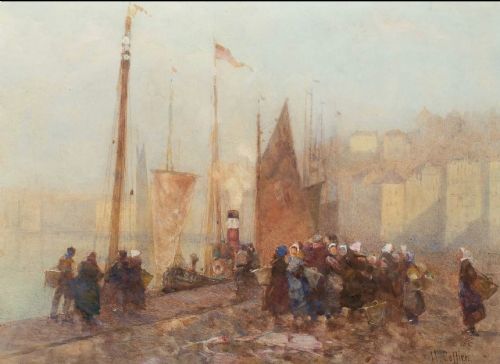
The subjects range widely, depicting bustling fishing docks with rigging and sails, moonlit harbours, smugglers on coastal paths and expansive sandy beaches. Each canvas or sheet preserves a specific topography, recording maritime history through the eyes of local and visiting artists alike.
Materials and Techniques
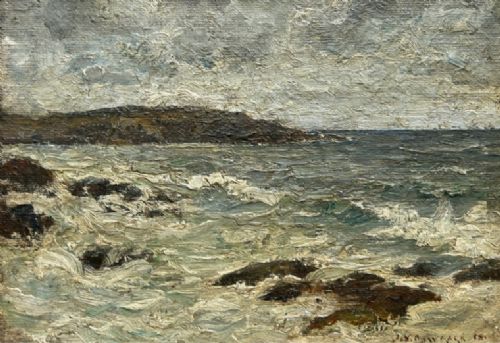
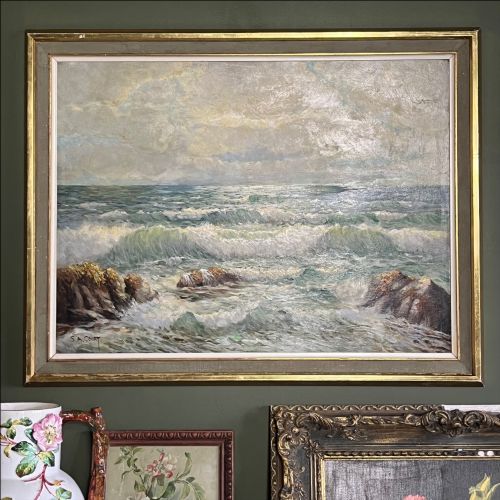
Artists utilised oil paint and watercolour pigment to capture the transparency of water and the dense weight of sea mists. Oil paintings appear on stretched canvas or wooden board, offering rich impasto textures that build the physical presence of cliffs and crashing surf.
Watercolour paintings rely on absorbent paper surfaces, using washes to render luminous skies and shimmering light on coastal tides. Some compositions incorporate ink or woodblock elements, while others depend purely on the fluid interplay of pigment and water.
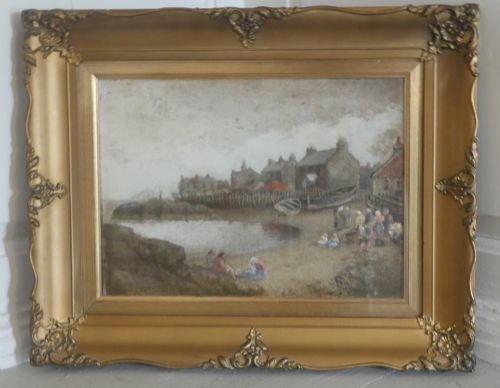
Framed watercolours and oils often retain their period character, mounted behind glass or presented in gilt wooden frames suited to the aesthetic of their respective decades.
Materials documented across the works include watercolour pigment, oil paint, board, canvas and paper, reflecting diverse British artistic traditions.
Distinctions in Quality
Quality rests in the handling of atmospheric light and the confidence of the brushwork. Superior pieces demonstrate a mastery of tone that suggests distance, moisture in the air and the specific time of day without relying on laboured detail.
Compositional balance separates exceptional works from routine topographical records. The strongest paintings arrange boats, buildings and shorelines to guide the eye naturally across the surface, creating depth and a distinct emotional resonance.
James Orrock·Clifford Hanney·Sidney A Court·James E Aitken·John E Aitken·William Banks Fortescue·Thomas William Morley·Lucy Pratt·Clive Browne·Peter Brannan·Hector Caffieri·Bernard Benedict Hemy·Thomas Creswick·James Fry·Ethel Sands·Thomas Maidment·Donald McIntyre·Cecil Allan Mould·John Wilson Carmichael·Alfred G Morgan·Abraham Cooper·William Matthison·William Henry Williamson·John Holland·Frank Kelsey
The British Coastal Landscape Glossary
- En Plein Air
- Painting outdoors to capture direct observation of light and weather. This method became popular in the nineteenth century as portable paint tubes allowed artists to work directly on the shore.
- Impasto
- Paint applied thickly to a canvas or board, leaving visible brush or palette knife marks. This technique adds tactile three-dimensional depth to crashing waves and rugged cliffs.
- Marine Art
- Artwork focused primarily on the sea, ships, harbours and coastal views. It encompasses historical naval scenes as well as quiet domestic depictions of fishing fleets.
- Watercolour
- A paint consisting of water-soluble pigment applied to paper. It relies on the white of the paper shining through translucent washes to create luminosity.
- Post-Impressionism
- An art movement extending roughly from the last decades of the nineteenth century into the mid-twentieth century. Painters rejected strict naturalism in favour of expressive use of colour and form.
British Coastal Landscape: Frequently Asked Questions
What defines a british coastal landscape?
These works depict shores, harbours, cliffs and maritime activity located around the British coastline. They encompass media ranging from detailed nineteenth-century watercolours to mid-century modern oil paintings.
Artists focused on recording local topography, fishing fleets, tides and coastal weather patterns, preserving historical views of specific ports and bays.
How do I care for antique watercolours?
Watercolour paintings on paper require careful placement away from direct sunlight to prevent fading of the pigments. Framing behind glass protects the paper surface from atmospheric moisture and dust.
Maintain stable indoor humidity and temperature levels to prevent the paper from warping or developing foxing spots over time.
How can I tell periods apart?
Nineteenth-century works often display meticulous detail in rigging and architecture, accompanied by romantic skies and subdued tonal palettes. Victorian pieces frequently lean towards narrative maritime subjects.
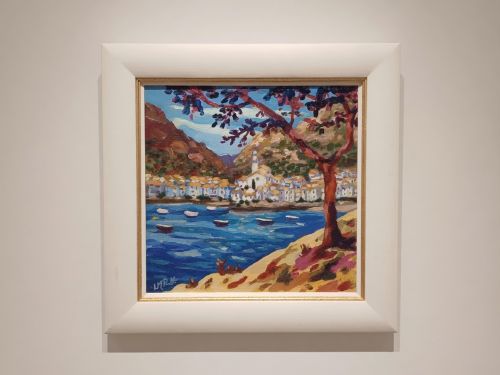
Mid-century paintings shift towards bolder brushstrokes, simplified forms and expressive interpretations of light, reflecting the influence of modern British art movements.
Where were these paintings created?
Many artists travelled to specific painting hubs such as St Ives in Cornwall, Whitby in Yorkshire, or various locations along the Dorset and Scottish coasts. They set up easels outdoors to capture local fishing vessels and harbour life.
Studio finishing often followed initial en plein air sketches made directly on the shore.