






British Coastal Landscape Art
British coastal landscape art captures the changing light and harbours of the shoreline through oil and watercolour from the nineteenth century onward.
British Coastal Landscape Art
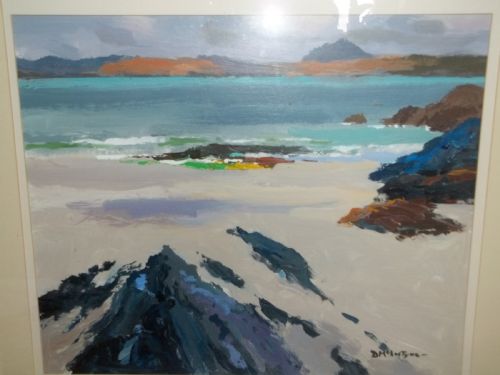
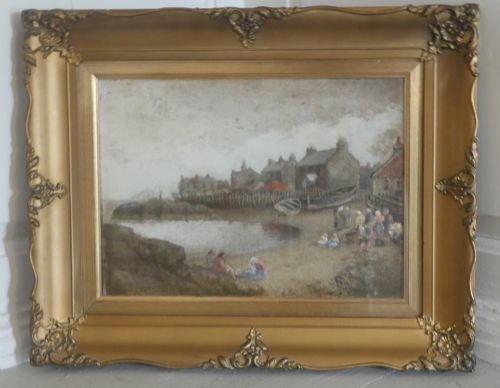
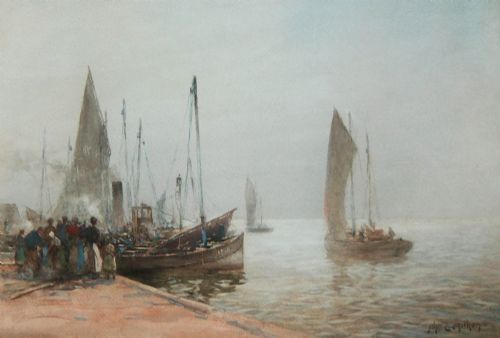
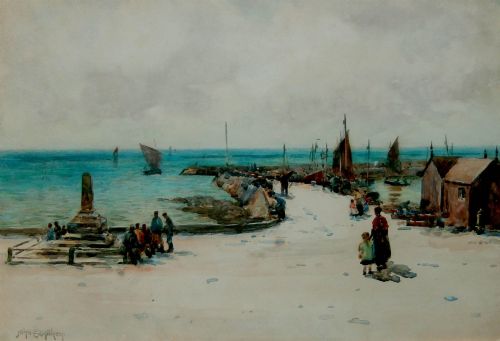
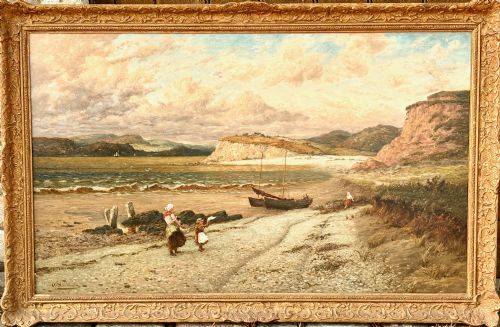
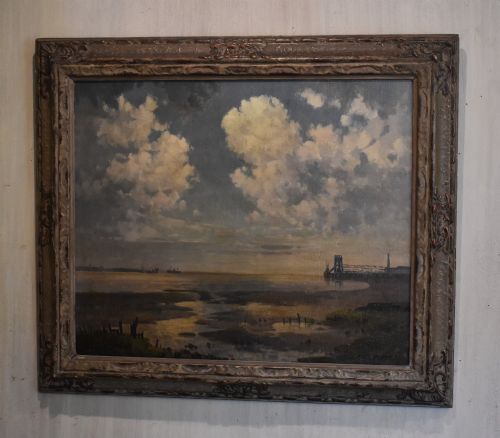
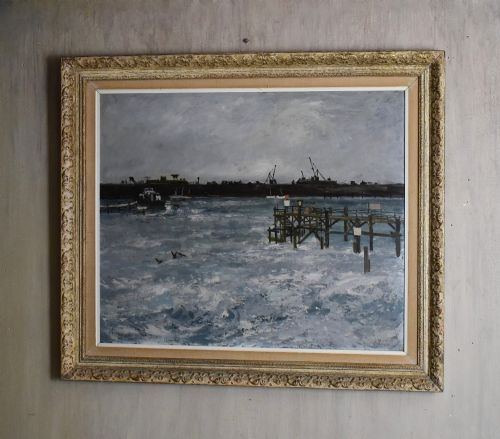
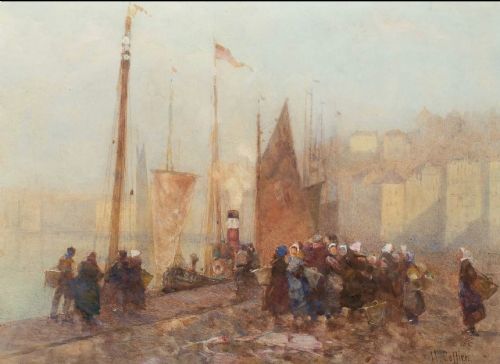
British coastal landscape art encompasses paintings depicting shores, fishing boats, and maritime views across England, Scotland, and Wales. The works on this page span from the nineteenth century into the mid twentieth century, covering Victorian scenes to modern interpretations.
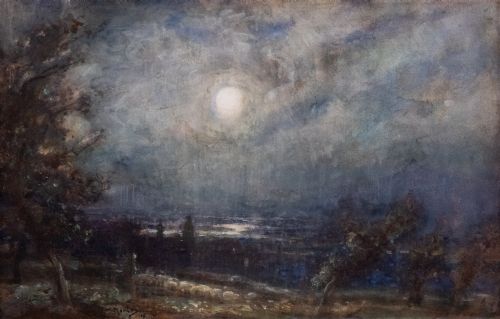
Buyers encounter oil paintings on canvas and board alongside delicate watercolour paintings on paper. Subjects range from busy Yorkshire harbours and Cornish fishing ports to quiet Dorset bays and moonlit shores.
The selection represents varied artistic movements, including Victorian marine art, British Impressionism, and mid-century modern styles. Painters record specific locations such as Whitby, St Ives, Scarborough, and Brighton with regional precision.
Materials and technique
Artists painted on stretched canvas, wooden panels, and heavy paper supports using oil paint and watercolour pigment. Oil paint allowed for textured impasto applications and rich colour blending, while watercolour offered translucent washes applied en plein air.
Watercolour paintings rely on the white of the paper for highlights, supplemented by gum arabic to deepen tones. Oil paintings utilise wood boards or primed canvas, sometimes showing direct brushwork completed outdoors beside the sea.
Several Victorian artists included stubborn horses hauling fishing boats ashore, ensuring the salt spray felt genuinely hard-earned.
Quality and execution
Quality rests in the artist's handling of coastal light, atmosphere, and maritime perspective. Superior pieces demonstrate confident brushwork and precise topographical observation rather than formulaic studio repetition.
Condition of the paper or canvas affects value, particularly with watercolours susceptible to fading or foxing. Original framing and clear artist signatures or attribution elevate the standing of an individual work.
James Orrock·Clifford Hanney·Sidney A Court·Edward Mills·James E Aitken·John E Aitken·William Banks Fortescue·Thomas William Morley·Clive Browne·Peter Brannan·Hector Caffieri·Bernard Benedict Hemy·Thomas Creswick·James Fry·Ethel Sands·Thomas Maidment·Donald McIntyre·Cecil Allan Mould·John Wilson Carmichael·Alfred G Morgan·Abraham Cooper·William Matthison·William Henry Williamson·John Holland·Frank Kelsey
The British Coastal Landscape Art Glossary
- Impasto
- Paint applied thickly to a canvas or board so that it stands proud of the surface. This technique creates physical texture that catches the light and adds depth to water or sky.
- En plein air
- Painting outdoors in direct contact with the subject matter. This method allowed artists to capture rapid changes in weather and coastal light.
- Foxing
- Brown spots and discolouration that appear on old paper caused by chemical reactions over time. It is commonly found in nineteenth-century watercolours.
- Maritime art
- Works depicting ships, harbours, coastal architecture, and marine weather. The genre ranges from strict documentary records to expressive landscape interpretations.
- Watercolour pigment
- Finely ground colour mixed with a water-soluble binder, traditionally gum arabic. It is applied in thin washes to paper to achieve luminous effects.
British Coastal Landscape Art: Frequently Asked Questions
How do I identify the age of a coastal painting?
Examine the support material, framing methods, and the style of the brushwork. Nineteenth-century works often use heavy gold leaf frames and muted academic palettes, whereas mid-century pieces favour simplified forms and lighter boards.
Signatures, exhibition labels on the reverse, and artist biographical dates provide definitive clues. Comparing the subject to historical depictions of places like Whitby or St Ives helps narrow the decade.
What is the difference between oil and watercolour coastal art?
Oils offer rich textures, deep impasto, and durable surfaces on canvas or wood board. Watercolours provide luminous transparency on paper, capturing fleeting coastal mists and bright skies.
Oils tolerate cleaning and changing environments more easily than watercolours. Watercolours require framing behind glass to protect the paper from moisture and light damage.
Where were most British coastal scenes painted?
Artists congregated around active fishing ports and scenic bays in Cornwall, Yorkshire, and the Scottish coastline. Locations like St Ives, Scarborough, and Whitby attracted colonies of painters seeking maritime subjects.
South coast destinations such as Brighton and Dorset also inspired numerous Victorian and twentieth-century interpretations. These regions offered varied topography, from chalk cliffs to bustling commercial harbours.