




Maritime Oil Art Pair
These maritime oil art pair selections bring nineteenth-century coastal life and open waters into your rooms through matched canvas works.
Maritime Oil Art Pair
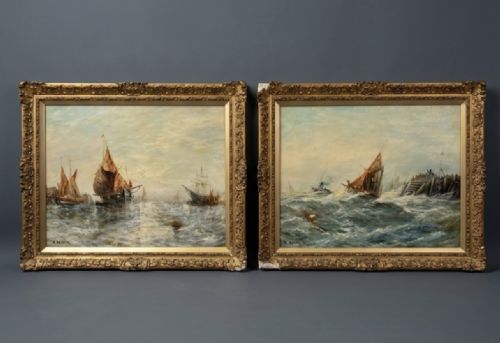
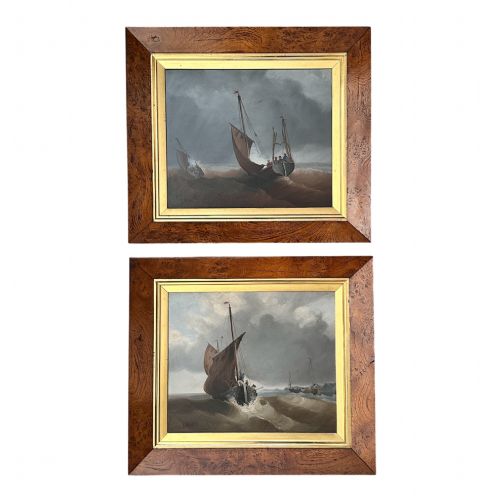
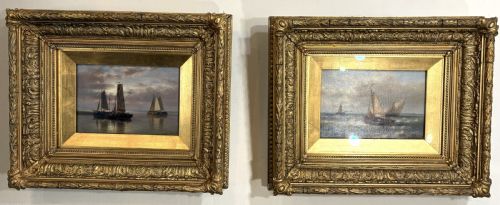
When you search for a maritime oil art pair, you look at matched canvas or board compositions depicting coastal scenes, shipping vessels, and stormy or calm seas. The evidence shows these predominantly stem from the Victorian and Edwardian eras, spanning the nineteenth and early twentieth centuries.
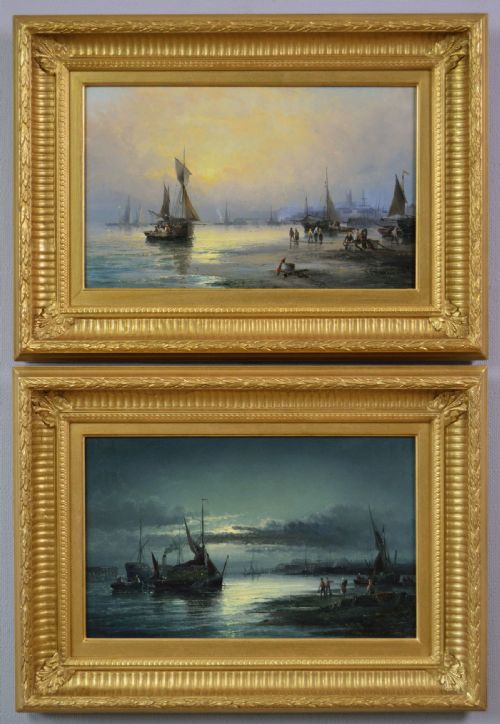
The most common version you meet on this page is a matched pair of framed oil paintings depicting complementary coastal moments, such as sunrise and sunset or companion ports. Artists painted these works to hang side by side, balancing light, water, and vessel placement across two distinct surfaces.
How they were made
Artists applied oil paint onto stretched canvas or wooden board substrates, building up layers to capture the texture of rough water and the luminosity of skies. These mediums allowed painters to blend pigments smoothly and achieve deep tonal variations in marine settings.
Makers housed these works in wooden frames finished with gesso, gold leaf, or giltwood, providing a decorative border that complemented the maritime subject matter. The framing technique typically utilised ornate mouldings to enhance the visual weight of the paired canvases.
The listings show works exclusively created in oil paint, utilising canvas and board supports paired with giltwood and gesso frames.
What varies in quality
The skill of the brushwork and the precision in rendering rigging, hull structures, and atmospheric light set superior works apart from simpler decorative pieces. Master painters captured specific coastal locations and weather conditions with convincing movement and depth.
The originality and preservation of the accompanying gilt frames also influence the standing of a pair, as matched period mouldings complete the intended presentation. Works bearing clear signatures by recorded nineteenth-century marine artists generally represent the higher tier of these offerings.
John Moore of Ipswich·Abraham Hulk I·Gustave De Bréanski·Pieter Cornelis Dommersen·Adrian Van Porten·George Dodgson Callow·Ebeneezer Colls·Hubert Thornley·John James Wilson·Walter Meegan·Thomas Rose Miles RCA·John Mc Ghie·Francis Moltino·Walter Williams·B. Nash
The Maritime Oil Art Pair Glossary
- Canvas
- A heavy woven fabric stretched across a wooden stretcher bar to serve as the foundation for oil paintings. It provides a flexible and durable surface that holds layered brushwork effectively.
- Giltwood
- Wood carved and coated with a thin layer of gold leaf or metallic gilt powder. This material defined the ornate frames surrounding nineteenth-century marine paintings.
- Gesso
- A plaster-like preparation mixture used to coat wooden frames before gilding. It created a smooth surface capable of holding intricate moulded relief details.
- Seascape
- A work of art depicting the sea, coastal views, or marine shipping scenes. These compositions formed the primary subject matter for nineteenth-century maritime painters.
Maritime Oil Art Pair: Frequently Asked Questions
How should I hang a maritime oil art pair?
Hang the two paintings at eye level on a clear wall space, maintaining a consistent gap between them so the horizon lines align. This placement allows the matched subjects, such as sunrise and sunset companions, to be viewed together as a single visual narrative.
Ensure the frames match the surrounding interior woodwork and avoid direct, harsh sunlight that could damage the nineteenth-century oil pigments over time.
What subjects appear in these marine paintings?
The works depict coastal scenes, shipping vessels on the Thames or the Channel, fishing boats near Dutch and British shores, and rough seas off Scarborough. Painters recorded active maritime trade and coastal weather during the Victorian and Edwardian periods.
Many compositions focus on specific ports, barques, and estuaries, capturing the working maritime life of the nineteenth century.
How do I identify a Victorian marine painting?
Look for the characteristic use of oil paint on canvas or board, combined with heavy giltwood or gesso frames typical of the nineteenth century. Subject matter often centres on sail boats, steam shipping, and dramatic coastal weather.
Signatures, artist dates, and traditional framing methods help confirm the nineteenth-century origins of these paired works.
Did artists paint these pairs together?
Painters created these works as companion pieces designed to hang side by side, often exploring contrasting times of day or complementary coastal views. The matching dimensions and unified palettes indicate a single artistic conception.
Artists occasionally signed both canvases or boards to confirm their origin as an intentional pair.