




Gilt Wood Marine Artwork
These gilt wood marine artwork pieces capture nineteenth century coastal scenes and maritime history within traditional gilded frames.
Gilt Wood Marine Artwork
A search for gilt wood marine artwork directs attention toward framed paintings and watercolours depicting seascapes, ships, and coastal harbours. The examples seen here predominantly date from the nineteenth century and the Edwardian period, capturing maritime subjects in oil and watercolour.
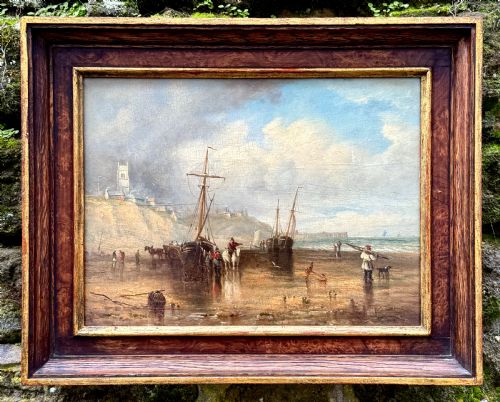
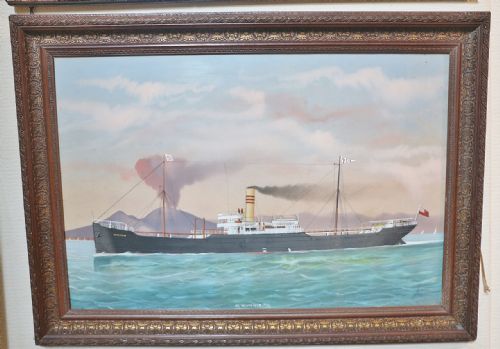
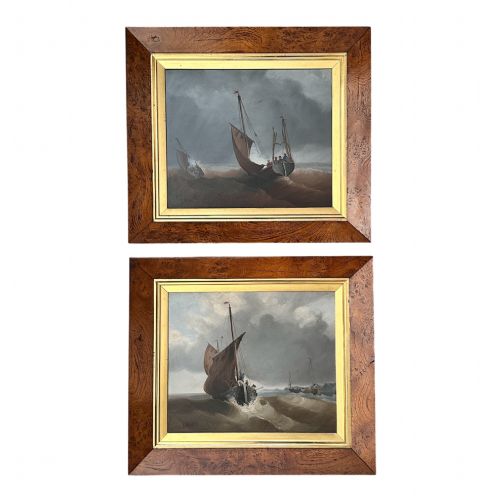
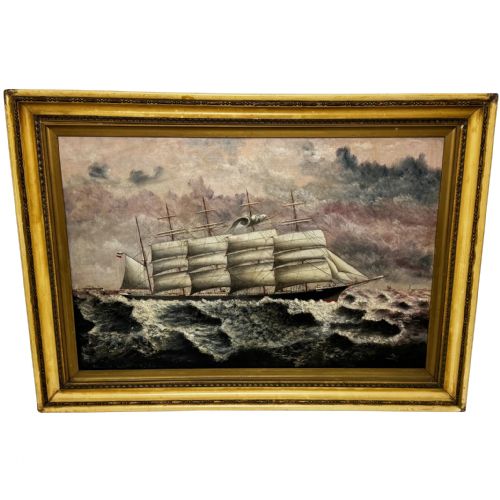
Buyers encounter oil paintings on canvas and board alongside delicate watercolours, all mounted within decorative gilded timber frames. Subjects range from large sail ships in rough seas and calm Italian harbours to specific coastal locations such as Whitby and the Isle of Wight.
Materials and construction
The physical objects combine painted surfaces on canvas, paper, or wood panels with elaborately gilded wooden frames. Artists utilised oil paints and watercolours to render the depth of water and movement of shipping vessels.
Frames employ wood as a base material, shaped and finished with layers of gilt to complement the maritime scenes. Glass occasionally protects works on paper such as watercolours.
A Newfoundland dog makes a surprise appearance amongst the ships and stormy seas.
Assessing quality
Quality rests upon the skill of the artist in handling light, water, and atmospheric conditions within the painting. Works by recorded painters display finer control over marine architecture and coastal detail than anonymous student pieces.
The craftsmanship of the gilt wood frame contributes significantly to the overall piece. Hand-enamelled polychrome frames or deep gilded mouldings indicate higher production standards and period authenticity.
Thomas Creswick·John Moore of Ipswich·Fred Waugh·Alfred Pollentine·Charles Martin Powell
The Gilt Wood Marine Artwork Glossary
- Seascape
- A painting or watercolour depicting the sea, coastal views, or marine vessels in motion. These works form the core of maritime art collections.
- Gilt
- A thin layer of gold leaf applied to wood to create decorative frames. This finish enhances the visual impact of the artwork contained within.
- Watercolour painting
- Art created using water-soluble pigments on paper. Such works require glass protection within their frames to prevent moisture damage.
- Oil on panel
- A painting executed on a flat wooden board rather than stretched canvas. This medium provides a rigid support often utilised in nineteenth century marine works.
Gilt Wood Marine Artwork: Frequently Asked Questions
What periods do these pieces represent?
The selection spans the nineteenth century, Victorian era, and early twentieth century Edwardian period.
Most items date between eighteen hundred and nineteen thirty, reflecting historical maritime painting traditions.
Are the frames original to the paintings?
Many pieces retain their period gilt wood frames, which were designed specifically to complement the maritime subject matter.
Frames incorporate gilded finishes and occasionally hand-enamelled polychrome details typical of nineteenth century framing.
What subjects appear in these artworks?
Paintings portray ships at sea, coastal harbours, fishing boats in choppy waters, and specific locations like Venice and the Thames.
Artists record active shipping alongside calm estuaries and dramatic coastal cliffs.
How should I care for a gilt wood frame?
Keep gilded wooden frames away from direct sunlight and excessive moisture to preserve the metallic leaf.
Dust gently with a dry, soft cloth without applying cleaning liquids or polishes.