
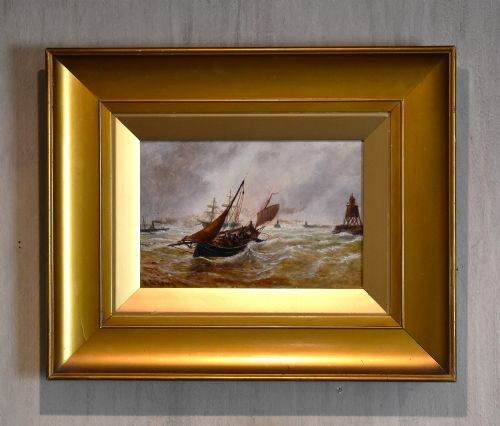


Nineteenth Century Marine Oils
Nineteenth century marine oils capture coastal trade and shipping on canvas, offering a direct view of maritime heritage that collectors prize for historical depth.
Nineteenth Century Marine Oils
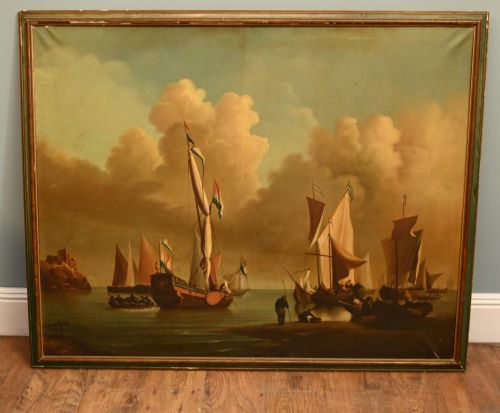
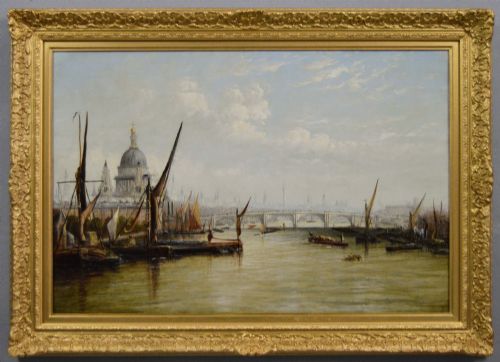
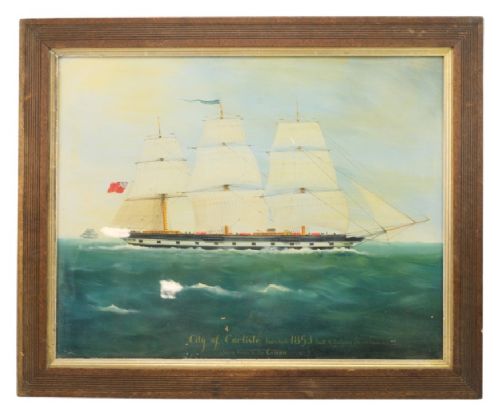
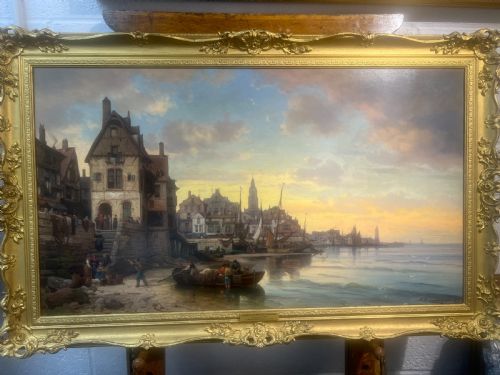
When you search for nineteenth century marine oils, you encounter framed canvases depicting coastal scenes, harbour traffic, and deep-water shipping. These paintings range from busy urban river views to quiet fishing ports and dramatic open seas.
The selections span various decades of the 19th Century and reach into the early 20th century, capturing shifts from Victorian realism to British impressionism and post-impressionism. Works often feature specific locations such as Venice, the Thames, or domestic fishing harbours.
Pairs of coastal scene oil paintings appear alongside large individual canvases and townscapes. Buyers frequently find signed works by named artists as well as pieces attributed to English and continental schools.
Materials and technique
Painters applied oil paint to stretched canvas, often mounted on wood supports, building texture with brushwork and sometimes using gesso and gold leaf within ornate frames. Giltwood and gilt wood frames frequently complement the palette of the canvas.
Artists handled light and weather through layered pigments, capturing sunrise, sunset, and overcast maritime atmospheres. Techniques range from the tight precision of Victorian realism to looser brush strokes seen in impressionist and post-impressionist works.
Fishermen haul their daily catch on nineteenth-century canvas while sailors brave choppy waters under heavy golden frames.
Judging quality in maritime canvases
Quality rests on the artist's command of maritime architecture, rigging, and water movement, distinguishing careful observation from formulaic studio production. Stronger pieces convey atmospheric light and convincing spatial depth rather than flat, static harbour views.
Condition of the oil paint and canvas surface matters greatly, alongside the integrity of the original giltwood or gilt frame. Works that retain their surface varnish and show minimal past restoration hold greater appeal for serious collectors.
Francis Moltino·Bernard Benedict Hemy·William Greaves·Charles Malfroy·George Dodgson Callow·Jane Vivian·Thomas Rose Miles·H. Hadfield Cubley·Henri Ottman·Alfred Pollentine·Samuel John Milton Brown·Frank Myers Boggs·William Edward Webb·Hubert Thornley·Ralph Hedley·Samuel Bough
The Nineteenth Century Marine Oils Glossary
- Oil on Canvas
- A traditional painting medium where coloured pigments suspended in drying oils are applied to a woven fabric support. This combination allows for rich colour blending and durable surface textures.
- Giltwood
- Timber carved and coated with gold leaf or gold paint, frequently used for period picture frames. It provides a reflective border that isolates the painting from its surroundings.
- Victorian Realism
- An artistic approach focusing on accurate, detailed representation of everyday subjects and contemporary life. In marine art, this translates to precise depictions of vessels and rigging.
- Gesso
- A plaster-like mixture applied to wood or canvas as a base for painting or frame gilding. It creates a smooth, absorbent surface that holds fine decorative details.
- British Impressionism
- A painting style influenced by French movements, focusing on light, colour, and looser brushwork. Artists working in this manner prioritized transient atmospheric effects over strict topographical accuracy.
Nineteenth Century Marine Oils: Frequently Asked Questions
How do I identify nineteenth century marine oils?
Examine the canvas substrate, framing materials, and stylistic cues such as Victorian realism or early impressionism. Pigment behaviour and canvas preparation often indicate nineteenth-century workshop practices.
Look for artist signatures, biographical dates, and subject matter tied to 19th-century shipping, trade, or coastal expansion. Documentation or attribution to regional schools further helps confirm the period.
Where were these marine paintings created?
Artists painted these scenes across British and European coastal locations, river ports, and international harbours. Many works record specific sites such as Venice, Rotterdam, or domestic fishing stations.
Painters often travelled to the coast to sketch en plein air before finishing large canvases in studio settings. Urban waterways like the Thames also served as major subjects for Victorian artists.
How should I display a framed oil painting?
Hang paintings away from direct sunlight and fluctuating heat sources to protect the oil paint and canvas from drying out. Stable indoor humidity prevents warping in both the wooden stretchers and the giltwood frames.
Ensure wall fixings adequately support the combined weight of the canvas and its heavy decorative frame. Proper placement at eye level enhances visual engagement with the maritime scene.
What subjects appear in these maritime scenes?
Common subjects include working fishing boats, commercial barques, coastal trade vessels, and harbour architecture. Scenes frequently capture daily maritime labour, from net hauling to troops embarking for military campaigns.
Artists also focused on atmospheric coastal conditions, rendering calm lagoons, choppy harbour entrances, and serene sunsets over water. Both bustling commercial ports and quiet fishing beaches feature prominently.