





British Coastal Artwork
British coastal artwork captures the enduring character of seaside harbours, fishing fleets and rugged shores through traditional paintings.
British Coastal Artwork
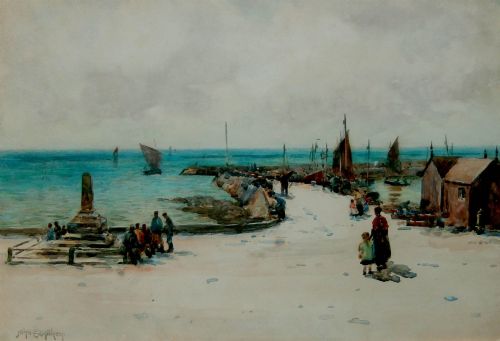
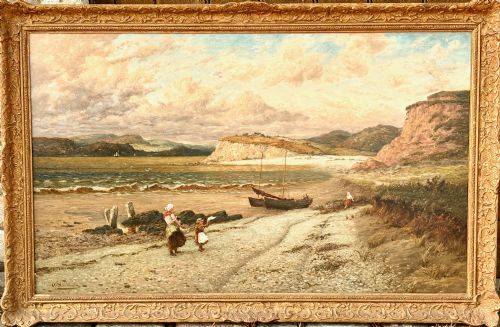
British coastal artwork comprises paintings depicting maritime views, fishing ports and shorelines created across the nineteenth and twentieth centuries. These pieces record historical harbours, coastal paths and sea activity from locations including Cornwall, Yorkshire and Scotland.
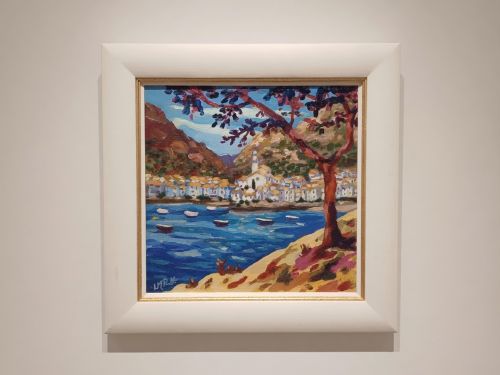
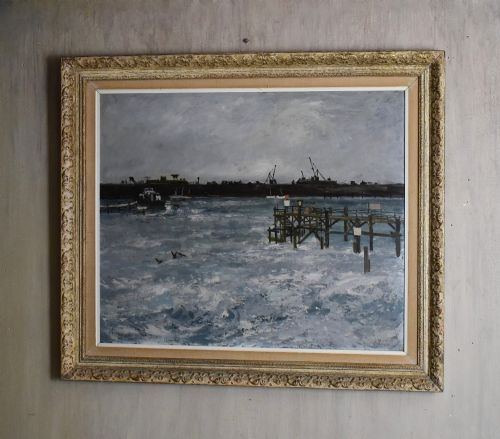
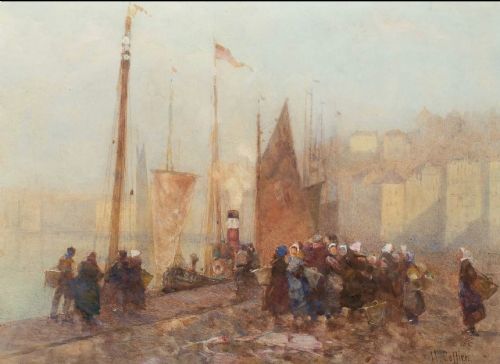
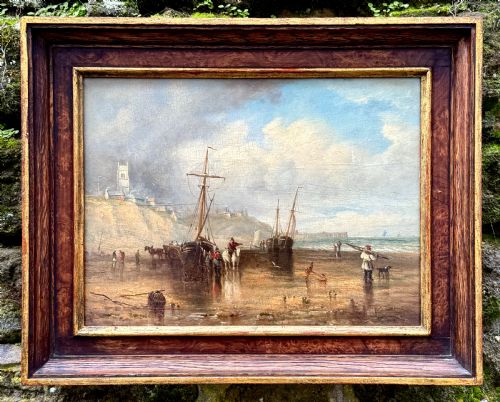
The selections encountered here span Victorian maritime scenes through to mid-century modern interpretations. Watercolour and oil paint on canvas or board represent the primary formats utilised by artists documenting these coastal environments.
How they were made
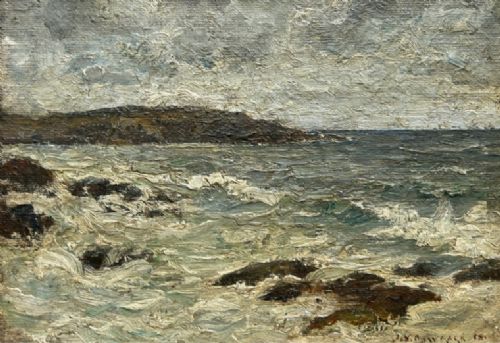
Artists employed oil paint and watercolour pigment applied to canvas, paper, wood or board to capture coastal light and atmosphere. Many nineteenth-century and early twentieth-century works relied on en plein air techniques to record direct observations of harbours and seascapes.
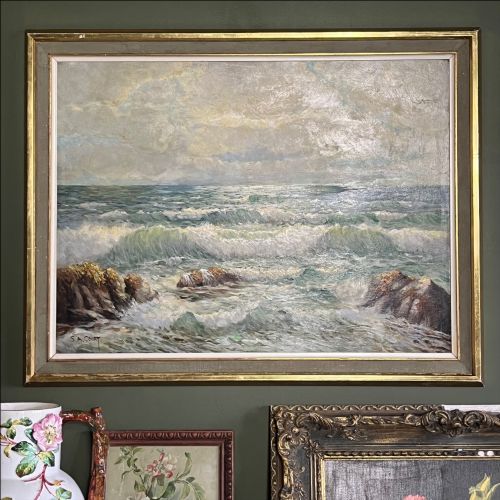
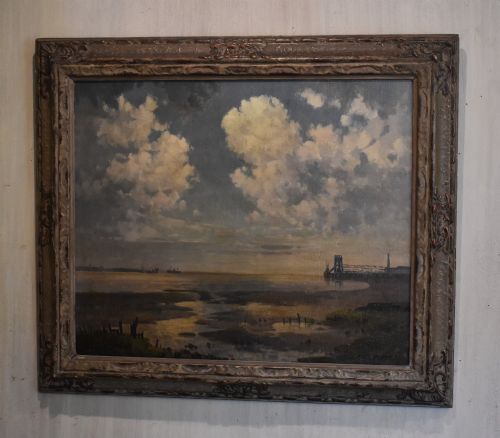
Support materials range from traditional stretched canvas and heavy watercolour paper to wooden boards. Finished pieces often show textured impasto applications in oil or delicate washes in watercolour depending on the period and style.
Listings feature works spanning the nineteenth century through to the late twentieth century, utilising both canvas and paper supports.
What varies in quality
Quality rests upon the artist's ability to render light, movement and atmospheric depth within the maritime setting. Works by established painters demonstrate superior composition and confident brushwork compared to simpler topographical records.
The handling of medium also dictates distinction, where masterly control of oil pigment or transparent watercolour washes elevates a standard harbour view into a compelling artistic record.
Kenneth Cozens·James Orrock·Clifford Hanney·Sidney A Court·Edward Mills·James E Aitken·John E Aitken·William Banks Fortescue·Lucy Pratt·Clive Browne·Peter Brannan·Hector Caffieri·Bernard Benedict Hemy·Thomas Creswick·TB Hardy·Donald McIntyre·Cecil Allan Mould·John Wilson Carmichael·Alfred G Morgan·Abraham Cooper·William Matthison·William Henry Williamson·John Holland·Frank Kelsey·Henry Barlow Carter
The British Coastal Artwork Glossary
- Watercolour
- A painting method where fine pigment is suspended in a water-based solution, typically applied to paper to create luminous transparent washes. It was widely utilised by British artists recording coastal scenes.
- Impasto
- Paint applied thickly to a canvas or board, leaving visible brush or palette knife marks that add tactile texture. This technique appears frequently in impressionist and modern marine paintings.
- En plein air
- The practice of painting outdoors to capture direct natural light and atmospheric conditions. Coastal artists frequently worked on location beside harbours and beaches.
- Seascape
- A work of art depicting the sea, coastal views, shipping or maritime activity. These subjects formed a major focus for British painters across the Victorian and modern eras.
British Coastal Artwork: Frequently Asked Questions
Where were most coastal scenes painted?
Painters concentrated heavily upon active fishing ports, estuaries and rocky shores around the British coastline. Popular locations included St Ives and Looe in Cornwall, Whitby and Scarborough in Yorkshire, alongside various Scottish and Welsh harbours.
Artists frequently returned to specific coastal communities that supported thriving maritime industries and picturesque boat traffic.
How do watercolours differ from oils here?
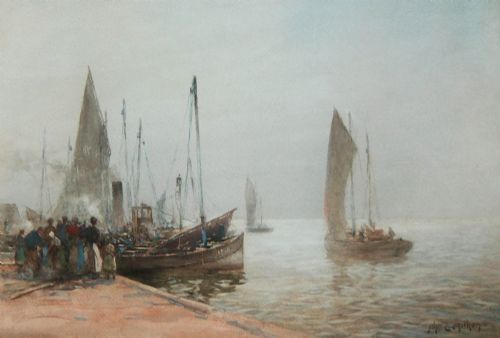
Watercolour paintings utilise transparent pigments on paper to achieve luminous skies and gentle coastal light effects. Oil paintings employ heavier binders on canvas or board, allowing for rich textures and deep chromatic range.
Both mediums served distinct purposes for artists recording the changing moods of the sea and shore.
How should these paintings be framed?
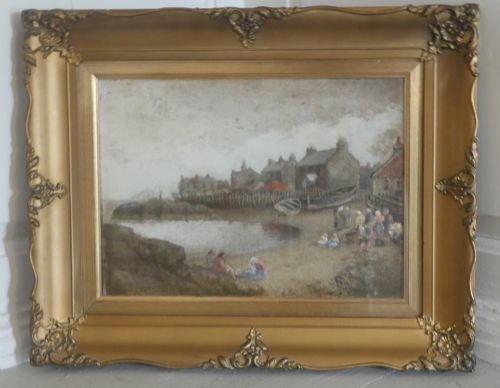
Traditional works benefit from moulding styles appropriate to their period, such as swept gilt frames for Victorian oils or simple wood frames for mid-century pieces. Watercolours require conservation mounting behind glass to protect the paper surface from environmental damage.
Proper framing preserves the physical integrity of both the support and the painted medium.
Can I date a painting by its style?
Stylistic shifts from Victorian maritime realism towards British Impressionism and Mid-Century Modernism provide clear chronological markers. Victorian works typically emphasise detailed rigging and topographical accuracy, while later twentieth-century pieces focus on abstract form and atmospheric mood.
Examining the handling of paint and the support materials helps confirm the era of execution.