


Yorkshire Coast Watercolour
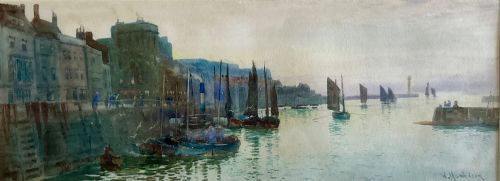
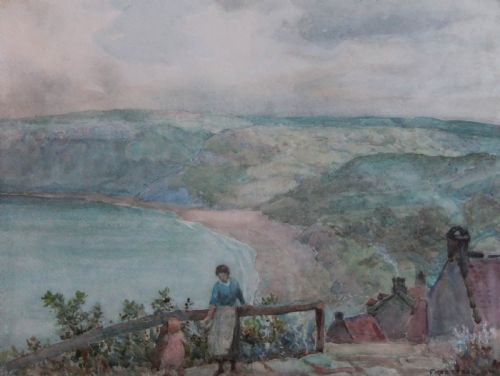
These yorkshire coast watercolour pieces capture maritime scenes, harbour views, and fishing boats along the historic shoreline.
Yorkshire Coast Watercolour
A yorkshire coast watercolour depicts maritime scenes, fishing villages, and busy harbours along the rugged northern shore. The most common works met here date from the Victorian era through the mid-twentieth century, featuring familiar coastal ports like Whitby, Scarborough, Staithes, and Runswick Bay.
These paintings typically record local marine life, shipping, and daily coastal industry, from herring drifters to cobles at rest. Painters worked on location or in studios using preliminary sketches, documenting the topography and atmospheric light of the North Sea.
The selections range from detailed architectural studies of harbour streets to expansive seascapes under changing skies. Collectors encounter both intimate sketches and finished gallery pieces executed in traditional British mediums.
How They Were Made
Artists applied watercolour pigment and gouache onto paper supports, utilising the white of the unpainted paper to create highlights of breaking waves and foam. Washed layers established the vast skies and transparent sea tones, while finer brushwork defined rigging, boats, and stone piers.
Many works combine transparent watercolours with opaque bodycolour to build texture on sails, cliffs, and figures. This traditional technique allowed painters to capture rapidly shifting coastal weather and maritime activity outdoors.
The listings span from the early nineteenth century through the mid-twentieth century, recording watercolour pigment and gouache on paper.
What Varies in Quality
Quality rests on the sureness of the brushwork and the artist's ability to render the specific luminosity of northern light and turbulent sea conditions. Superior examples demonstrate a confident handling of pigment that brings immediacy to the harbour scene without overworking the paper.
Composition and tonal balance separate standard topographical records from accomplished artistic interpretations of the coastline. Stronger works balance structural elements like piers and cliff faces with the dynamic movement of water and shipping.
William Matthison·Robert Leslie Howey·Frank H Mason·George Hamilton Constantine·Frederick William Booty·Kate E Booth·John Syer·James Webb·Henry Barlow Carter·Frank Rousse
The Yorkshire Coast Watercolour Glossary
- Gouache
- An opaque watercolour paint containing white pigment, used by artists to add highlights and solid colour to a paper support.
- Coble
- A traditional type of open fishing boat native to the north-east coast of England, distinguished by a flat bottom and high bow.
- Marine Realism
- An artistic style focused on accurate depiction of maritime subjects, shipping, and coastal waters.
- Wash
- A thin, fluid layer of diluted watercolour pigment spread evenly across paper to create skies or water.
Yorkshire Coast Watercolour: Frequently Asked Questions
What subjects appear most often in these watercolours?
These works focus primarily on coastal towns, harbour entrances, and fishing vessels along the northern shore. Scenes often feature local craft such as cobles and drifters operating near familiar ports.
Views frequently incorporate historic landmarks like Whitby Abbey, local piers, and cliffside streets. Figures engaged in maritime labour, including seaweed gatherers and net menders, also appear regularly.
How do I identify the period of a painting?
Dating relies on stylistic markers, framing, and recorded artist active dates ranging from the nineteenth century into the twentieth century. Victorian and Edwardian examples often display detailed architectural rendering and formal maritime compositions.
Mid-century works tend toward looser brushwork associated with twentieth-century British impressionism. Signatures, inscriptions on the reverse, and artist biographies provide further confirmation of the execution date.
How should I frame and display a watercolour?
Watercolour paintings require protection from direct sunlight to prevent fading of the pigments on paper. Framing should incorporate acid-free mounts and conservation glass to shield the work from environmental damage.
Displaying pieces away from damp areas and direct heat sources preserves the paper support and the integrity of the media. Proper sealing on the reverse prevents dust accumulation.
What is the difference between watercolour and gouache?
Traditional watercolour uses transparent pigments that allow the white paper to shine through the painted layers. This creates luminous effects suitable for open skies and coastal water.
Gouache includes an added white pigment that makes the paint opaque, allowing artists to build solid highlights and heavier textures. Many marine painters combined both mediums within a single sheet.