


Sailboat Watercolour Painting
A sailboat watercolour painting captures the shifting moods of coastal tides and maritime movement through translucent washes applied directly to paper.
Sailboat Watercolour Painting
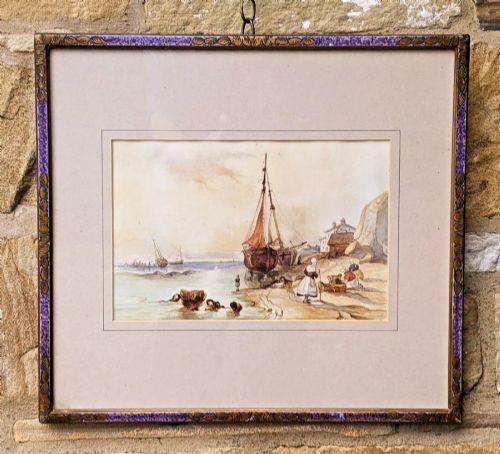
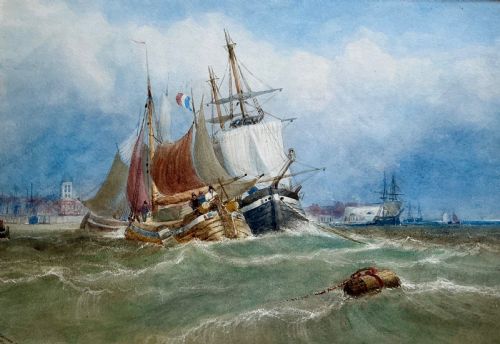
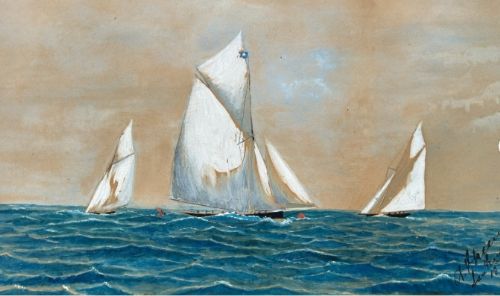
A sailboat watercolour painting brings together maritime subjects and delicate pigment application across periods spanning from the nineteenth century through the mid-twentieth century.
The versions most commonly met on this page include framed coastal scenes, harbour views, and depictions of racing yachts or fishing luggers executed by British and European artists.
These works range from nineteenth-century Victorian maritime compositions to twentieth-century regional harbour depictions framed under glass with wood and gilt surrounds.
Materials and technique
Artists applied watercolour pigment and ink onto paper supports, often building up translucent washes to represent sea and sky alongside opaque touches of bodycolour or gouache for highlights.
Framing typically involves wood and gilt mouldings protecting the paper surface beneath glass, preserving the fugitive qualities of early pigments against light and moisture.
Several artists clearly preferred getting salt spray on their boots, recording Whitby harbour and Cornish luggers with absolute fidelity.
Quality and execution
The standard of a sailboat watercolour painting rests upon the confidence of the brushwork and the artist's command of light, atmosphere, and maritime perspective.
Stronger examples demonstrate careful control over pigment washes to render water and movement, whereas lesser works rely on stiff drawing or heavy, muddy applications of colour.
Henry Barlow Carter·Paul Delvaux·Richard Harry Carter·F J Aldridge·Charles Harmony Harrison·Ernest F Hill·Stanley Orchart·John McDougal·Frank Wasley·Harry Wanless·Thomas Bush Hardy·Henry Scott Tuke·Henry Bright
The Sailboat Watercolour Painting Glossary
- Watercolour pigment
- Finely ground colour particles suspended in a water-soluble binder, used to create transparent washes on paper.
- Gilt wood
- Timber framing finished with a thin layer of gold leaf or metallic paint, frequently found surrounding antique paintings.
- Gouache
- An opaque water-based paint sometimes combined with watercolour to add highlights and solid areas of tone.
- Lugger
- A traditional two-masted fishing vessel with lug sails, commonly depicted in nineteenth-century coastal art.
Sailboat Watercolour Painting: Frequently Asked Questions
How should I frame a watercolour?
Watercolours need protection behind glass with acid-free mounts to prevent the paper from touching the glazing directly.
Keep them away from direct sunlight to preserve the fugitive pigments used by nineteenth-century artists.
Are these paintings signed?
Many examples feature artist signatures or initials either visibly within the composition or recorded in historical attributions.
Unsigned works often rely on stylistic evidence and subject matter to connect them to specific regional schools.
What subjects appear in maritime watercolours?
Common subjects include fishing boats off coastal harbours, racing yachts, moored merchant ships, and Venetian lagoon scenes.
Artists frequently recorded working ports, lighthouses, and estuaries around Britain and continental Europe.
How do I date an antique watercolour?
Dating relies on stylistic conventions, artist biographical dates, framing materials, and sometimes inscriptions left on the reverse of the paper.
Nineteenth-century works often show characteristic paper types and palette choices distinct from later twentieth-century pieces.