
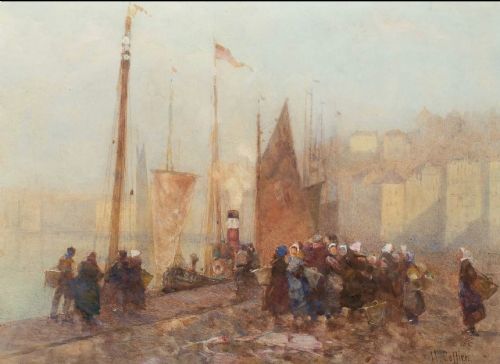
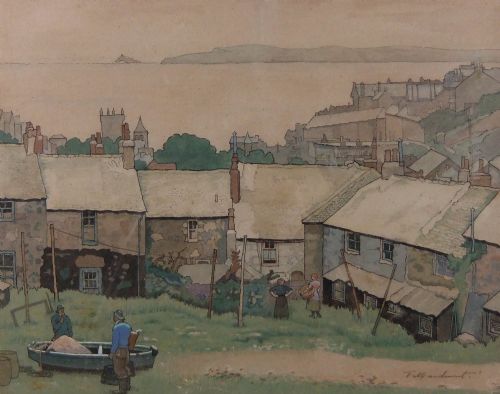
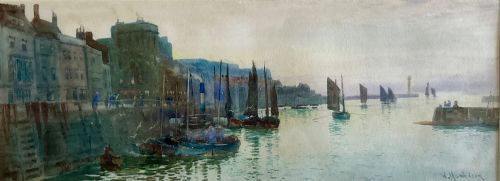
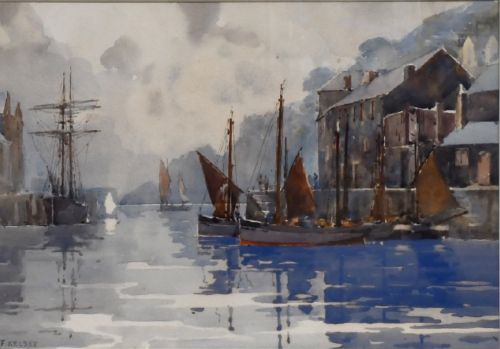
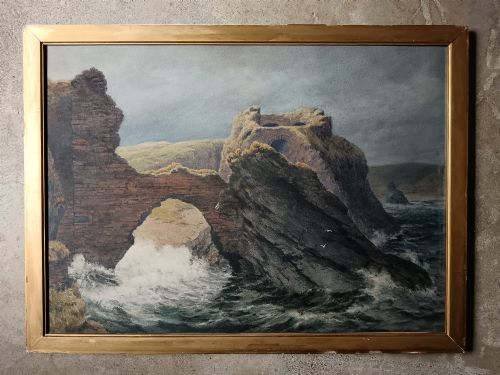


Grey Watercolour Coastal Painting
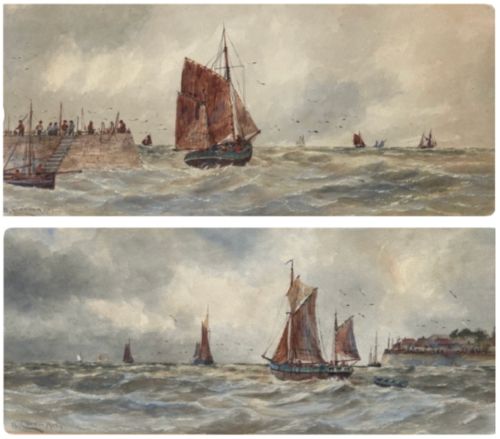
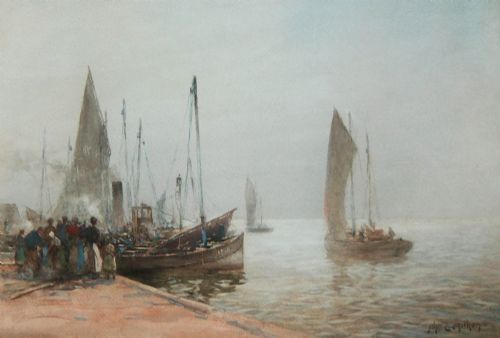
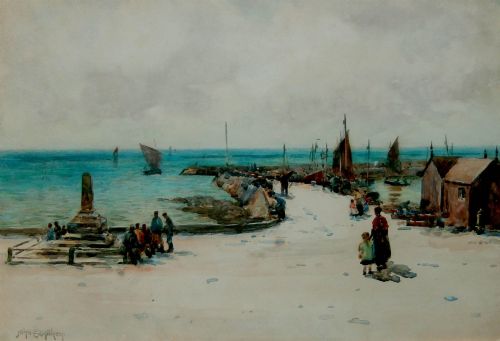
These grey watercolour coastal paintings capture maritime scenes from the nineteenth and twentieth centuries, offering buyers evocative glimpses of historic British and European shores.
Grey Watercolour Coastal Painting
A grey watercolour coastal painting depicts harbours, fishing fleets, and shorelines using muted pigments on paper, often framed behind glass with wood mouldings. These works span periods from the late nineteenth century through the mid twentieth century, encompassing Victorian marine art, Edwardian coastal views, and British Impressionism.
The subjects range from Scottish castles and Yorkshire fishing ports like Whitby and Staithes to Cornish harbours and foreign coastal vistas. Many examples portray daily maritime life, featuring sailing vessels, cobles, and coastal buildings rendered in subdued tones.
Collectors encounter works attributed to named regional painters alongside pieces bearing nineteenth century dates or modern British stylistic traits. The selection centres heavily on British coastal topography executed on paper supports.
How they were made
Artists applied watercolour pigment and ink onto paper surfaces, utilising the white of the unpainted paper to capture misty skies and grey coastal light. Washed pigments built up atmospheric depths while fine ink lines defined rigging, architecture, and shorelines.
Finished waterpaintings were mounted and housed within glass-fronted wooden frames to protect the delicate paper from moisture and dust over successive decades.
Several waterpaintings document bustling historic harbours where fishermen routinely hauled their daily catch past watchful coastal gulls.
What varies in quality
The strength of a grey watercolour coastal painting rests upon the artist's handling of atmospheric tone and compositional depth, where deft brushwork evokes the specific weight of sea mist and overcast skies. Pieces by established regional practitioners or members of recognised art societies display superior draftsmanship in rendering shipping vessels and maritime architecture.
Preservation also distinguishes individual works, as paper exposed to dampness or harsh light loses pigment vibrancy, whereas well-kept examples retain the crisp contrast between delicate washes and crisp ink detailing.
William Cannon·James E. Aitken·John E. Aitken·Thomas William Morley·Hector Caffieri·Thomas Maidment·William Matthison·Frank Kelsey·John Moxon·Charles William Adderton·Thomas Bush Hardy·Ernest Dade·Edward Seago·Arthur Tucker·Robert Leslie Howey·Tom Clough·James Watson·George Hamilton Constantine·John Mitchell·Samuel Owen·H.E. Tidmarsh·Ernest F. Hill·Frederick Stuart Richardson·Percy Brooke·William Kay Blacklock
The Grey Watercolour Coastal Painting Glossary
- Watercolour
- A painting method where paint is made of pigments suspended in a water-based solution. It is traditionally applied to paper surfaces to create translucent washes of colour.
- Seascape
- A type of artwork that depicts the sea. These pieces focus specifically on coastal views, harbours, and maritime shipping scenes.
- Coble
- A traditional type of open fishing boat used on the northeast coast of England. They appear frequently in regional marine waterpaintings.
- Monogrammed
- Bearing a signature consisting of initials intertwined or combined in a single design. This serves to identify the artist when a full signature is absent.
Grey Watercolour Coastal Painting: Frequently Asked Questions
What subjects appear in these coastal waterpaintings?
The compositions generally feature working harbours, moored fishing boats, coastal castles, and stormy seas. Common locations include Yorkshire ports, Scottish shores, and Cornish fishing villages.
Artists frequently recorded the daily routines of fisherfolk alongside maritime architecture and coastal vessels under overcast skies.
How do I care for a watercolour on paper?
Watercolours require protection from direct sunlight to prevent the pigments from fading over time. Keeping the works away from damp environments ensures the paper and wooden framing remain stable.
Displaying them behind glass safeguards the delicate paint surface from atmospheric pollutants and physical damage.
How can I tell the period of a piece?
Dating often relies on artist signatures, period framing styles, and inscriptions noted on the mounts or reverse of the paper. Victorian and Edwardian works frequently employ specific muted palettes and traditional maritime subjects.
Stylistic shifts toward modern British abstraction help separate mid twentieth century examples from earlier nineteenth century pieces.
Who painted these coastal watercolours?
The works originate from a range of nineteenth and twentieth century artists, including members of regional art societies and dedicated marine painters. Many creators lived and worked near the fishing communities they portrayed.
Signatures, monograms, and biographical details link individual waterpaintings to specific practitioners active across British shores.