


Brass Topped Bed Frame
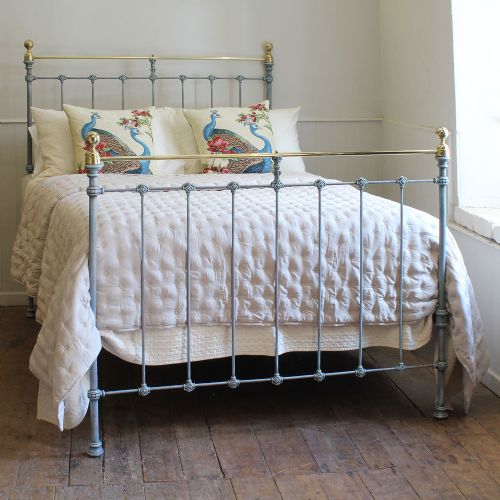
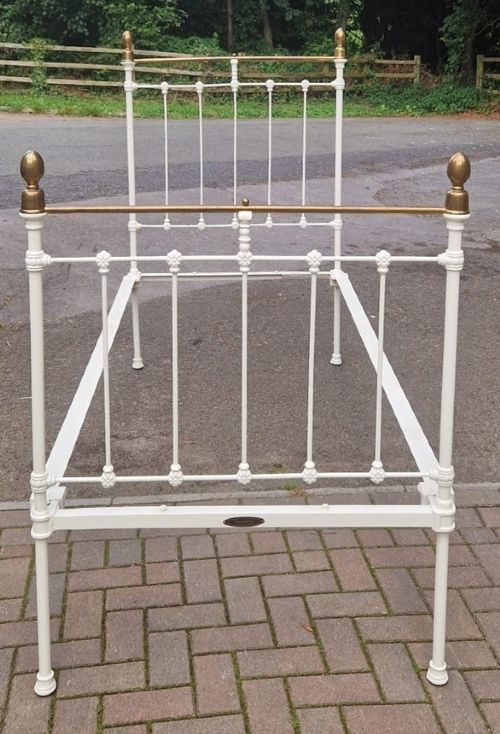
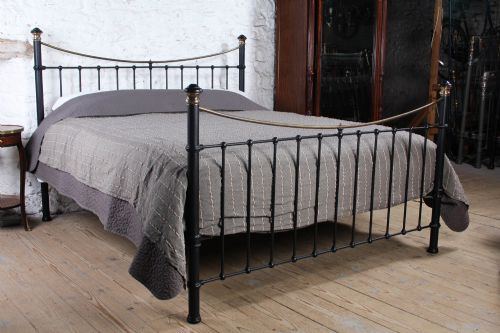
A brass topped bed frame brings lasting Victorian and Edwardian character to a bedroom through substantial metalwork.
Brass Topped Bed Frame
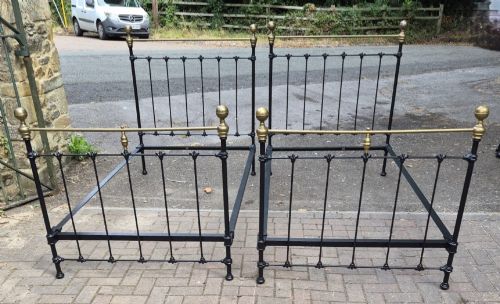
When you search for a brass topped bed frame, you encounter robust Victorian and Edwardian bedsteads combining iron frames with polished brass components. These pieces range in scale from single and double sizes up to king and super king proportions.
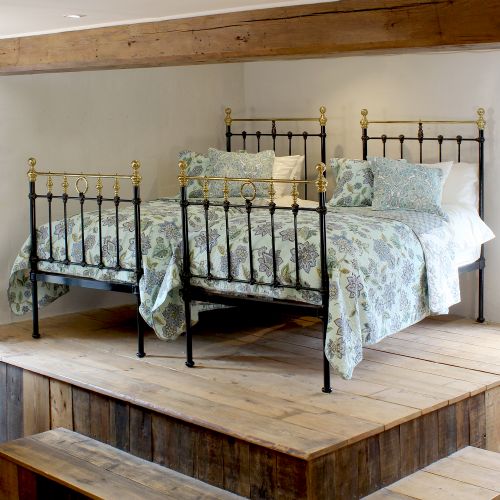
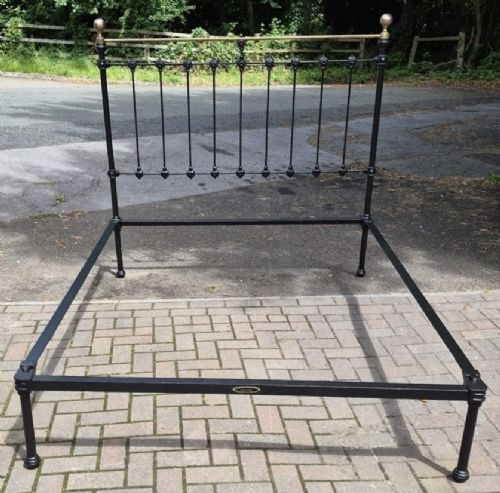
The most common form on this page pairs a dark cast iron or painted body with gleaming brass top rails and decorative castings. These beds reflect the industrial manufacturing methods of the nineteenth century, built to serve domestic spaces with permanence.
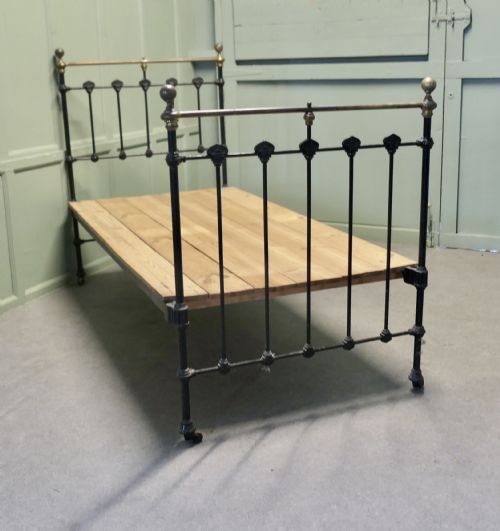
Makers utilised various configurations including dip rail designs, straight rail ends, and low profile no end formats. Surviving examples often appear as matched pairs or individual full size pieces ready for modern mattress support.
Materials and construction
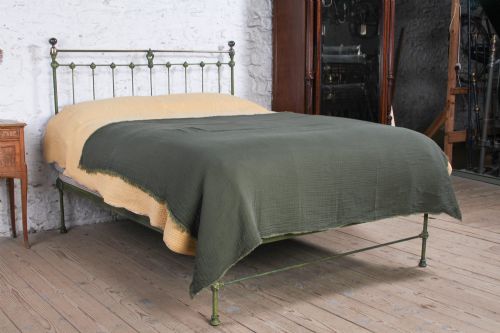
The construction relies on sturdy cast iron and wrought iron frameworks that provide structural integrity and weight. This metal foundation is paired with sheet metal and solid brass elements to create the characteristic contrasting metallic finish.
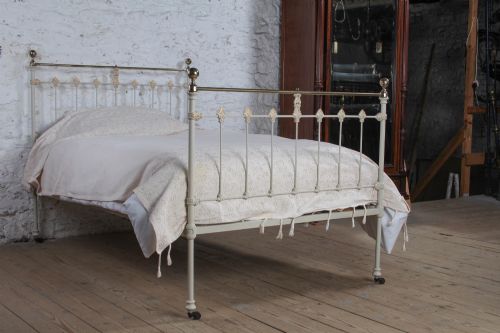
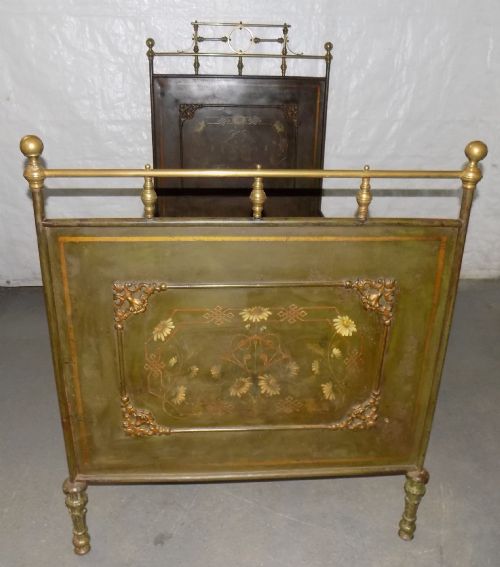
Decorative details are achieved through cast brass embellishments, applied rings, and detailed corner castings secured to the main frame. Surfaces are often finished with durable black or white paint alongside polished brass sections that require regular cleaning.
Materials documented across the available inventory include cast iron, wrought iron, mahogany, and polished sheet brass.
Factors of distinction
Quality in these beds depends upon the crispness of the brass castings and the complexity of the decorative ironwork. Finer examples display deeper relief on ornamental details and heavier gauge tubing on the top rails.
The overall preservation of the original paint finish and the integrity of the structural joints dictate the desirability of a piece. Beds that retain their original castors and complete side rails offer better authenticity for collectors.
The Brass Topped Bed Frame Glossary
- Cast iron
- A strong, hard iron-carbon alloy poured into moulds to create intricate bed components and structural frames. This material defined nineteenth century furniture manufacturing due to its durability.
- Dip rail
- A bed frame top rail that curves downwards towards the centre. This style provides a softer silhouette compared to straight horizontal rails.
- Toleware
- Painted sheet metal objects produced in various European workshops. These pieces introduce painted colour accents to the bedroom environment.
- Castor
- A small wheel mounted on a swivel attached to the bed legs. These allowed heavy iron and brass beds to be moved across floor surfaces with greater ease.
- No end bed
- A bedstead configuration featuring a low footboard or lacking one entirely. This design creates an open appearance in smaller sleeping quarters.
Brass Topped Bed Frame: Frequently Asked Questions
How do I clean a brass topped bed frame?
Polished brass sections benefit from gentle wiping with a soft cloth to remove dust and maintain their brightness. Avoid harsh chemical abrasive cleaners that can damage the underlying metal surface or surrounding paint.
Iron frameworks require simple dusting and occasional inspection of painted surfaces. Keeping moisture away from the joints prevents rust formation over time.
Will modern mattresses fit antique bed frames?
Many Victorian and Edwardian bed frames accommodate standard modern mattress sizes, particularly pieces built to broad double or king dimensions. However, nineteenth century sizing conventions sometimes differ slightly from contemporary standards.
Checking the internal length and width measurements before purchase ensures proper alignment. Slats or modern base supports can be integrated safely to hold contemporary mattresses securely.
How do I date a brass and iron bed?
Dating relies on stylistic clues such as the presence of dip rails, specific casting motifs, and the proportions of the frame. Pieces originating from the Victorian era often feature more elaborate ornamentation than later Edwardian examples.
Construction methods also provide guidance, as nineteenth century frames utilise specific bolt systems and iron assembly techniques. Comparing the listed production period helps confirm the era of manufacture.
Are these beds easy to assemble?
Most antique metal bedsteads use a straightforward wedge or bolt slot system connecting the headboard, footboard, and side rails. This modular construction allowed nineteenth century homes to move furniture between rooms with minimal tools.
Careful handling during setup protects the painted iron surfaces and brass finials from accidental impact. Having two people manage the heavier cast iron components makes assembly much simpler.