

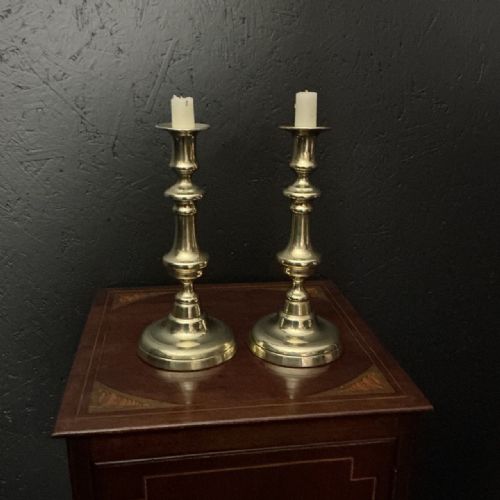
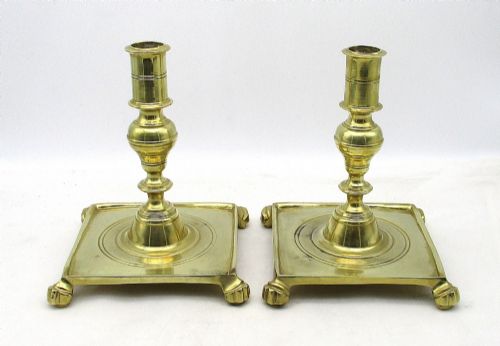
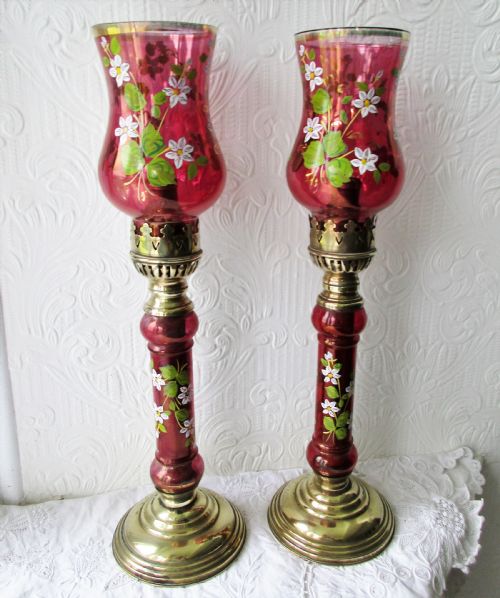
Brass Table Candlestick Pair
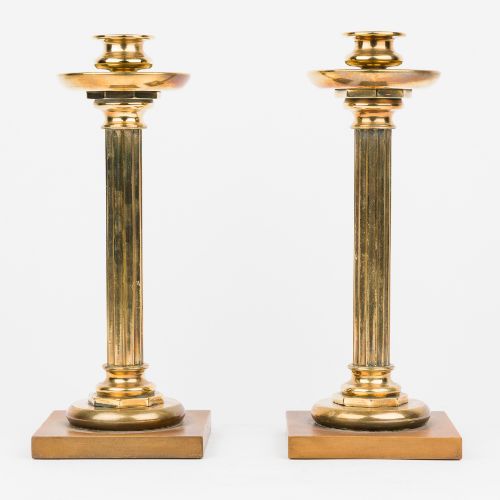
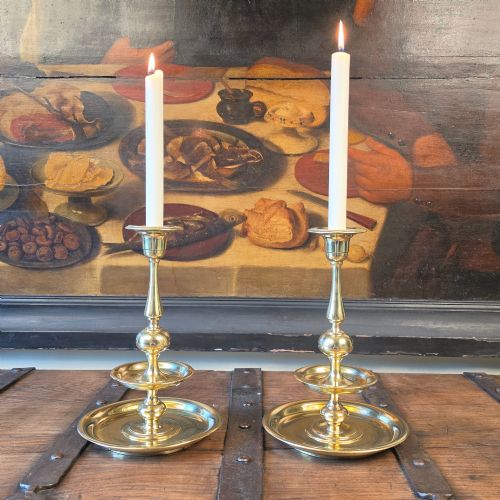
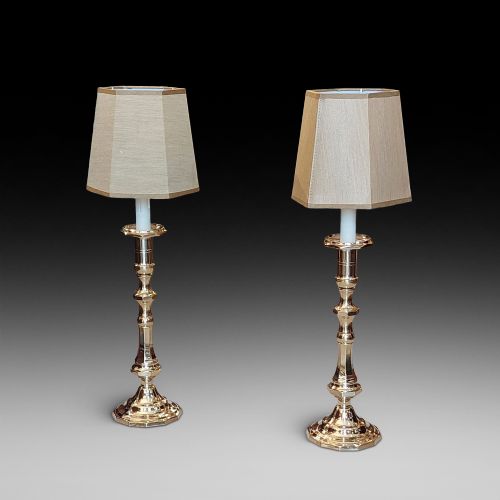
A brass table candlestick pair brings period symmetry and warm metal reflection to a room, offering functional candlelight or converted lamp illumination.
Brass Table Candlestick Pair
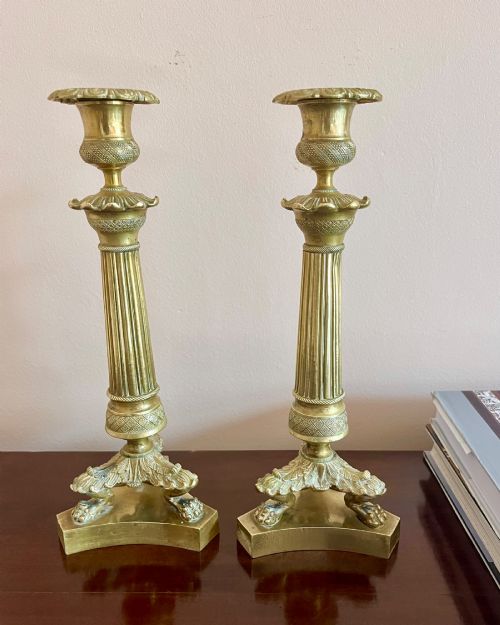
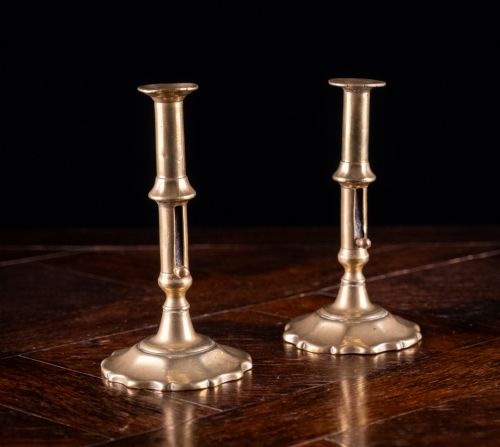
A brass table candlestick pair comprises matched lighting fixtures designed to sit upon furniture surfaces, utilising copper-zinc alloy and related metalwork to support candles or bulbs.
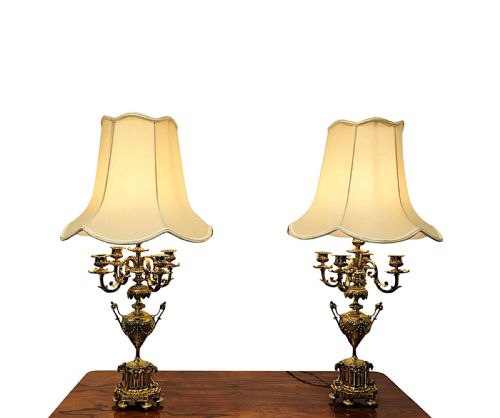
Buyers encounter numerous Victorian and Georgian examples alongside twentieth-century adaptations, ranging from simple domestic stems to elaborate Continental revival models.
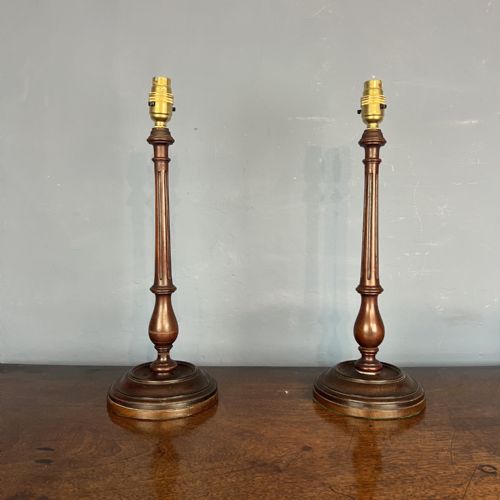
Many specimens show thoughtful alterations where period metal stems have received wiring for electricity, integrating antique form with modern utility.
Materials and construction
Foundry workers utilised sand casting and seaming techniques to shape molten brass and bronze into rigid columns, bases, and bobbins, often combining cast components with sheet metal elements.
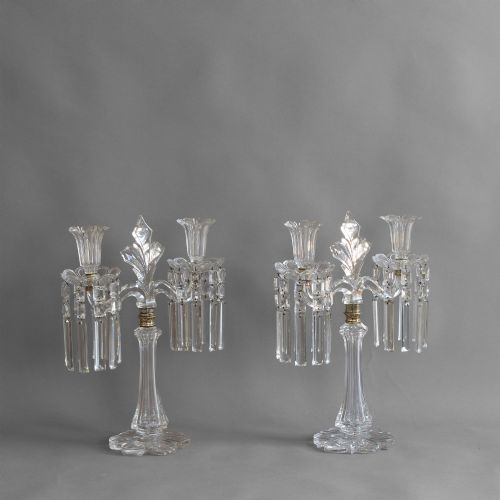
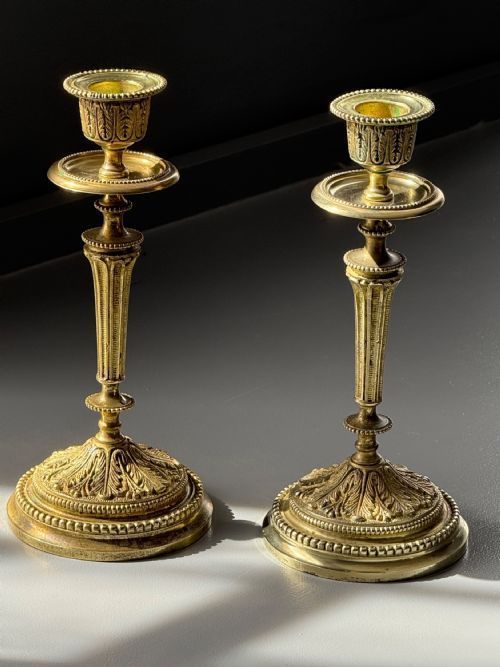
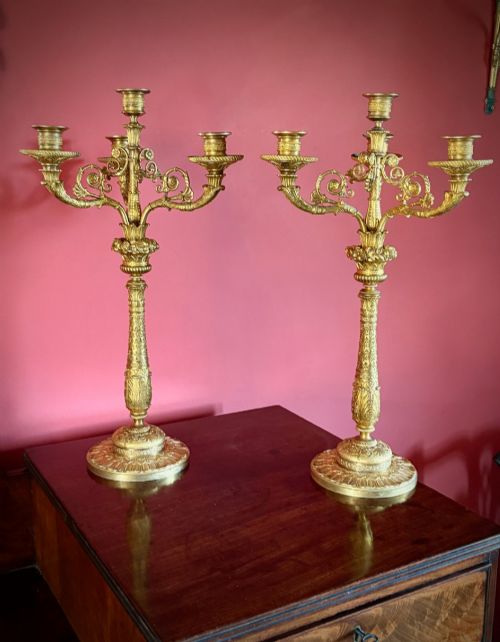
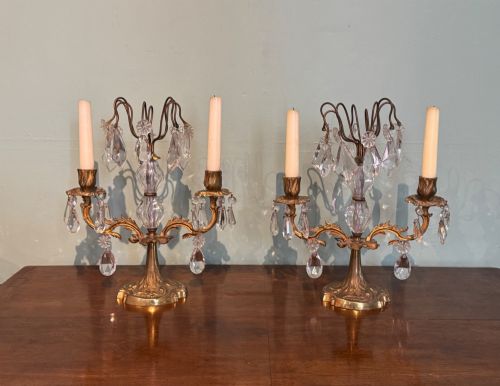
Selected pieces display surface enhancement through ormolu gilding, champlevé enamel detailing, or glass components like cut crystal drops and lustres.
Patents such as telescopic mechanisms and ejector levers allowed nineteenth-century makers to introduce mechanical functionality into traditional domestic hardware.
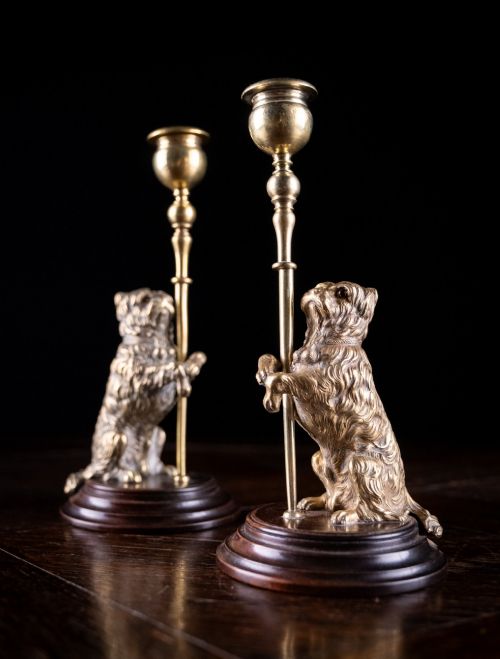
Some nineteenth-century brass dogs stand ready to hold your candles while waiting patiently on the sideboard.
Markers of quality
Superior pairs display crisp casting definition in foliage, fluting, and figural details like lions paw feet or terrier dogs, whereas inferior examples exhibit smoothed or muddy contours from worn moulds.
The weight and gauge of the metal indicate standard; thick, heavy brass elements provide stable support and resist distortion, unlike thin stamped components.
Original matching components, consistent patination across both items, and functional internal mechanisms separate standard production pieces from heavily altered or mismatched survivors.
J.T. & Co·Harrison Patent·Frederick J Smith & Co·Wm. Tonks & Sons
The Brass Table Candlestick Pair Glossary
- Ejector
- A concealed internal mechanism with a small side lever designed to push a stub of candle up and out of the socket. This nineteenth-century innovation prevented wax from becoming wedged inside the stem.
- Ormolu
- Finely ground high-carat gold applied in a mercury amalgam to a bronze base, producing a rich golden surface. French workshops utilised this technique extensively during the eighteenth and nineteenth centuries.
- Pricket
- A sharp metal spike set in the centre of a candle pan to secure a large candle, rather than the standard socket that receives the base. These forms often derive from ecclesiastical or altar furnishings.
- Lustre
- A mantle or candlestick hung with cut glass prisms that refract candlelight. These decorative glass drops enhance visual brilliance when lit.
- Champlevé
- An enamelling technique where troughs are dug into a metal surface, filled with vitreous paste, and fired. The resulting coloured patterns contrast against the polished bronze or brass body.
Brass Table Candlestick Pair: Frequently Asked Questions
How do I date an old pair?
Dating relies on examining manufacturing marks, base construction methods, and stylistic cues such as Georgian column proportions or Victorian ornamentation. Seams visible on older stems reveal specific historical casting techniques.
Changes in screw threads and the presence of patent stamps offer further chronological markers. Comparing the wear patterns across both pieces helps confirm their unified age.
Are converted lamps reversible?
Most electrical conversions involve running a cord through the existing central aperture or stem without drilling the primary structure. This allows a restorer to remove wiring and restore the piece to standard candle use.
Buyers should inspect the base and socket fittings to understand how the conversion was secured. Professional rewiring ensures modern safety standards while preserving antique integrity.
How should I clean aged brass?
Routine maintenance requires only a soft cloth to remove dust, preserving the natural oxidation and dark patination accumulated over centuries. Aggressive chemical polishes strip away this historical surface layer and diminish the visual depth.
Active dirt can be addressed with mild soapy water and immediate drying. Maintaining the existing patina protects the character valued by collectors.
What defines a true pair?
A matched pair shares identical height, casting weight, base diameter, and decorative vocabulary across both items. Minor casting variations often occur in older handmade metalwork, but overall proportions must align.
Discrepancies in wear patterns or component details suggest married pieces assembled from different sets. True pairs display consistent historical use and identical material composition.