






Brass Strapwork Box
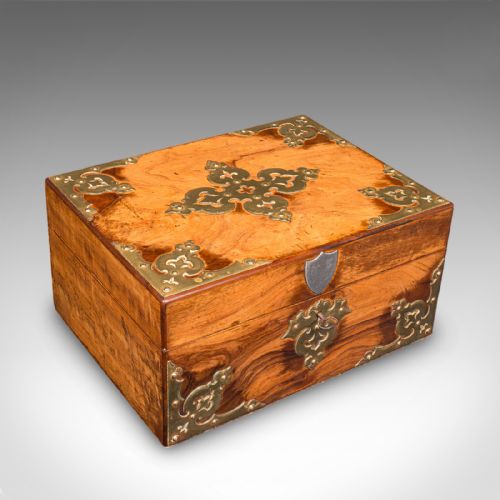
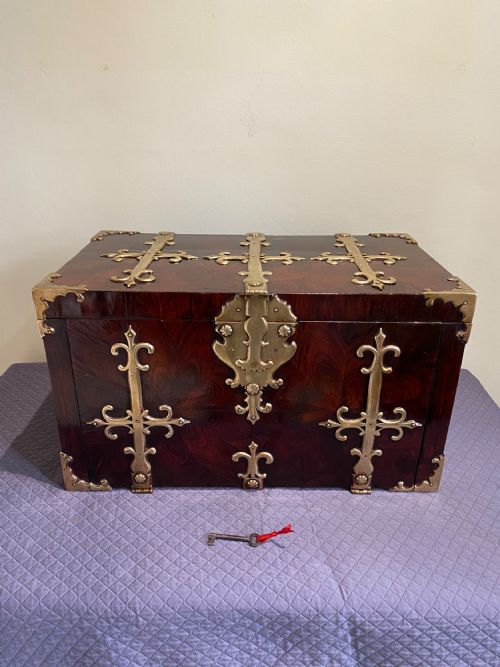
A brass strapwork box is a sturdy receptacle reinforced with metal bands, offering both secure storage and tactile decorative appeal.
Brass Strapwork Box
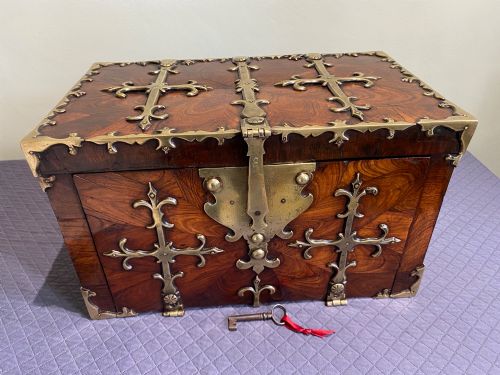
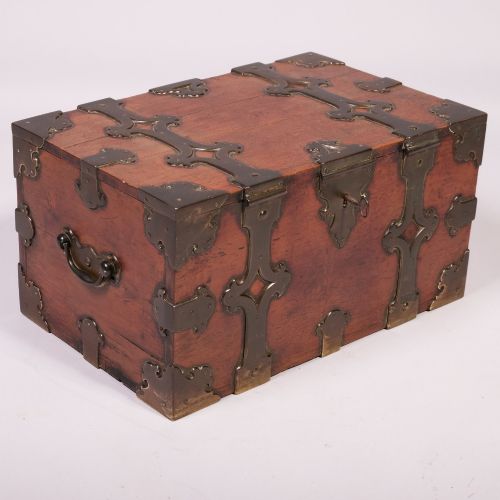
When you search for a brass strapwork box, you examine protective metal bands securing timber frames. These pieces span from the seventeenth century through to the late Victorian period. You encounter forms designed for stationery, writing, tea, and jewellery.
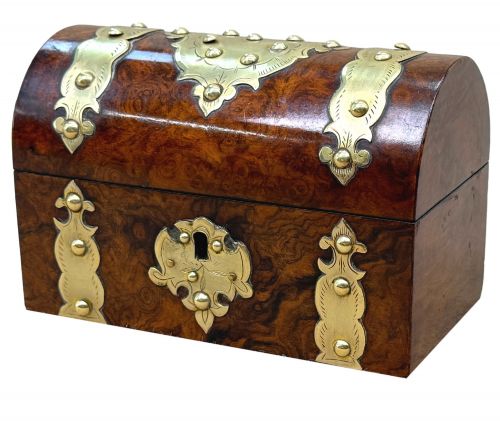
The Victorian incarnation dominates the selection, frequently utilising burr walnut or coromandel woods. Smaller numbers of pieces arrive from earlier centuries, including solid cedar and kingwood veneered variants.
How they were made
Cabinetmakers constructed the foundational carcasses from timbers such as walnut, oak, and exotic woods including coromandel and kingwood. They applied decorative veneers like burr walnut and amboyna to create patterned exterior surfaces.
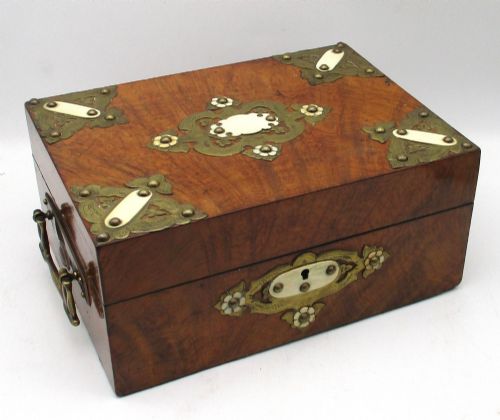
Artisans applied brass strapwork across the timber frames, securing the bands with numerous small pins or screws. They combined this metal reinforcement with fitted interior compartments, glass bottles, and porcelain insets.
Brass Strapwork Box Retail Price Guide 2026
Typical asking prices for brass strapwork box among the pieces listed under this phrase on Sellingantiques today, from the lower quarter to the upper quarter. They describe what is for sale here now, not the wider market.
The documented styles span the seventeenth-century William and Mary period, through Gothic Revival, to Arts and Crafts designs.
What varies in quality
The calibre of timber preparation and veneer selection dictates the standing of a piece. Finer examples display meticulously matched burr walnut or carefully chosen kingwood grain patterns across the domed or flat lids.
The execution and weight of the brass strapwork separate standard items from superior work. Precision in the fitting of metal mounts, hinges, and locks demonstrates the skill of the original workshop.
Trussell Brighton
The Brass Strapwork Box Glossary
- Brass strapwork
- Thin strips of brass applied across the exterior of a box for reinforcement and decoration. This metalwork often forms geometric patterns or frames the edges of the lid.
- Coffre forte
- A strong box or chest reinforced for secure storage of valuables. These early examples frequently date to the seventeenth and eighteenth centuries.
- Stationery box
- A desk accessory designed to hold writing paper, envelopes, and letters. They often feature sloping or domed lids with internal dividers.
- Coromandel wood
- A dense, heavy timber featuring dark brown and black stripes with a fine grain. Cabinetmakers utilised this material for high-status Victorian boxes.
Brass Strapwork Box: Frequently Asked Questions
What were brass strapwork boxes used for?
These boxes served multiple domestic functions, from holding writing paper and correspondence to storing tea, gloves, and jewellery. Their robust construction made them suitable for keeping personal valuables secure.
Larger variants functioned as desk sets or small coffers, while specialised pieces accommodated scent bottles or sewing equipment for daily use in Victorian households.
How do I date a Victorian box?
Dating relies on observing the combination of timber veneers, brass mount styles, and internal fittings. Mid-nineteenth-century examples often favour coromandel or burr walnut with domed profiles.
Later decades introduced different wood species and varied joinery techniques. Makers marks, where present, help narrow down the decade of production.
How do I care for my box?
Maintain the timber surfaces by applying appropriate wax polish sparingly to nourish the grain and retain the sheen. Avoid placing the box in direct sunlight or near heat sources to prevent veneer lifting.
Keep the brass strapwork clean with a soft cloth, taking care not to let cleaning agents touch the surrounding wood.
Are these boxes English or French?
The selection includes pieces from various origins, with many originating from English workshops using domestic and imported timbers. Other pieces reflect continental European manufacture, such as French desk sets.
Distinctive regional traits appear in the choice of wood species and the complexity of the brass strapwork patterns applied to the exterior.