






Victorian Domed Box
A victorian domed box brings curved form and tactile nineteenth-century warmth to a desk or dressing table.
Victorian Domed Box
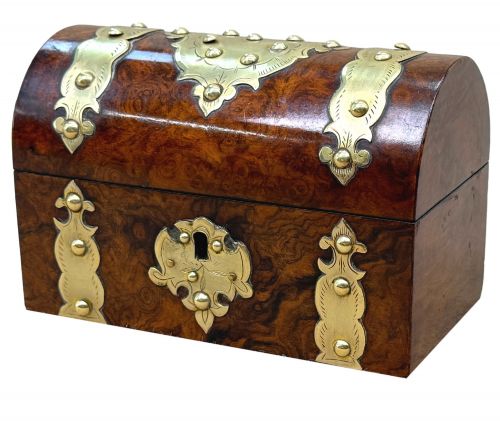
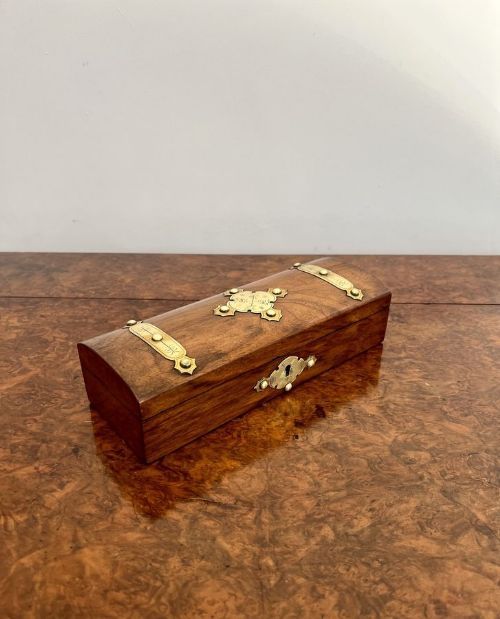
A victorian domed box combines a curved lid with the rich timbers and heavy mountings typical of the nineteenth century. These pieces appear frequently as stationery boxes, tea caddies, glove boxes, and travel trunks, spanning compact desk accessories to large floor chests.
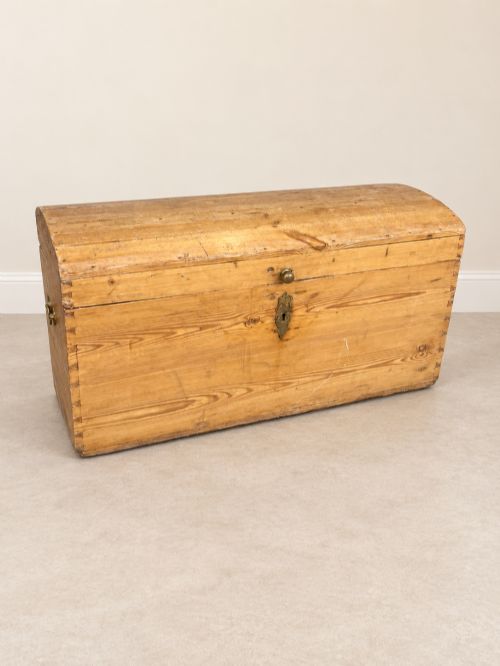
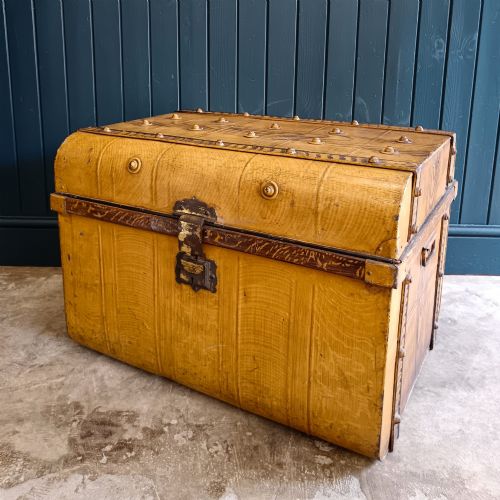
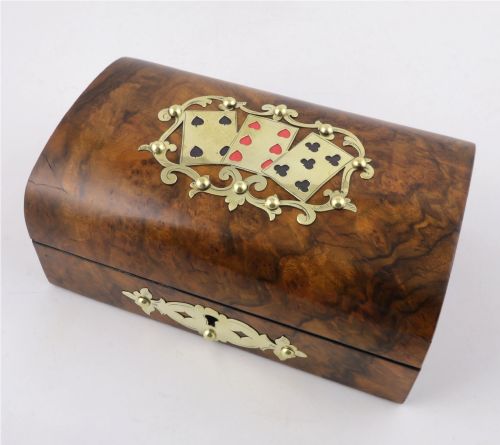
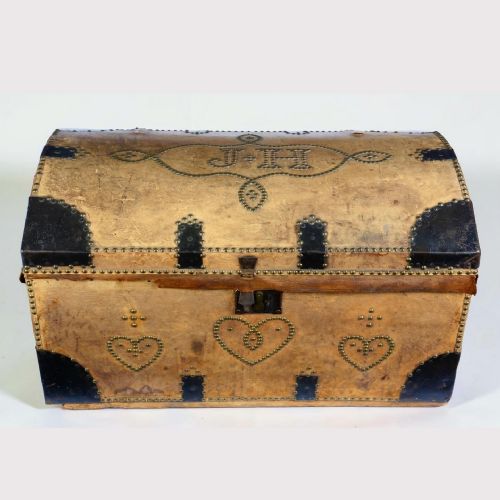
The versions most commonly met on this page are desk-top stationery boxes and tea caddies fashioned from burr walnut or coromandel, often enhanced with brass banding. Larger variations include leather, painted pine, and canvas-covered trunks featuring domed tops designed to shed water during travel.
Makers and craftsmen applied this rounded profile across diverse styles, ranging from Gothic Revival and Baroque Revival to rustic country folk art. The curved lid not only distinguished the silhouette from flat-topped caskets but also created generous internal space for storage.
Materials and construction
Cabinet makers utilised dense native and exotic hardwoods such as walnut, coromandel, rosewood, and pollard oak, frequently selecting burr veneers to display complex natural grain patterns. Carcases were constructed from solid secondary timbers, then faced with finely matched veneers fixed with traditional animal glues.
Metalwork played a structural and decorative role, with brass straps, studs, hinges, and lock plates reinforcing the wooden joints. Leather, canvas, and iron appeared predominantly on travel trunks and steamer luggage, providing durable exterior protection for transit.
Victorian Domed Box Retail Price Guide 2026
Typical asking prices for victorian domed box among the pieces listed under this phrase on Sellingantiques today, from the lower quarter to the upper quarter. They describe what is for sale here now, not the wider market.
Object forms recorded here range from desktop stationery boxes and tea caddies to heavy leather travel trunks and canvas dome-top chests.
Judging quality
Quality rests upon the selection of timber and the precision of the joinery rather than mere decorative elaboration. Superior examples display uninterrupted grain flow across the curved lid and flawless application of brass mounts that sit flush with the surrounding wood.
Interior fittings reveal the standard of original manufacture, distinguishing utilitarian items from luxury goods. Well-made stationery boxes and tea caddies incorporate fitted compartments, original velvet or silk linings, and working locks complete with matching keys.
Arthur Wannop·Trussell Brighton·Barton
The Victorian Domed Box Glossary
- Burr Walnut
- A figured veneer taken from the growth excrescences of the walnut tree, prized for its swirling, organic patterns. It appeared frequently on high-status nineteenth-century boxes.
- Coromandel
- A heavy, durable East Indian timber featuring dark brown stripes against a light background, utilised for luxury nineteenth-century desk accessories. It provides a striking contrast when paired with brass mountings.
- Tunbridge Ware
- Small wooden objects decorated with intricate mosaic patterns made from thousands of tiny coloured wood blocks. This specialised technique originated in Tunbridge Wells.
- Stationery Box
- A desk accessory designed to hold writing paper, envelopes, and letters in upright vertical slots or sloping compartments. These often feature domed lids to accommodate tall documents.
Victorian Domed Box: Frequently Asked Questions
What were domed boxes used for?
These containers served specific domestic and travel functions depending on their interior layout. Smaller caskets held tea leaves, writing paper, gloves, or jewellery, while larger iterations functioned as robust travel trunks for clothing and personal belongings.
The curved lid allowed for extra interior clearance, making these vessels particularly suited to bulky items or tiered internal trays that required additional vertical space.
How do I style a victorian box at home?
These pieces integrate easily into contemporary and traditional interiors as functional decorative accents. Place a walnut stationery box on a study desk or position a smaller velvet-lined casket on a dressing table to store modern trinkets.
Larger trunk variants work well as low coffee tables or beside seating as subtle storage solutions. Their rich wood tones and patinated metalwork complement neutral fabrics and modern minimalist furniture.
How do I tell different periods apart?
Dating relies on observing changes in timber preference, hardware design, and decorative motifs across the nineteenth century. Earlier mid-century pieces frequently display dense burr walnut veneers with Gothic Revival brass strapwork, whilst later decades introduced painted finishes and Arts and Crafts pokerwork.
Construction methods also shift over time, transitioning from hand-cut dovetails and heavy cast brass to machine-sawn components and lighter plated ironmongery by the end of the century.
Are keys usually included?
Original working keys occasionally accompany these pieces, though many survive without them due to centuries of displacement. Surviving keys are typically small and fashioned from brass or steel to match the fitted lock.
The presence of an operational lock adds historical completeness, but a missing key does not diminish the decorative appeal or structural integrity of the box.