
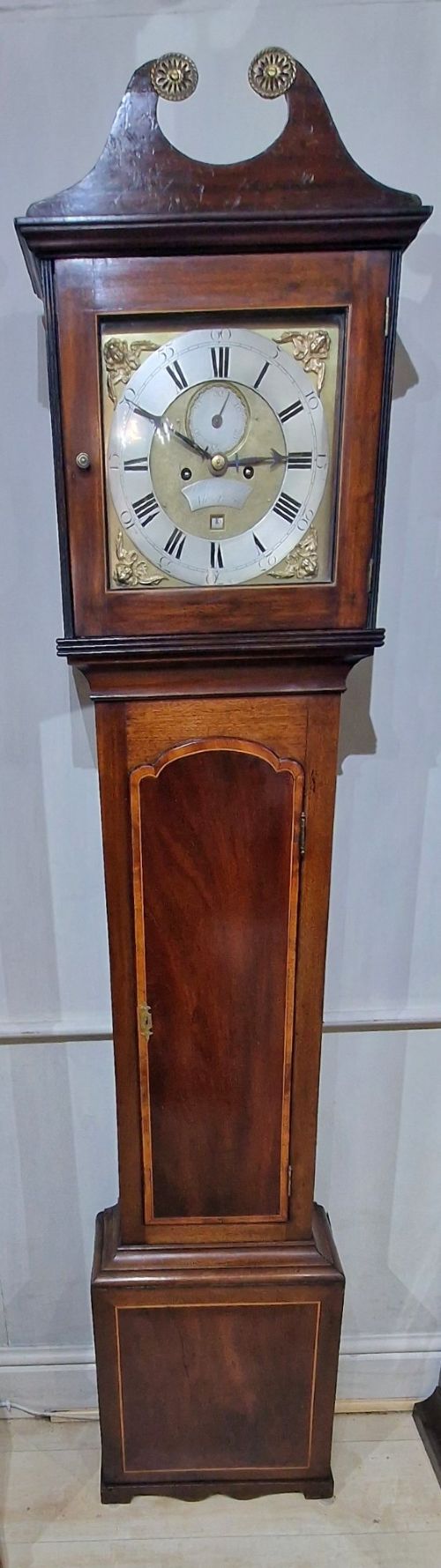
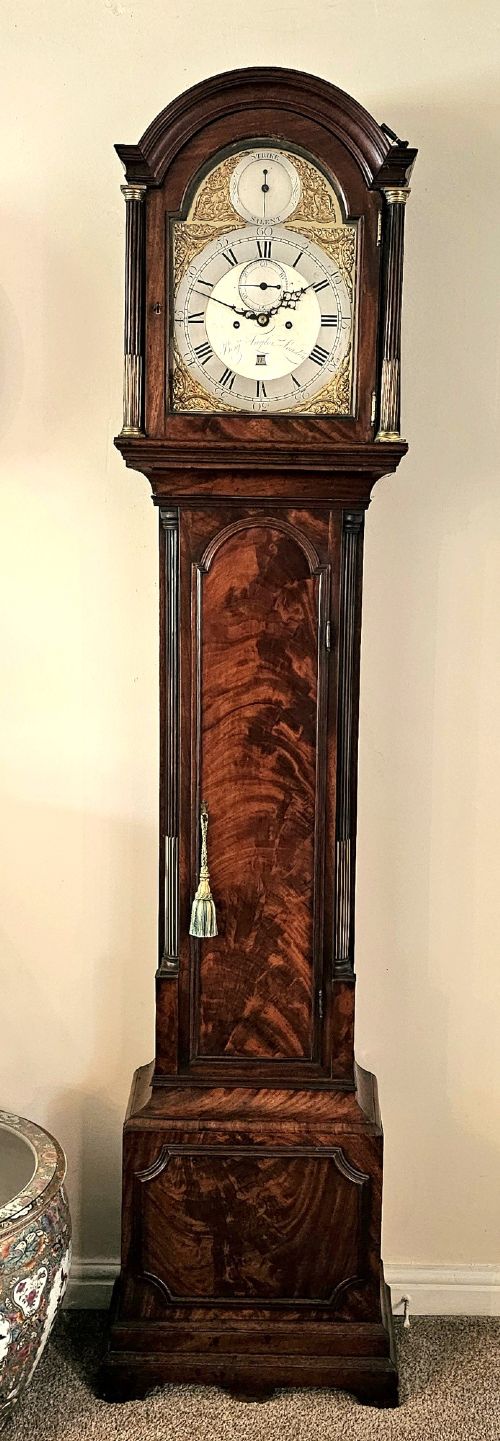
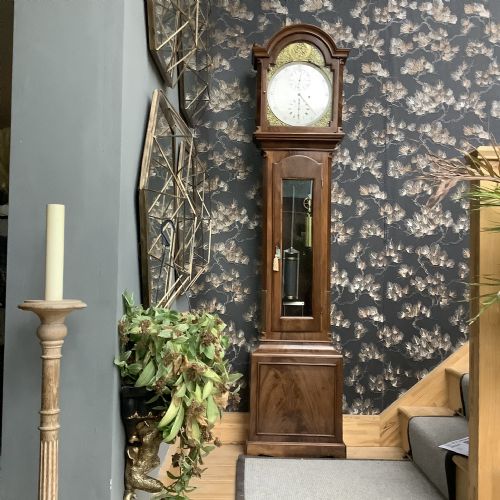


Brass Spandrel Floor Clock
A brass spandrel floor clock is a tall timepiece housing a dial with decorative brass corner elements, built to command a room with mechanical presence.
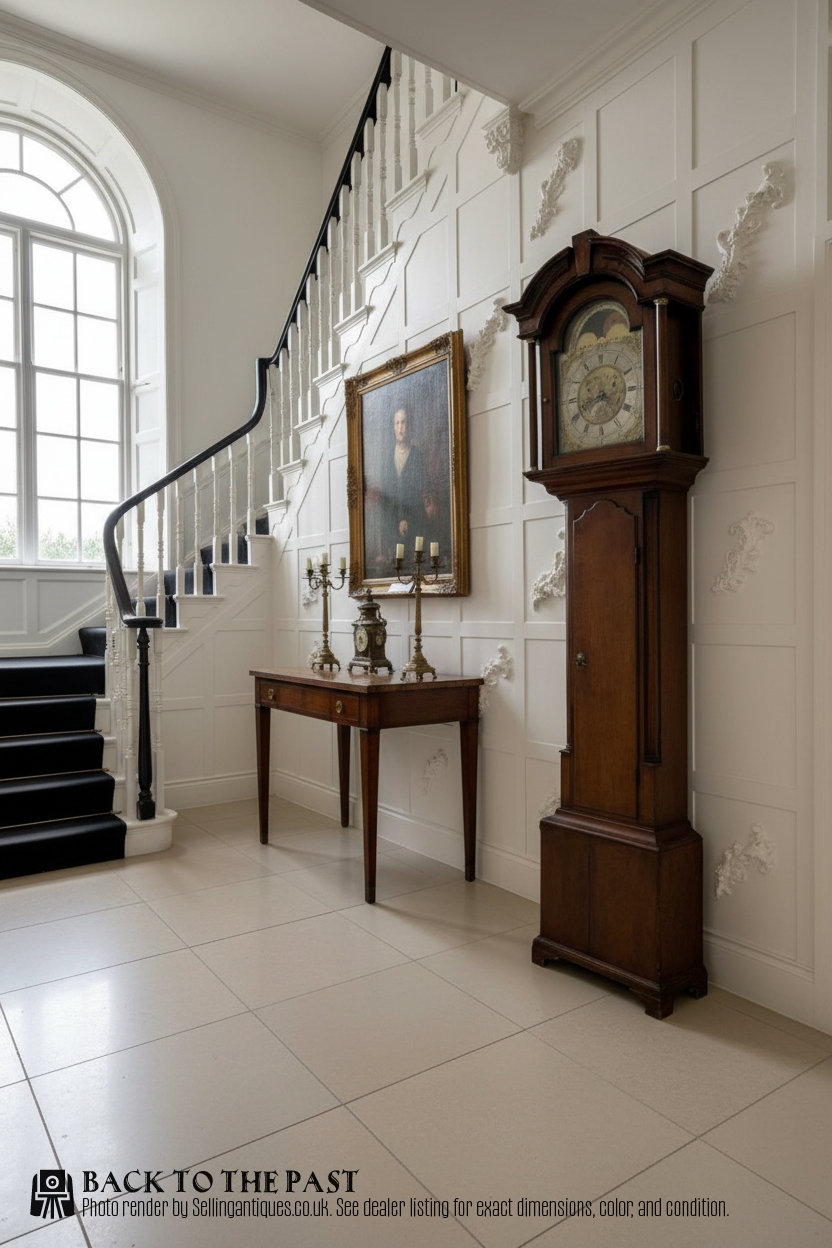
Brass Spandrel Floor Clock
When you search for a brass spandrel floor clock, you are looking at tall case timepieces primarily originating from the Georgian and 18th Century periods, alongside occasional Victorian and Edwardian examples. These tall instruments take the form of longcase clocks and grandmother clocks housed in substantial wooden cabinetry.
The versions you are most likely to meet on this page feature regional or London craftsmanship, spanning simple 30 hour movements to more complex 8 day mechanisms. Their heights and proportions vary from compact small formats to grand architectural statements.
Cases present in several timber varieties that define their visual weight, ranging from vernacular oak to figured mahogany, walnut, and pollard oak. Each example showcases the traditional clockmaker's art preserved through centuries of domestic use.
What varies in quality
Quality reveals itself in the selection of timber veneers and the figure of the wood, where richly grained mahogany or pollard oak elevates the cabinet's presence far beyond plain boards. The cabinet proportions and the crispness of the mouldings dictate the maker's original ambition.
Within the movement, the finish of the brass dial work and the engraved signature of the maker indicate the tier of workshop production. Well executed mechanical parts and refined dial engraving separate standard regional production from fine London work.
Listings span Georgian, Victorian, and Edwardian periods, utilising oak, mahogany, walnut, and pollard oak timber.
Benjamin Taylor·Thomas Utting·Joseph Lum·William Lister·Thomas Rogers
The Brass Spandrel Floor Clock Glossary
- Spandrel
- The triangular space between the circular dial and the rectangular frame, usually filled with cast brass ornamentation on these clocks.
- Longcase clock
- A tall freestanding pendulum clock enclosed in a wooden case with a trunk and hood, commonly known as a grandfather clock.
- Grandmother clock
- A smaller, more slender version of the traditional longcase clock, often associated with Edwardian or later production.
- Chapter ring
- The circular band on the clock face that bears the numerical hour and minute markers.
- Eight day movement
- A mechanical clock movement designed to run for eight days between winding sessions, requiring two weights or springs.
Brass Spandrel Floor Clock: Frequently Asked Questions
What is a brass spandrel floor clock?
A brass spandrel floor clock is a tall case timepiece featuring decorative brass corners on the dial face. They encompass longcase and grandmother clocks from the Georgian era onwards.
These pieces combine cabinetmaking with mechanical clockwork, designed to stand upright on the floor in domestic settings.
How do I tell an 18th century clock from a later one?
Eighteenth century examples often display regional oak or early mahogany cabinetry with simpler, robust proportions and single hand or early eight day movements. Makers inscribed their names directly onto the brass dial face.
Later Victorian and Edwardian pieces frequently adopt different styling cues, sometimes in smaller formats such as grandmother clocks, reflecting changing domestic interiors.
What woods were used for the cases?
Makers constructed the tall cases using native and imported timbers suited to fine furniture making. Oak appears frequently in earlier and regional examples.
Mahogany, flame mahogany, pollard oak, and walnut feature in more polished pieces, offering varied grain patterns and rich tones.
Are these clocks thirty hour or eight day?
The evidence includes both thirty hour and eight day mechanical movements. Thirty hour versions require daily or weekly winding depending on the weight drop.
Eight day movements run for slightly over a week before needing a full wind, utilising dual weights housed within the trunk.