
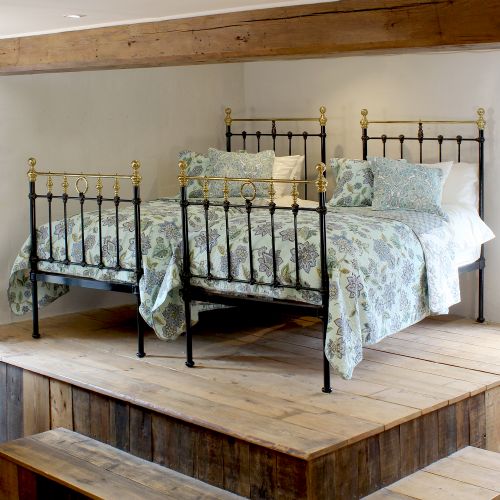
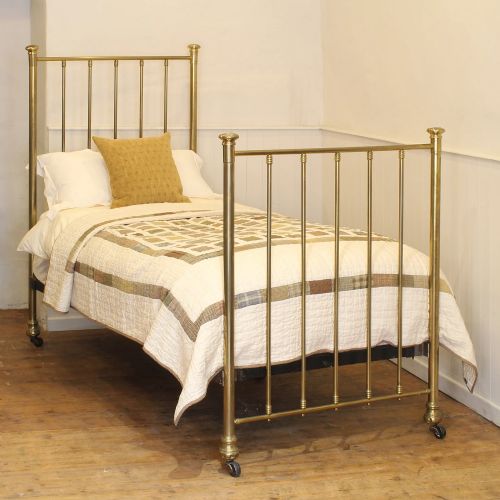
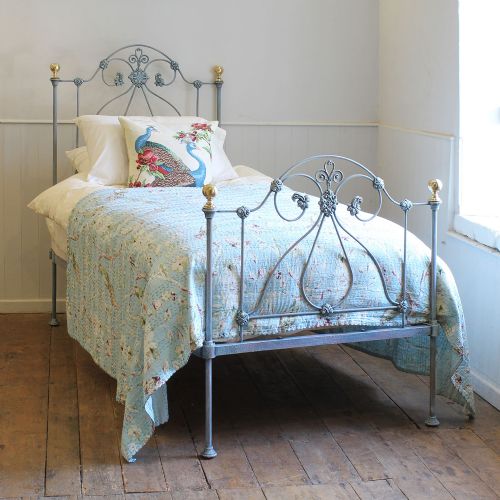
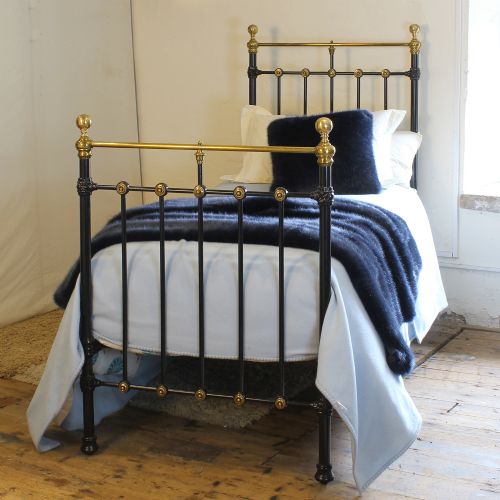


Brass Single Bedstead
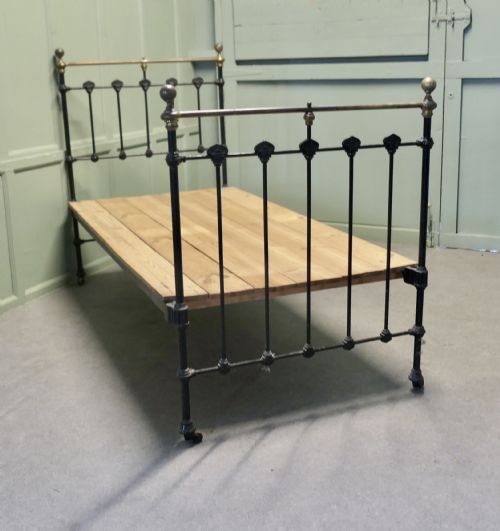
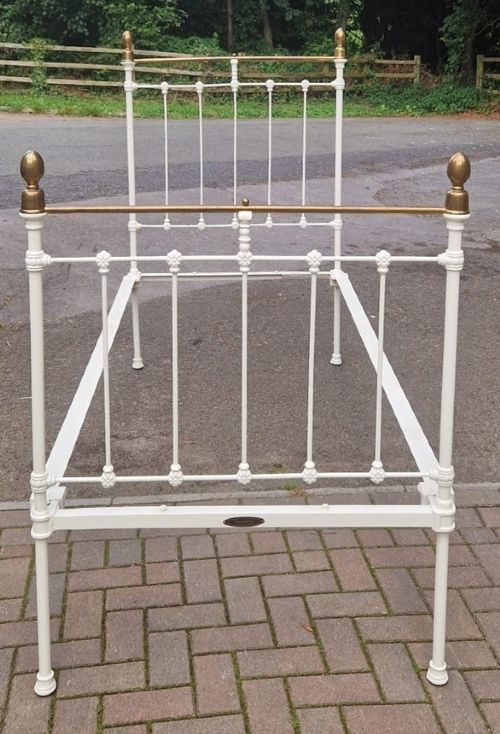
A brass single bedstead brings warmth and structural presence to a compact bedroom, combining metal frames with gleaming brass components.
Brass Single Bedstead
A brass single bedstead is a compact sleeping frame designed for one person, incorporating metal framework alongside polished brass elements. These pieces emerge primarily from the Victorian and Edwardian eras, spanning the mid-nineteenth century into the early twentieth century.
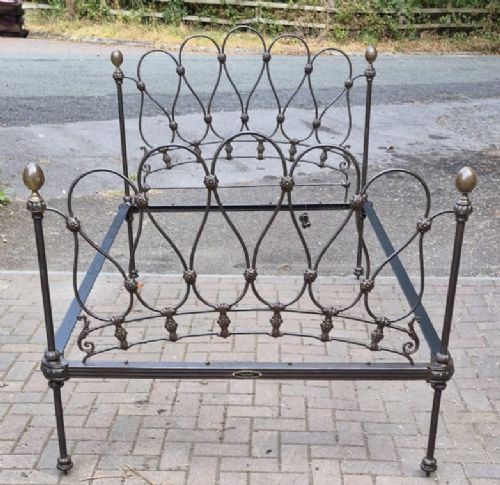
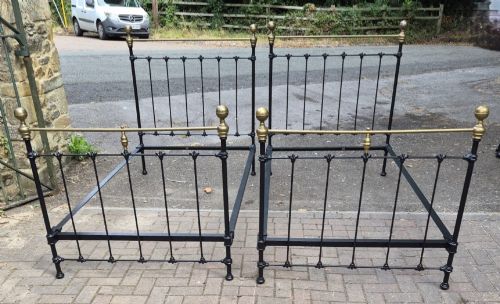
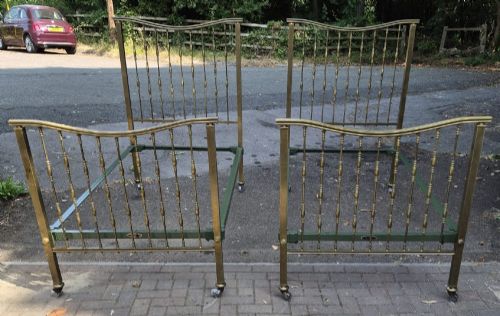
The version most commonly met on this page is the single-size frame, frequently combining brass tubing with cast iron, painted finishes, or wooden elements. Makers such as Hoskins & Sewell, R W Winfield, and Shoolbred produced notable examples during this period.
How they were made
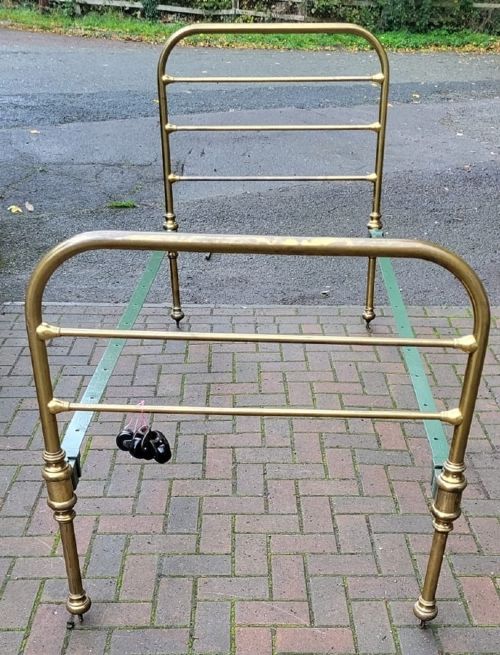
Construction relies heavily on robust metalworking techniques, joining cast iron, wrought iron, and tubular brass to create stable frameworks. Cast iron components provide structural integrity, while brass tubing and cast mounts form the decorative headboards and footboards.
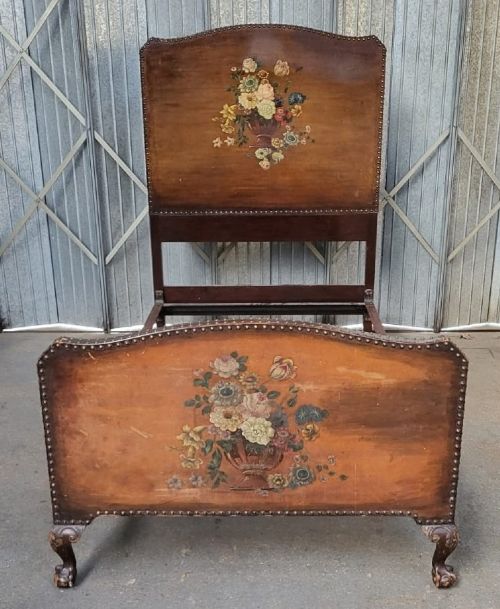
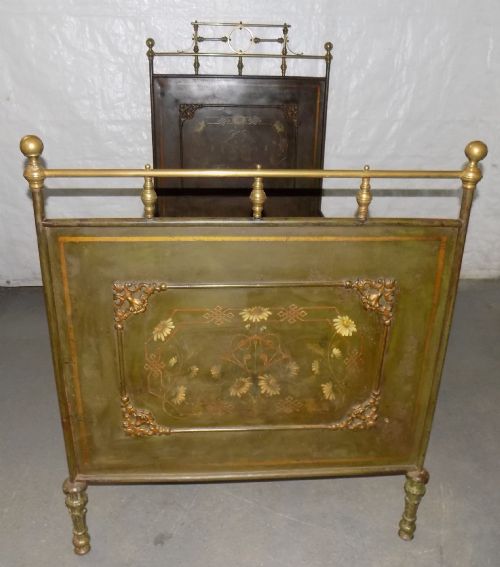
Surface treatments vary widely, incorporating painted finishes in black, white, and blue verdigris, alongside toleware painting and hand-painted Dutch styles on leather or timber. Joints often utilise mechanical fixings designed for straightforward assembly and dismantling.
Brass Single Bedstead Retail Price Guide 2026
Typical asking prices for brass single bedstead among the pieces listed under this phrase on Sellingantiques today, from the lower quarter to the upper quarter. They describe what is for sale here now, not the wider market.
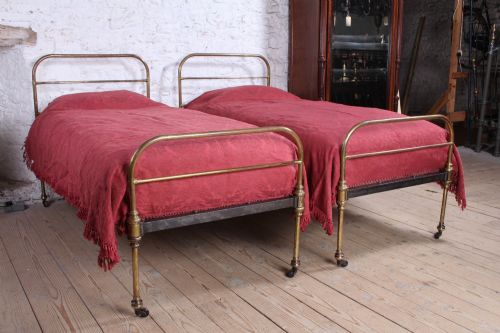
Several listings note pairs that can be joined together, offering a flexible sleeping arrangement first popular over a century ago.
What varies in quality
The distinction between tiers rests upon the robustness of the casting work and the weight of the metal used in the frame. Heavier gauge brass tubing and finely detailed cast iron mounts indicate superior manufacture compared to lighter, purely utilitarian models.
Detailing such as hoop flourishes, ceramic castors, and integrated brass decoration elevate certain examples above standard production. The integrity of the original painted or polished surfaces further dictates the standing of an individual piece.
Hoskins & Sewell·R W Winfield·Shoolbred
The Brass Single Bedstead Glossary
- Bedstead
- The complete framework of a bed, excluding the mattress and bedding. It supports the sleeping platform through side rails and head and foot assemblies.
- Cast iron
- An iron-carbon alloy poured into moulds to create rigid structural or decorative components. It frequently forms the chassis of these metal beds.
- Toleware
- Lacquered or enamelled metalware, typically tin or iron, decorated with painted scenes or patterns. It appears on specific continental bed frames.
- Verdigris
- A green patina formed naturally on copper, brass, or bronze surfaces through atmospheric oxidation. On these beds, it is sometimes applied as a deliberate decorative finish.
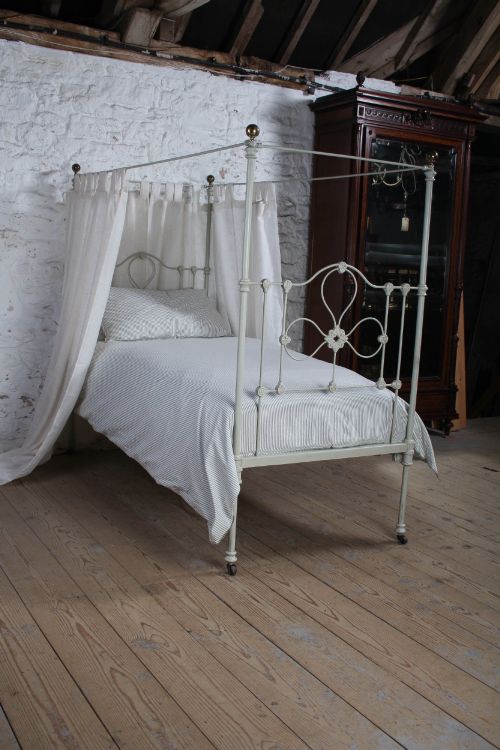
- Four poster
- A bed featuring four vertical columns that support an upper canopy framework. This form appears occasionally alongside standard single frames.
Brass Single Bedstead: Frequently Asked Questions
How do I assemble an antique bed?
Most frames utilise wedge-fit or bolt-in side rails that slot directly into the headboard and footboard posts.
Tightening the structural bolts evenly ensures the frame remains square and stable once mattress slats are added.
Can standard modern mattresses fit these beds?
Many older single frames measure around three feet in width, but overall lengths can occasionally differ from contemporary standard sizes.
Checking the internal length and width dimensions against modern mattress sizes prevents fitting issues.
How should I clean brass bed parts?
Dusting with a dry cloth removes everyday debris without disturbing patinated surfaces.
Harsh metal polishes should be avoided unless the brass was previously lacquered or modern brightening is specifically desired.
What indicates a Victorian date?
Victorian examples frequently display heavy cast iron framing combined with substantial brass knobs and robust joinery techniques.
Proportions tend to be heavier and more industrial than the lighter forms seen in later Edwardian pieces.