


Brass Scientific Barograph
A brass scientific barograph records atmospheric pressure over time within a polished case, offering a tangible link to meteorological history.
Brass Scientific Barograph
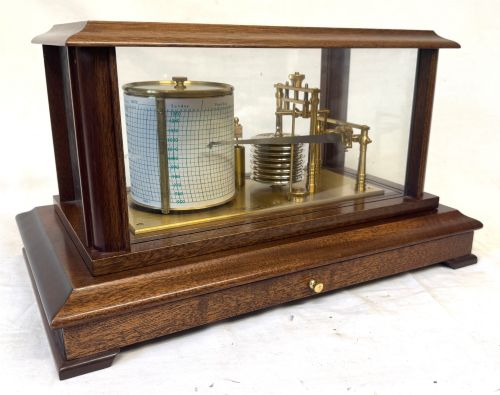
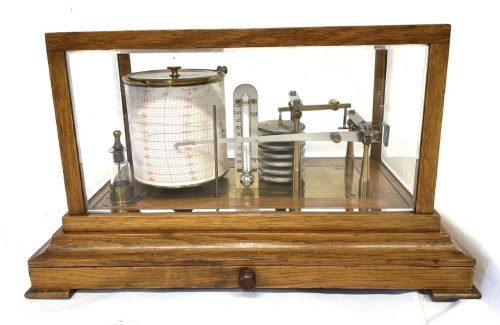
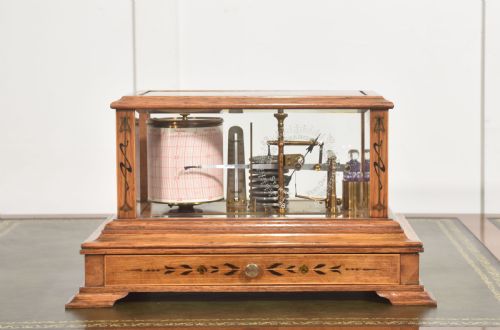
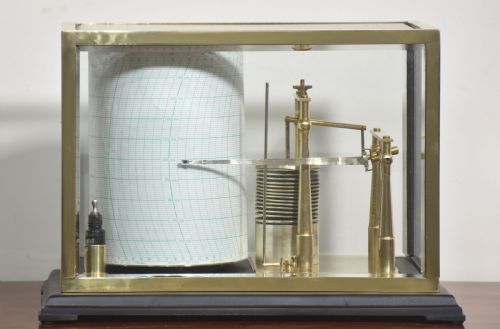
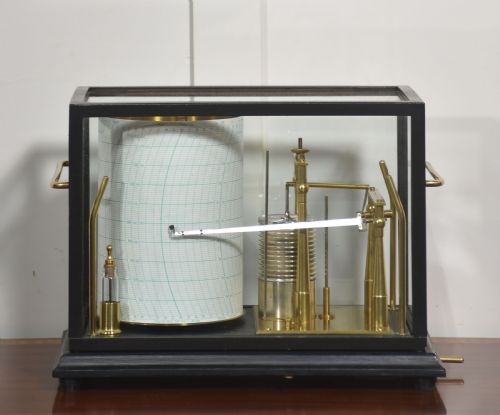
A brass scientific barograph combines brass mechanisms with timber and glass housings to chart barometric pressure continuously. These instruments record weather shifts onto paper charts driven by clockwork movements housed beneath the metal framework.
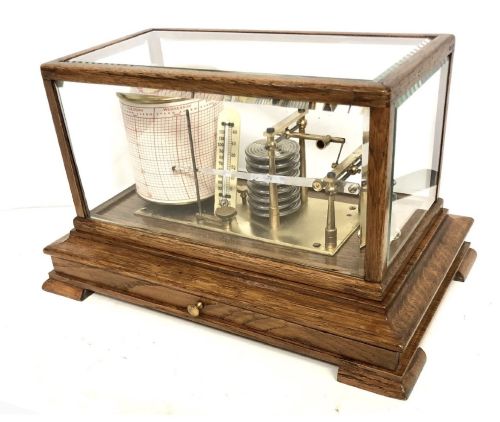
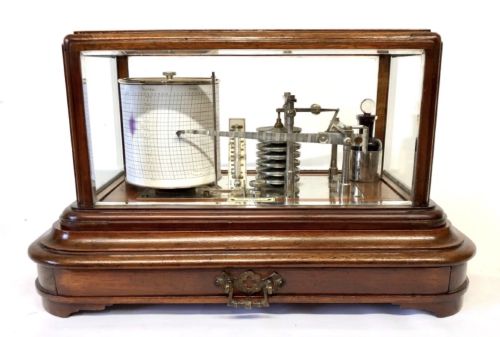
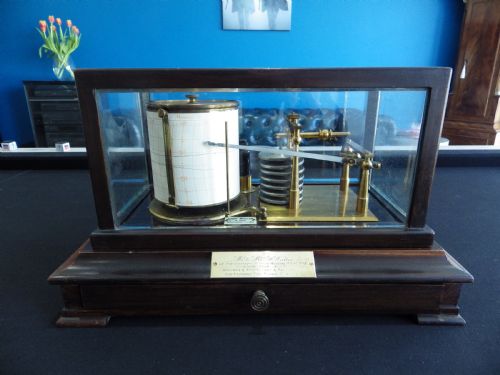
The versions most commonly met on this page span the Victorian, Edwardian, and interwar periods, featuring oak, mahogany, or walnut cabinetry. Many examples incorporate glass panels on five sides alongside built-in thermometer scales and chart drawers.
Makers stamp their names onto the metal beds or silvered dials, connecting domestic weather recording with established scientific instrument firms of the nineteenth and twentieth centuries.
Materials and construction
Makers built the internal chassis from polished brass and steel, pairing stacked aneroid metal bellows with delicate recording levers and ink arms. This metallic assembly sits inside wooden table or wall cases constructed from seasoned oak, mahogany, or walnut.
Glazing typically utilises bevelled glass panes fitted into timber frames to protect the delicate movement while allowing a clear view of the revolving drum and oscillating arm.
Some travel-hardened instruments carry faint ink splashes inside their wooden bases, left behind by past owners wrestling with stubborn nibs.
Judging quality in scientific barographs
Quality rests in the crispness of the maker's signature, the precision of the brass linkages, and the calibre of the cabinetry. Finer examples display meticulous dovetailing, heavy bevelled glass, and secondary barometer dials integrated into the base.
Cabinet timber selection and secondary functions, such as attached thermometers or lower chart storage drawers, distinguish standard utilitarian models from bespoke pieces retailed by prominent London houses.
Short and Mason·Negretti and Zambra·Casella London·Richard Freres·Jules Richard
The Brass Scientific Barograph Glossary
- Aneroid barograph
- An instrument measuring atmospheric pressure without liquid, using expanding metal capsules connected to a recording arm. This mechanical setup drives the pen across a rotating paper cylinder.
- Chart drawer
- A small compartment built into the wooden base below the glass case to store spare weekly recording papers. This feature keeps consumables neatly contained beneath the instrument.
- Bevelled glass
- Glass panes with angled, polished edges fitted into the wooden housing. This detail catches the light and signifies superior cabinet construction.
- Thermometer
- A temperature scale mounted alongside the main pressure drum, usually framed in brass. It provides an immediate secondary weather reading.
- Clockwork movement
- The spring-driven mechanism concealed within the rotating brass drum that turns the chart once per week. It requires manual winding via a dedicated key.
Brass Scientific Barograph: Frequently Asked Questions
How does a brass scientific barograph work?
Stacked metal bellows expand and contract with changes in atmospheric pressure, moving a pivoted arm fitted with an ink nib. This arm traces a continuous line onto a paper chart secured around a rotating clockwork cylinder.
The clockwork drum turns once a week, translating invisible barometric shifts into a physical ink trace that reveals weather patterns over several days.
How do I wind the clockwork mechanism?
A small winding key engages with an arbour on the top or inside of the rotating brass drum. Care must be taken not to overwind the mainspring.
Most drums are designed to run for seven days before requiring another turn to maintain the rotation of the paper chart.
Where should I place a barograph at home?
These instruments require a stable, level surface away from direct sunlight, radiators, and heavy vibrations that might disturb the delicate aneroid bellows. A sturdy sideboard or desk in a main room suits them well.
Because the cases feature glass panels on multiple sides, positioning the instrument where adequate natural light reaches the dial enhances visibility of the recording arm.
How are Victorian and Edwardian barographs told apart?
Victorian examples frequently utilise heavier mahogany or walnut timber frames with robust brass fittings, often reflecting mid-to-late nineteenth-century cabinet styles. Edwardian pieces commonly introduce lighter oak cases, sometimes incorporating Art Nouveau inlay motifs.
Maker signatures and style cues on the paper chart drawers also help narrow down the decade of manufacture.