



Glass Case Barometer
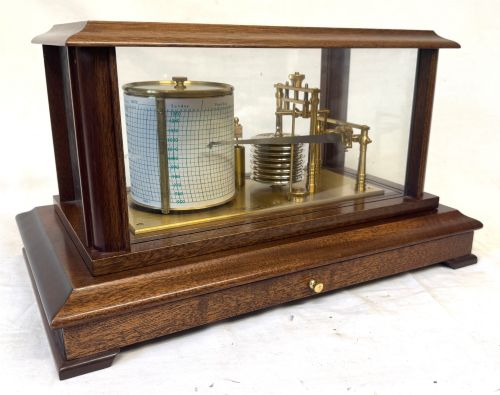
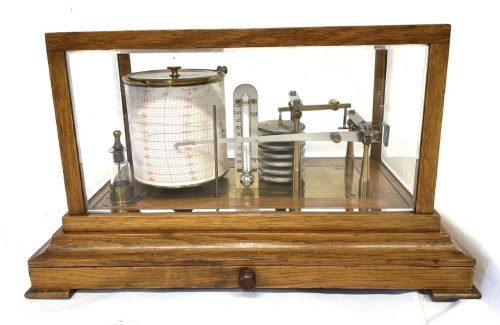
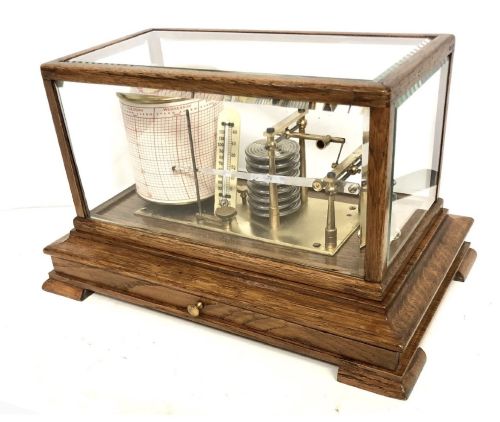
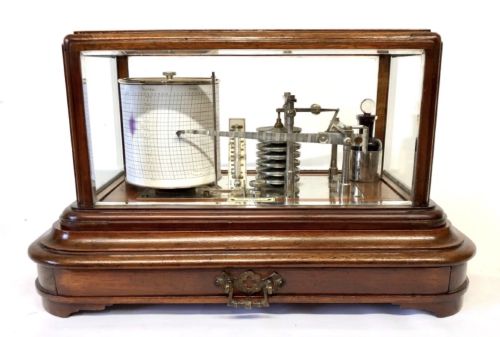
A glass case barometer brings precision weather tracking into the room, housed inside protective timber and glass frames that display the intricate mechanics within.
Glass Case Barometer
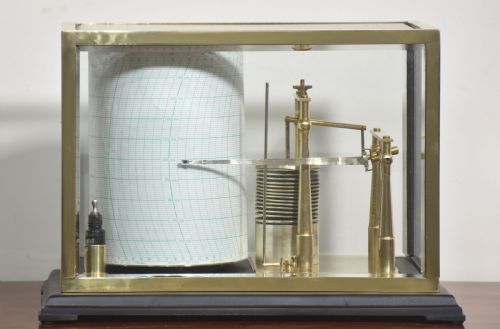
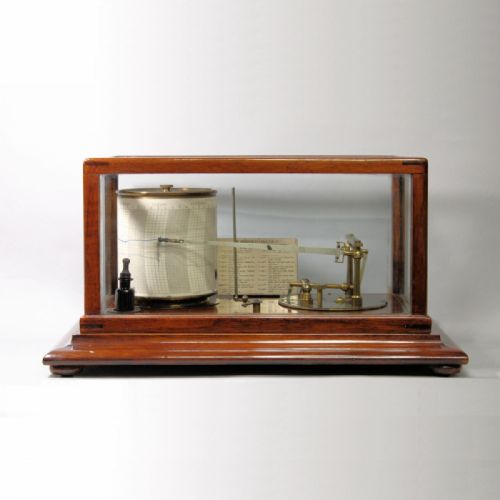
A glass case barometer encompasses meteorological instruments designed to record atmospheric pressure, most frequently taking the form of recording barographs housed in five-glass wooden enclosures. These pieces emerge predominantly from the Victorian and Edwardian eras, spanning into the mid-twentieth century.
Makers and retailers stamped their names upon dials and paper beds, linking these scientific instruments to provincial towns, London houses, and colonial outposts alike. Buyers encounter domestic recording devices intended to monitor shifting weather patterns with mechanical reliability.
Materials and construction
Cabinetmakers utilised dense timbers such as oak, mahogany, and walnut to construct the protective housings, joining them with clean corners to support heavy bevelled glass panes. These timber cases required stability to protect the sensitive barometric bellows and clockwork drums operating inside.
Metal components, predominantly brass and steel, form the recording arms, levers, and clockwork movements that translate atmospheric shifts into inked lines upon paper charts. Bevelled glass fitted into the timber frames allows an unobstructed view of the mechanical recording process from every angle.
Several instruments carry retailer signatures from Glasgow, Harrogate, and Norwich, reflecting regional distribution across Britain.
Evaluating quality and execution
Superior examples distinguish themselves through the crispness of the timber cabinetry and the finish of the internal brass mechanisms. Fine houses and prominent makers invested greater care in jointing the oak or mahogany and engraving the instrument scales.
The presence of original bevelled glass panes, intact chart drawers, and associated paperwork elevates a piece above standard utility versions. Attention to detail in the geometric woodwork and the precision of the clockwork drum mark the higher tiers of production.
Short and Mason·Negretti and Zambra·J Hughes London·Russell Norwich·Gaupp and Co
The Glass Case Barometer Glossary
- Barograph
- A self-recording barometer that graphs atmospheric pressure onto a rotating paper chart over the course of a week. This mechanical instrument uses an aneroid cell stack linked to an inked nib.
- Aneroid barometer
- A device for measuring pressure without liquid, using a flexible metal box that expands or contracts as air pressure changes. This movement transfers to a dial indicator via levers.
- Bevelled glass
- Glass panes with edges ground and polished at an angle, fitted into the timber case to provide distortion-free viewing of the mechanism. This feature signifies better quality construction.
- Chart drawer
- A shallow compartment built into the base of the timber case to store spare weekly recording papers and spare ink bottles. It keeps necessary maintenance accessories neatly contained beneath the instrument.
- Stick barometer
- A tall wall-mounted instrument displaying a mercury column within a protective wooden trunk, allowing direct reading of barometric height. These pieces often feature exposed cistern covers at the base.
Glass Case Barometer: Frequently Asked Questions
How do I operate a barograph?
You fit a fresh weekly paper chart around the rotating drum, wind the clockwork movement carefully, and ensure the inked nib rests lightly on the paper.
The instrument then tracks pressure changes automatically as the aneroid stack rises and falls, moving the arm across the rotating cylinder.
Where were these instruments placed?
Victorian and Edwardian households placed them in libraries, halls, or studies where guests could observe the mechanical recording of local weather.
The sturdy timber and glass construction protected the delicate internal levers from household dust while keeping the recording drum visible.
How do I date a glass case?
Cabinet styles, timber choices, and maker signatures help date the enclosure, with heavier mouldings appearing on nineteenth-century pieces and lighter oak or walnut frames in twentieth-century examples.
Paperwork or retailer stamps left inside the chart drawer provide further clues to the active trading period of the shop.