

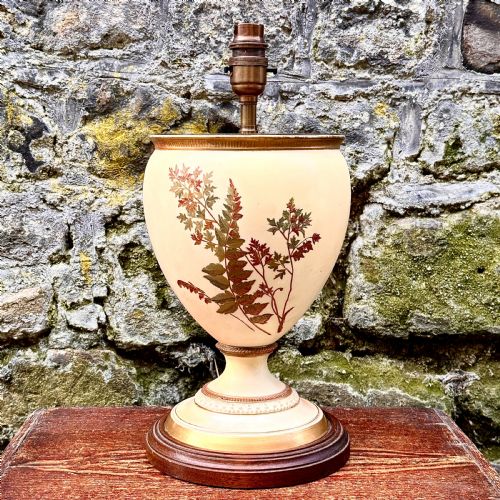


Brass Porcelain Table Lamps
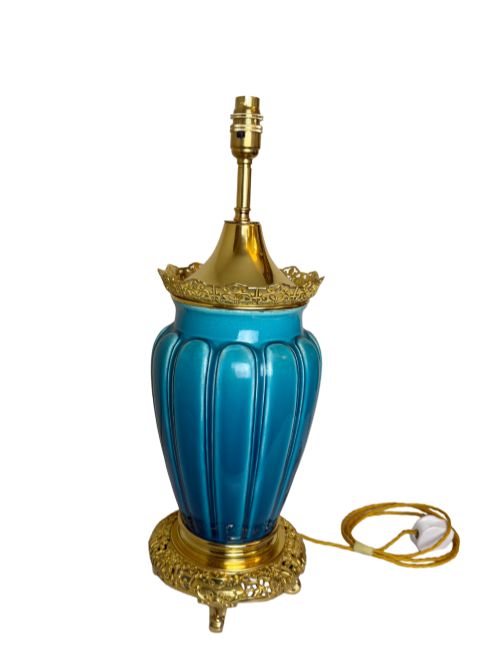
Brass porcelain table lamps bring together glazed ceramic bodies and cast metal mountings to illuminate a room with period character.
Brass Porcelain Table Lamps
Brass porcelain table lamps combine ceramic bodies with metallic bases and mounts, often converted from earlier oil lamps or vases. These pieces appear across nineteenth-century and early twentieth-century periods, including Victorian and Edwardian examples.
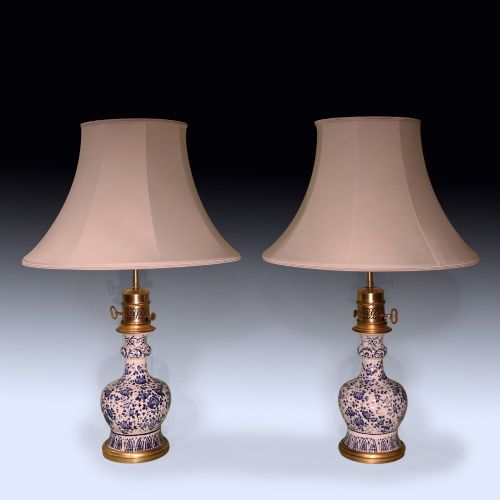
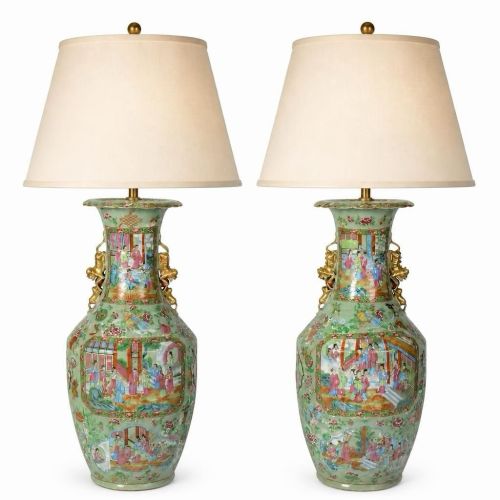
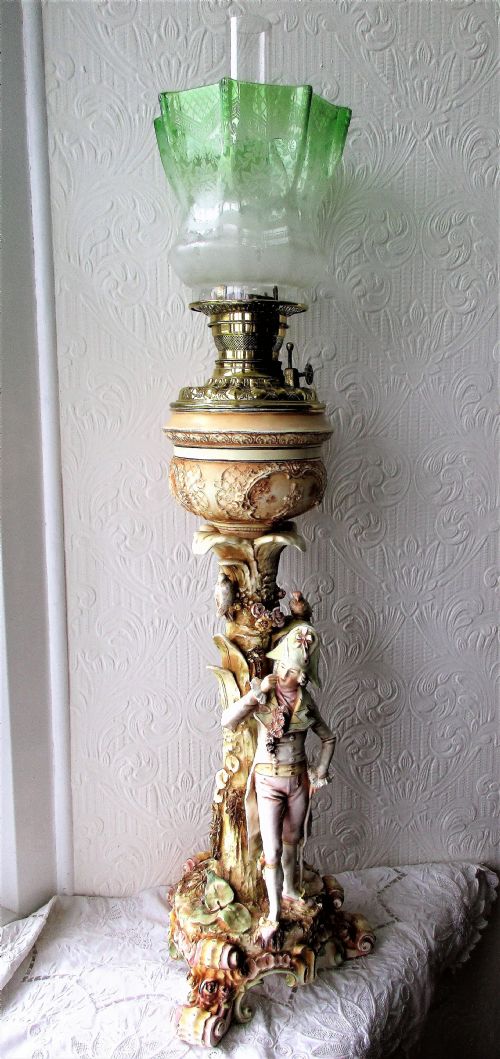
The selection includes Chinese export porcelain, French manufactory vessels, and English ceramic bodies fitted with brass hardware. Buyers encounter forms ranging from ginger jars and vases to figural models and converted oil lamps.
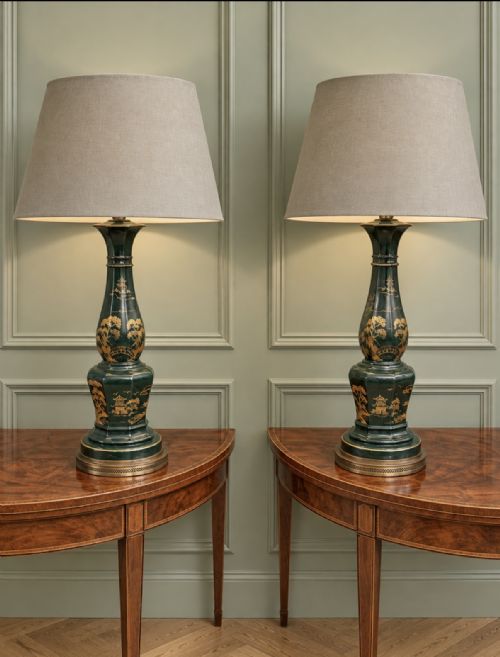
Styles span Chinoiserie decoration, Rococo Revival ornamentation, and classical Chinese designs such as Famille Rose and celadon. Many retain fabric or silk shades that complement the painted and glazed porcelain bodies.
How they were made
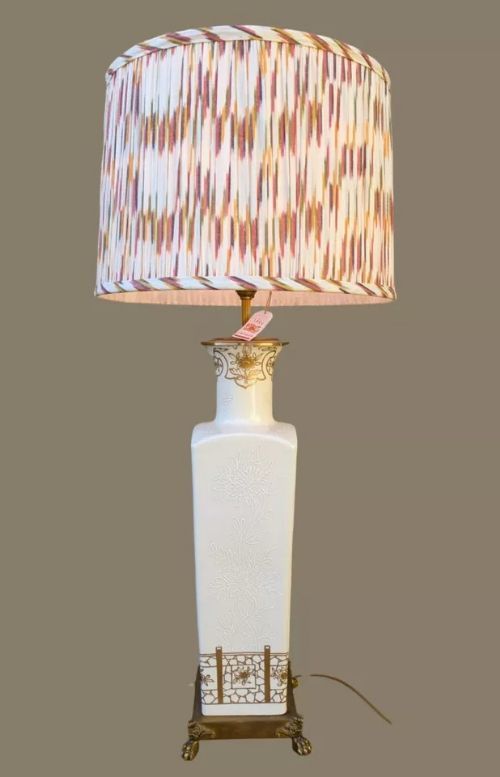
Makers constructed these lamps by mounting porcelain bodies onto cast brass, gilt bronze, or ormolu bases, frequently incorporating metal collars and fittings. The ceramic components showcase hand-painted glazes, blue and white pigments, and enamel detailing.
Many examples utilise converted antique vases, ginger jars, or nineteenth-century oil lamps that were later adapted for electrical wiring. Fabric, silk, and glass elements are added to complete the lighting assemblies.
Brass Porcelain Table Lamps Retail Price Guide 2026
Typical asking prices for brass porcelain table lamps among the pieces listed under this phrase on Sellingantiques today, from the lower quarter to the upper quarter. They describe what is for sale here now, not the wider market.
A German porcelain spitz dog lamp from eighteen-eighty provides a charming canine alternative to traditional floral vases.
What varies in quality
Quality differences depend on the fineness of the porcelain body, the intricacy of hand-painted or enamelled decoration, and the crispness of the brass or gilt metal mountings. Superior pieces display finely detailed figures, botanical motifs, or balanced proportions.
The integration of the electrical conversion and the preservation of the original ceramic glaze and metal patination dictate the overall integrity of the lamp.
Royal Worcester·Sitzendorf porcelain·Karl Ens·Anton Buschelberger·Meissen Porcelain
The Brass Porcelain Table Lamps Glossary
- Famille Rose
- A palette of opaque Chinese ceramic enamels dominated by pink or rose colours, widely used during the Qing dynasty. This style appears frequently on nineteenth-century vases converted into lamps.
- Celadon
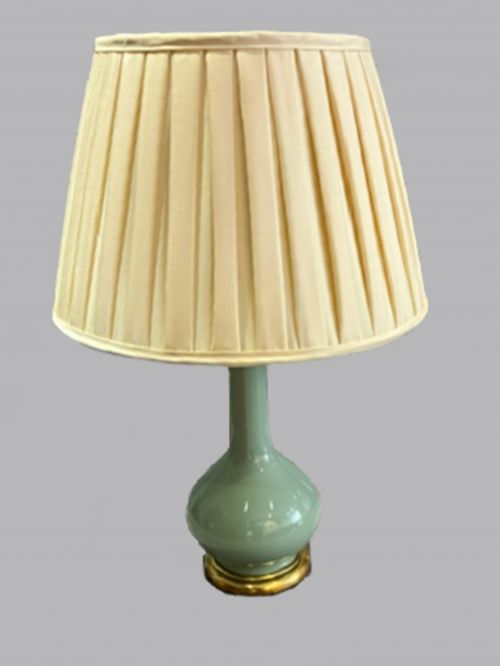
- A pale green jade-like glaze applied to porcelain bodies. It originates from traditional Chinese kilns and surfaces on several nineteenth-century pieces.
- Ormolu
- Cast brass that has been finished with a gold-coloured mercury amalgam or gilt coating. It provides ornamental mounts for French and Victorian lamp bases.
- Chinoiserie
- European artistic styles reflecting Chinese motifs and decorative techniques. This aesthetic informs many painted ceramic lamp designs.
- Cloisonné
- Metalwork technique where compartments are created using soldered wire and filled with enamel paste. Examples include lamp bases decorated in this manner.
Brass Porcelain Table Lamps: Frequently Asked Questions
Are these lamps converted from older vessels?
Many examples began life as nineteenth-century Chinese vases, ginger jars, or oil lamps before receiving electrical wiring and brass mountings.
This method of adaptation preserves antique ceramic bodies while updating them for modern interior lighting requirements.
How do I identify the period of the porcelain?
Dating relies on stylistic clues such as the glaze colours, hand-painted motifs, and the characteristics of the brass or gilt bronze mounts.
Victorian, Edwardian, and nineteenth-century Chinese export pieces each exhibit distinct manufacturing traits and decorative palettes.
Can I replace the lampshade safely?
Fabric, silk, and glass shades can be updated provided the fitter matches the gallery or harp dimensions of the existing brass hardware.
Choosing a shade that complements the scale of the porcelain body maintains the visual balance of the lamp.
What maintenance do these lamps require?
Dusting porcelain bodies with a soft cloth and cleaning brass components with appropriate metal care preserves the surface finish.
Wiring should be checked periodically by a qualified professional to ensure safety, particularly on older converted pieces.