
Brass Oil Lamp Glass Shade
A brass oil lamp glass shade brings warmth and period character to a room through the combination of polished metal and coloured or etched glass.
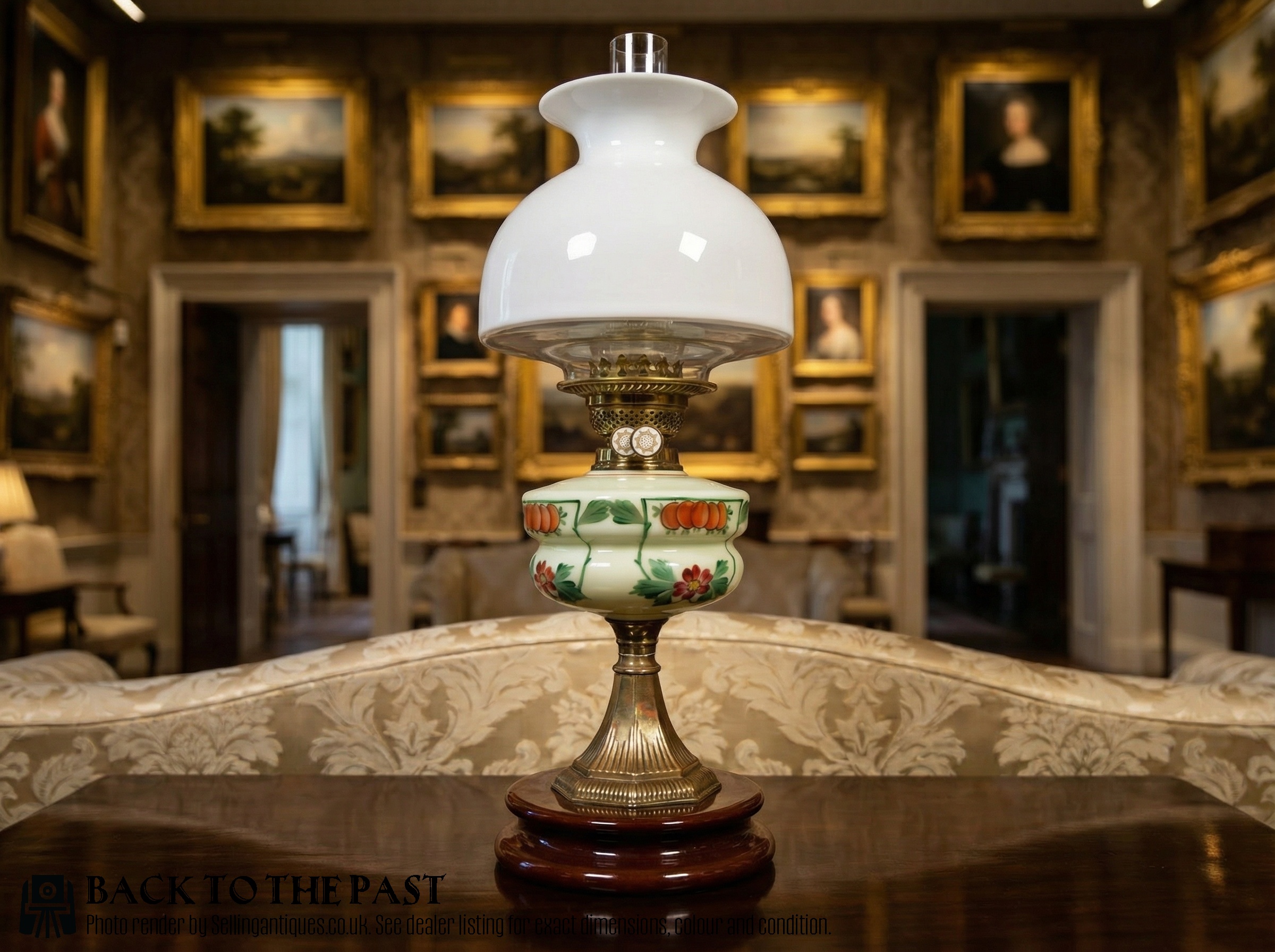
Brass Oil Lamp Glass Shade
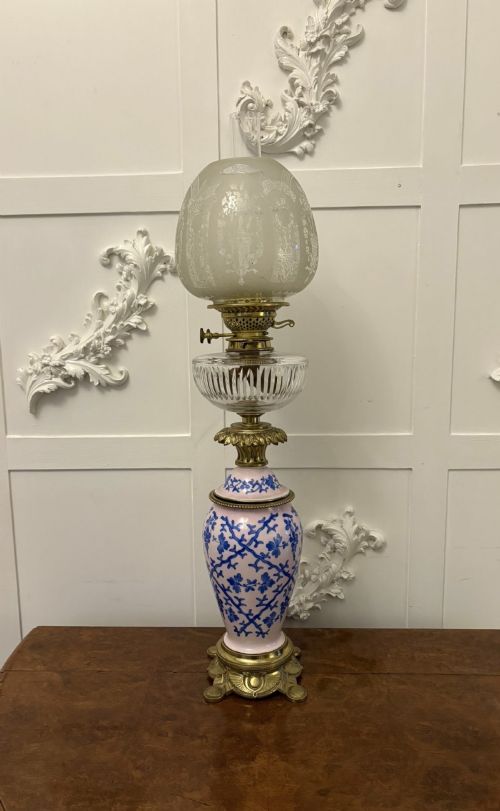
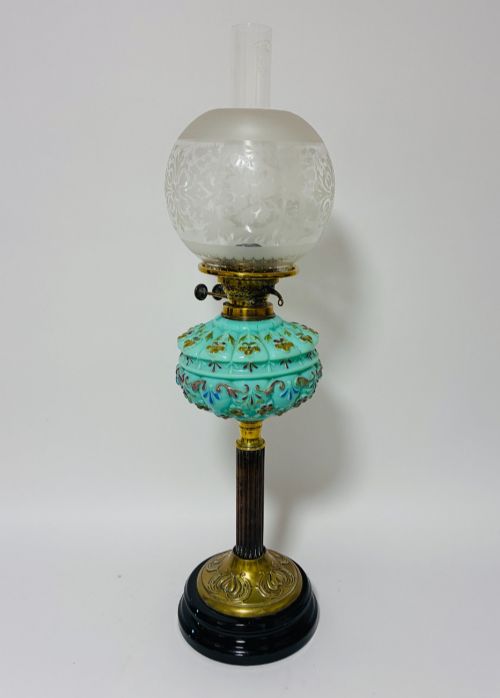
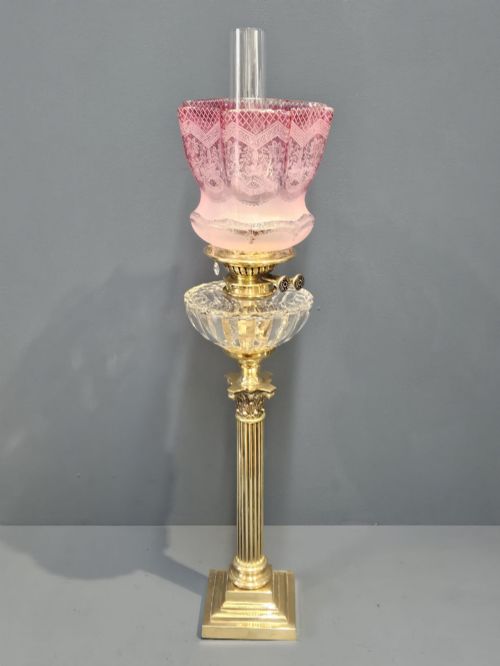
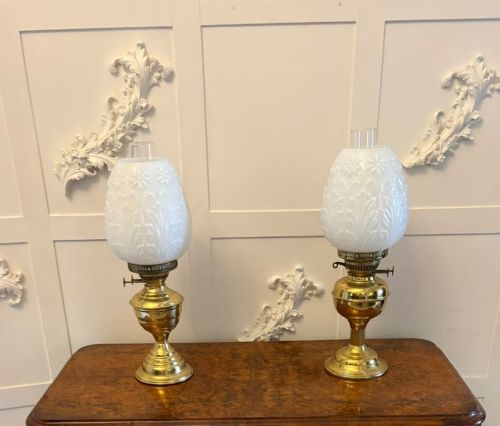
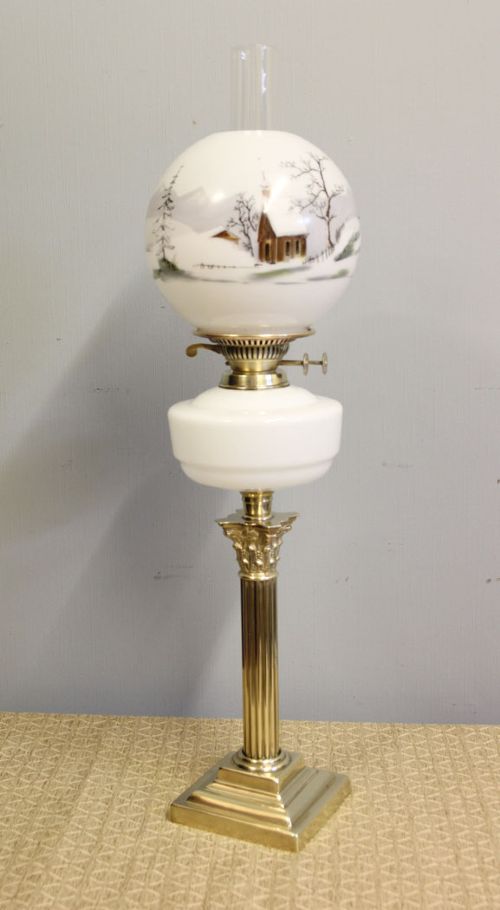
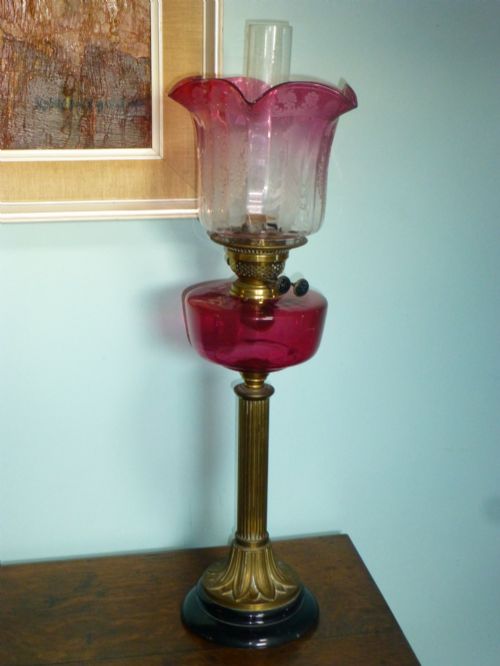
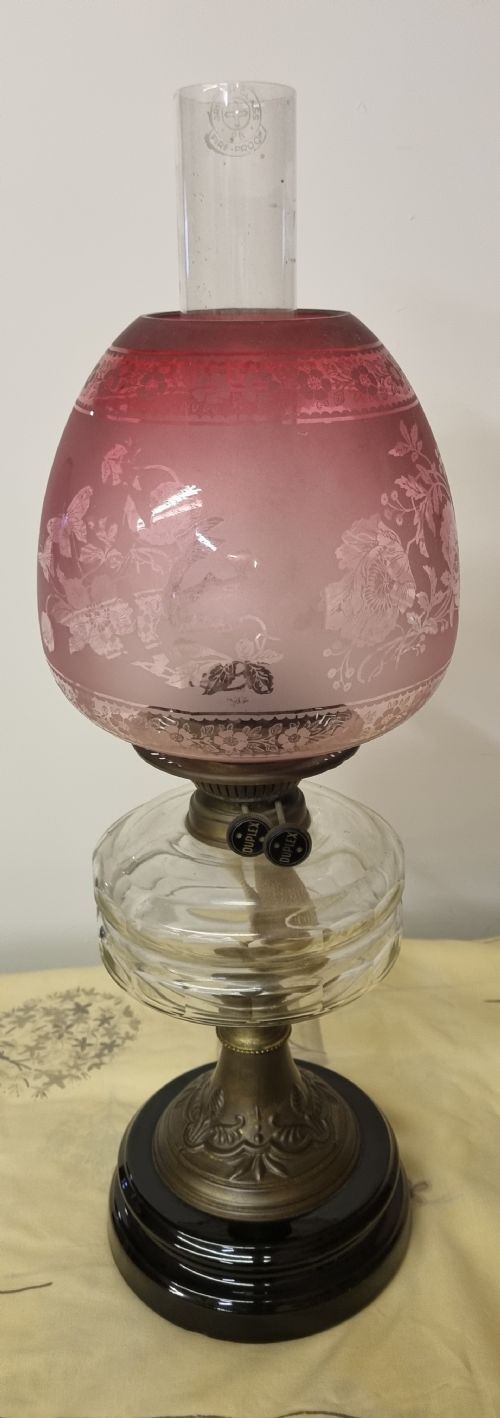
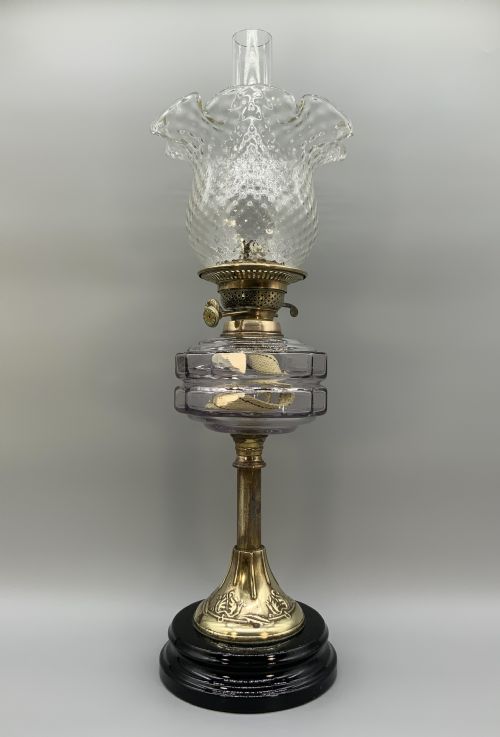
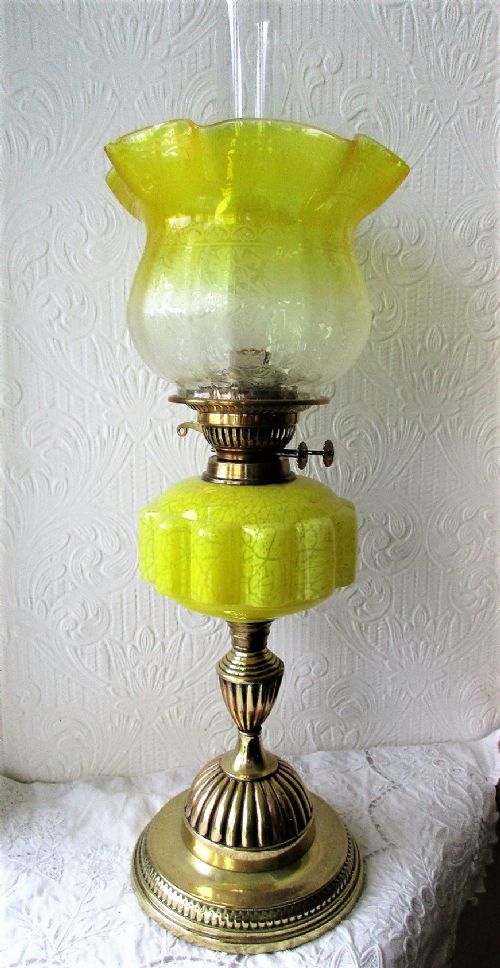
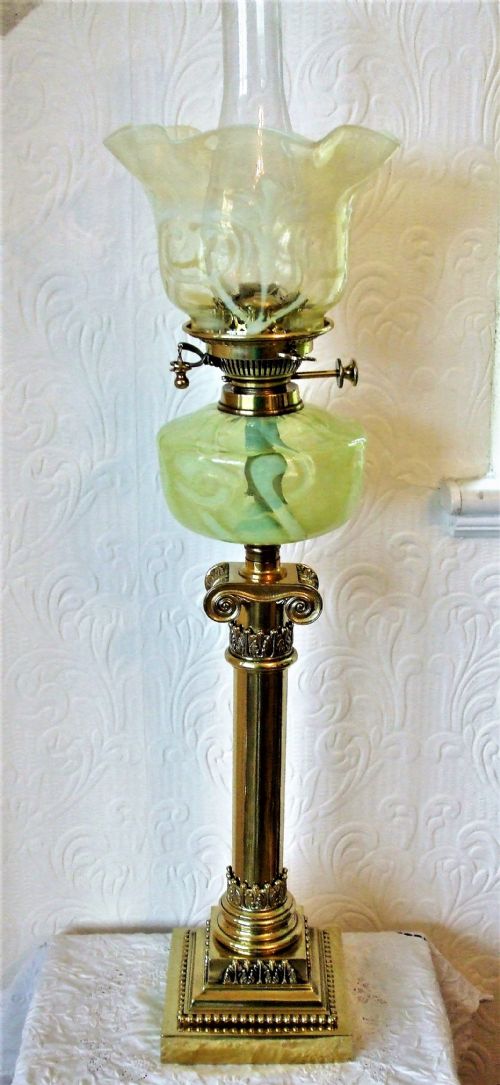
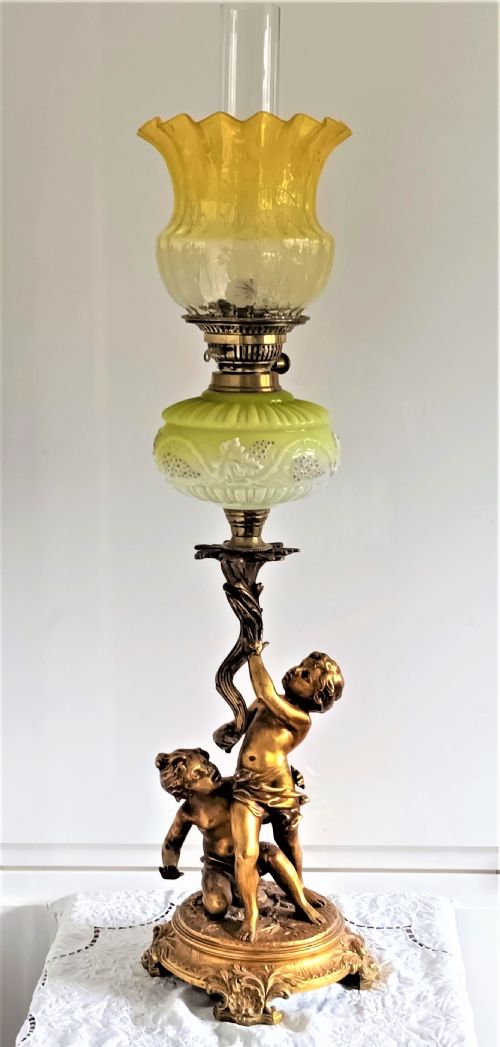
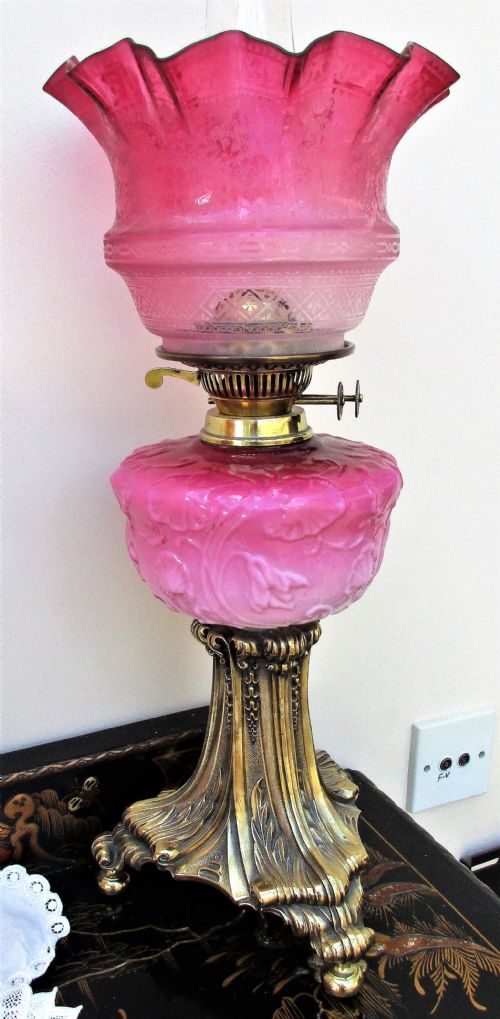
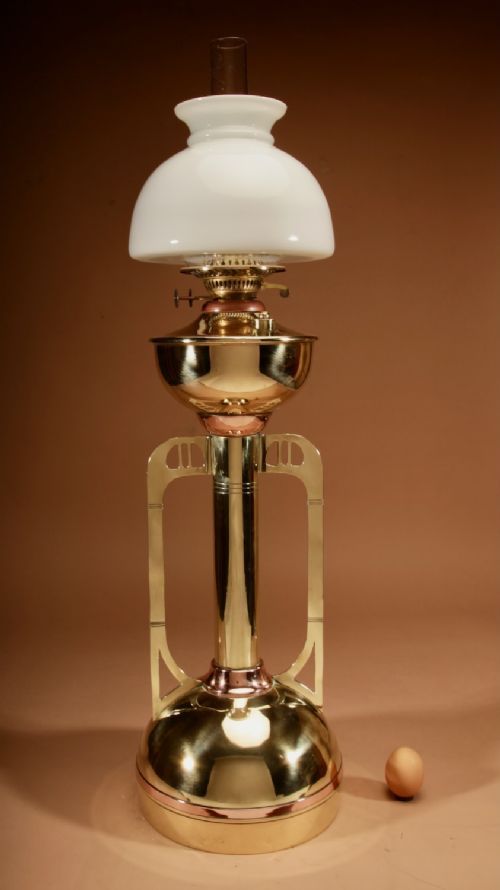
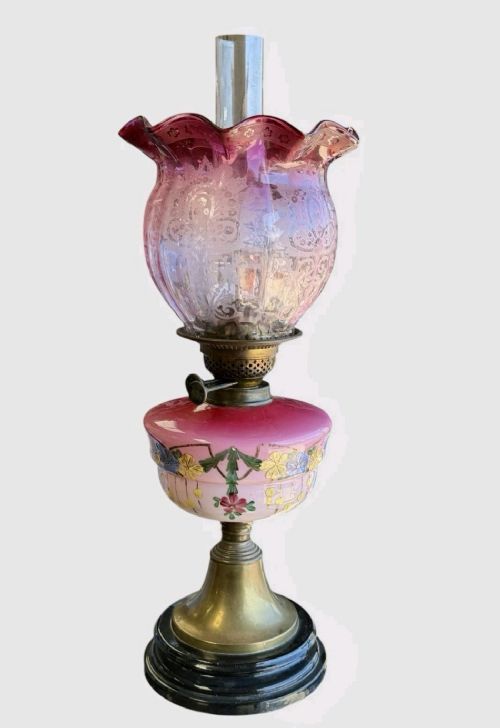
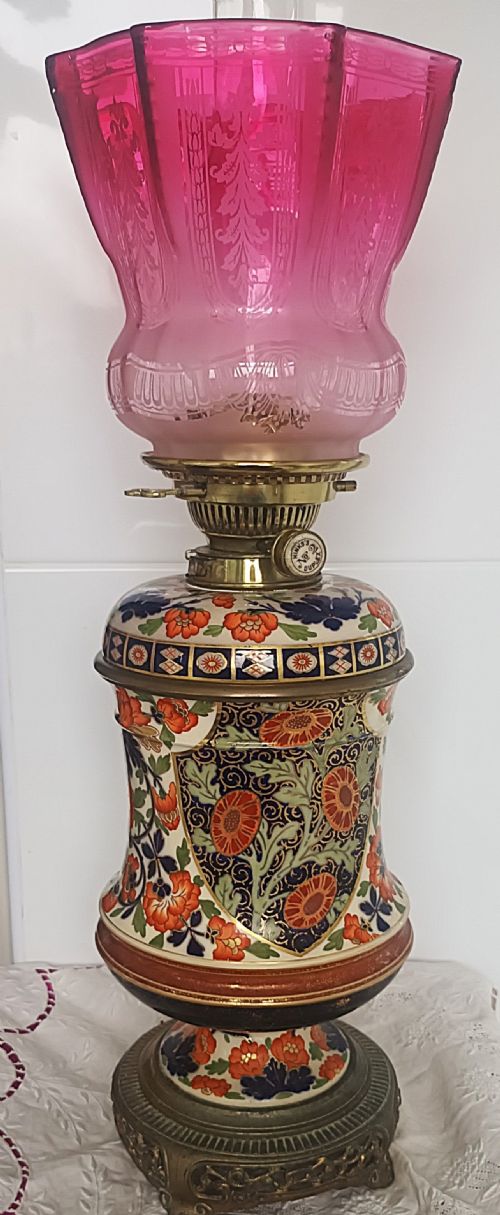
When you search for a brass oil lamp glass shade, you find lighting components and complete Victorian and Edwardian lamps originating from the nineteenth and early twentieth centuries. The versions most commonly met on this page combine a heavy brass column or base with a hand-blown or etched glass shade in cranberry, opaline, or clear glass.
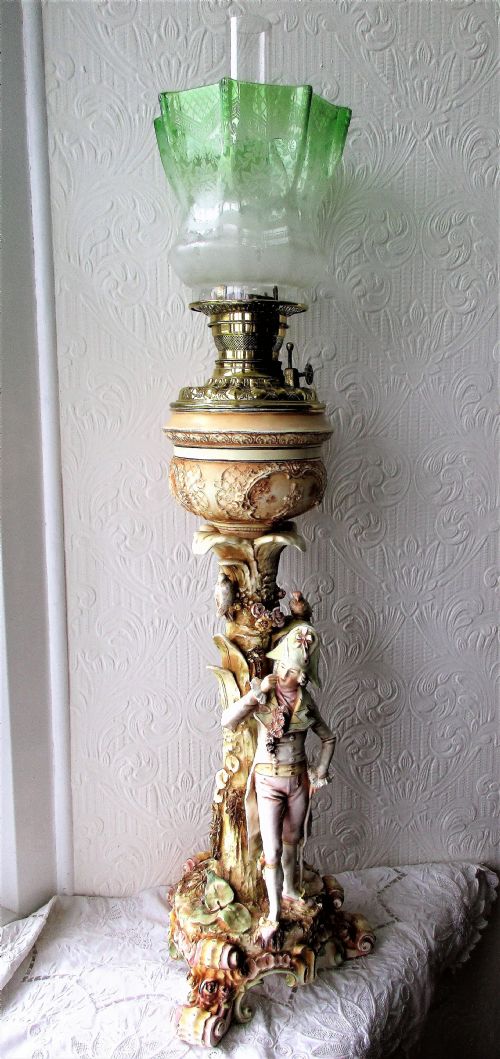
These items span periods from the 1860s through to the Edwardian era and 1910, encompassing table lamps, floor-standing models, and twin-burning duplex designs. Styles range from strict Corinthian and Ionic columns to flowing Art Nouveau and Secessionist forms with ceramic or copper elements.
How they were made
Makers formed the structural bases from cast and spun brass, often pairing the metal with ceramic bodies, copper, or black glass plinths. Columns frequently followed classical architectural orders, such as Corinthian and Ionic, utilising heavy casting techniques to support the weight above.
The glass shades and fonts required skilled glassblowing and hand-finishing, producing cranberry glass, opaline glass, and cut or etched patterns. Artisans also applied hand-painted botanical motifs directly onto the glass surfaces before mounting them onto the brass burners.
The listings on this page span the Victorian era, the Edwardian period, and the early twentieth century up to nineteen thirty.
What varies in quality
The standard of a brass oil lamp glass shade is judged by the crispness of the brass casting and the weight of the metal components. Heavier columns, intricate chasing, and substantial marble or glass bases separate superior pieces from standard domestic lighting.
On the glass side, depth of colour in cranberry or opaline variants and the precision of hand-etched or hand-painted details define the upper tier of the range. The integration of maker-marked burners, such as those by Hinks, adds significant distinction.
Gustave Serrurier Bovy·Hinks of Birmingham·Taylor Tunnicliff
The Brass Oil Lamp Glass Shade Glossary
- Duplex burner
- A double-wick mechanism designed to produce a brighter flame than standard single-wick lamps. These burners frequently appear on larger table and floor-standing models.
- Cranberry glass
- A rich red-pink transparent glass created by adding gold chloride to the molten batch. It is widely seen in Victorian and Edwardian shade production.
- Opaline glass
- An opaque, milky-white glass that diffuses light softly. This material was commonly blown into globe and tulip shapes for period lighting.
- Corinthian column
- A classical architectural column style featuring an ornate capital decorated with acanthus leaves. It was a popular motif for nineteenth-century brass lamp stems.
- Ionic column
- A classical column style distinguished by scroll-like spiral volutes on the capital. Lamp makers utilised this form to lend architectural dignity to table lamps.
Brass Oil Lamp Glass Shade: Frequently Asked Questions
How do I date a brass oil lamp?
Dating relies on stylistic clues such as column orders, burner patents, and glass colours. Victorian examples often favour ornate classical revival forms, while Edwardian pieces lean towards simpler lines or softer opaline shades.
Maker marks stamped onto the brass burner mechanisms provide the most reliable chronological markers. Comparing the font materials, from ceramic to coloured glass, also helps narrow the decade of manufacture.
Can I use these lamps for daily lighting?
Most of these pieces are antique decorative objects designed for paraffin oil and require careful assessment before any practical use. Many owners choose to display them as they are or have them professionally converted for modern electrical wiring.
When converting a lamp, care must be taken to preserve the original burner and shade fittings without causing permanent damage. Consulting a specialist ensures the delicate brass and glass components remain intact.
How do I clean brass and glass shades?
Cleaning brass requires gentle methods to preserve the natural aged patina rather than achieving a bright, modern shine. Mild soapy water on a soft cloth removes dust without stripping the historic surface.
Glass shades should be washed separately in lukewarm water to protect any hand-painted details or etched patterns. Harsh chemical cleaners must be avoided entirely on both metal and glass.
What is the difference between table and floor lamps here?
Table lamps are proportioned for placement on sideboards, desks, or mantelpieces, typically featuring compact brass columns and moderate glass shades. They represent the majority of surviving domestic lighting.
Floor-standing models are substantially taller and often incorporate pole designs or heavy tripod bases to maintain stability. These larger pieces were intended to stand directly on the floor in principal rooms.