


Painted Glass Oil Lamp
These painted glass oil lamp examples bring nineteenth and early twentieth century domestic illumination into modern rooms with hand-painted fonts and shades.
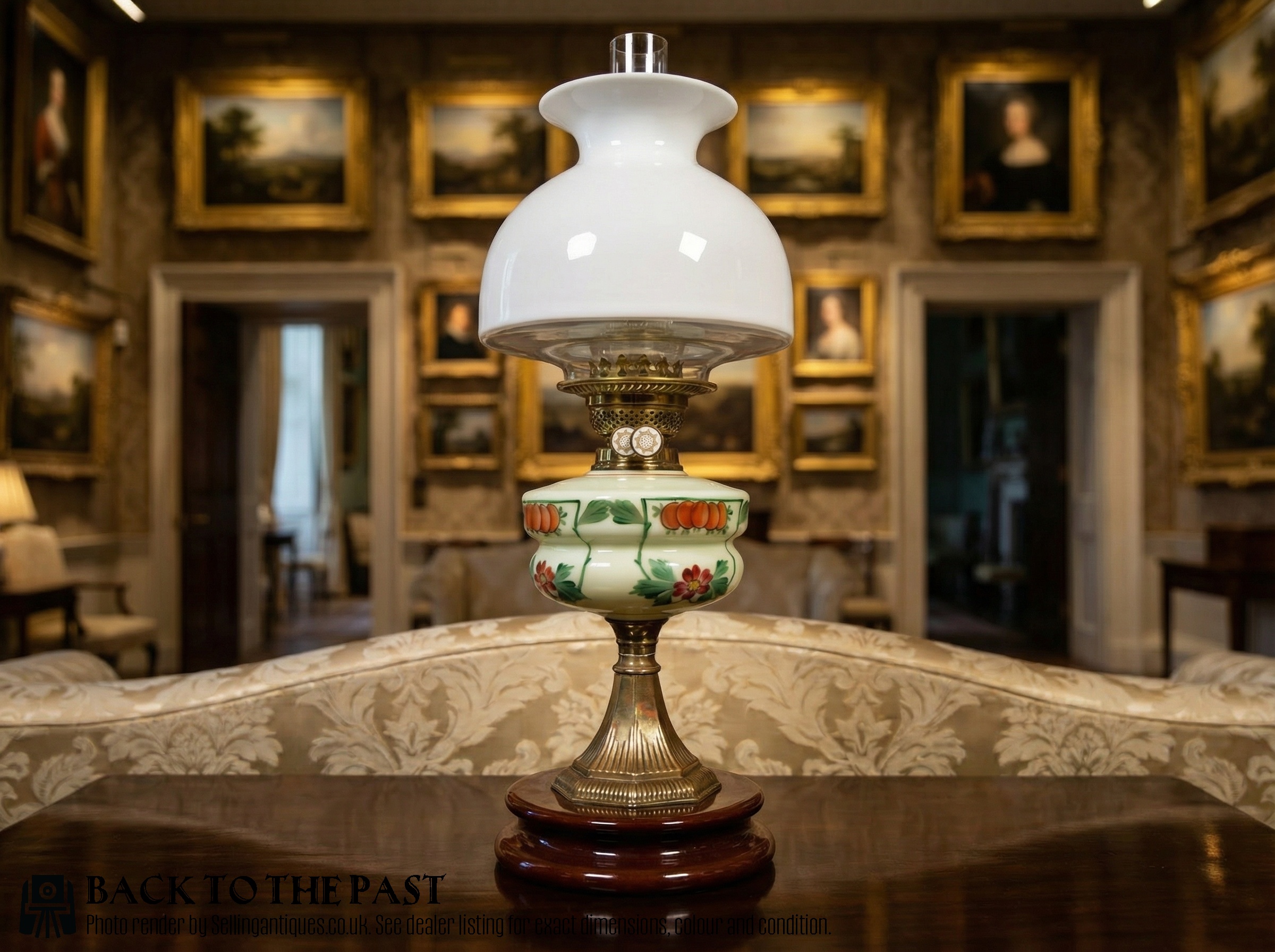
Painted Glass Oil Lamp
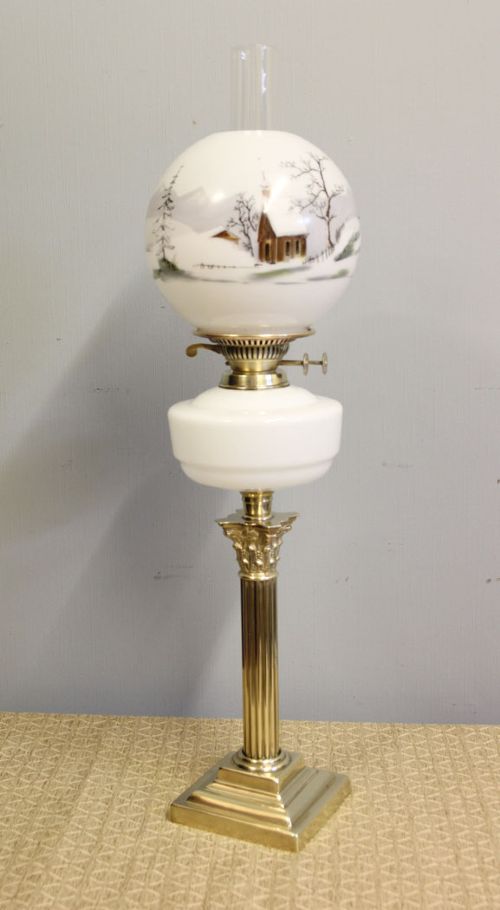
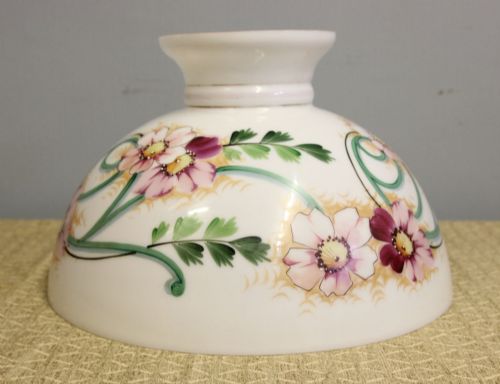
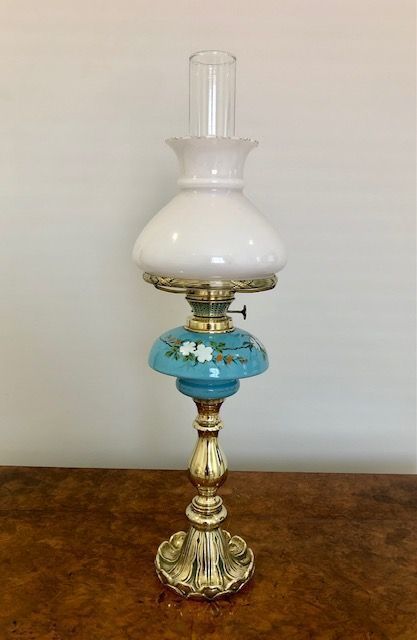
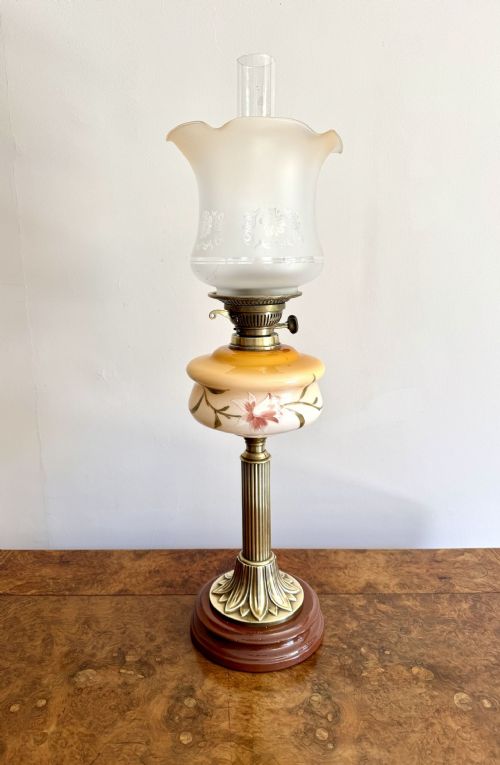
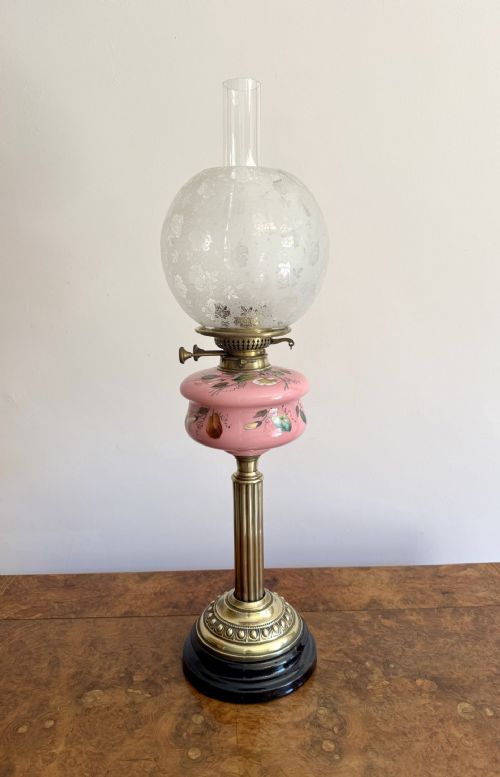
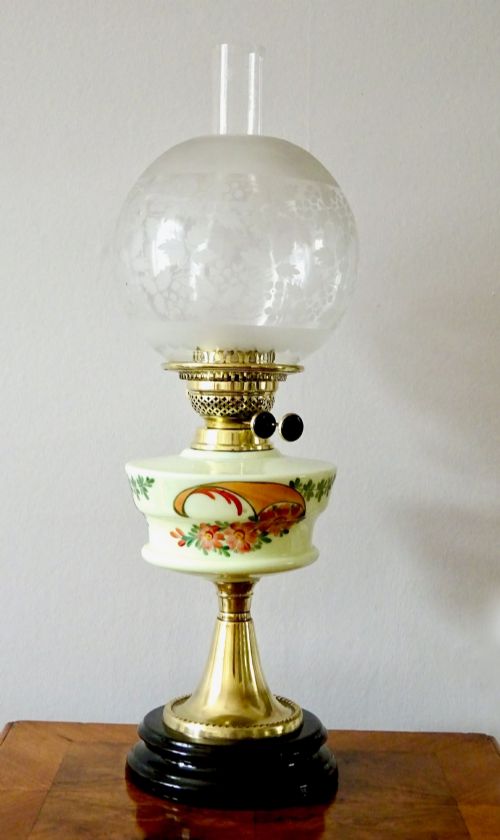
When you search for a painted glass oil lamp, you encounter table lamps, hanging shades and column lamps created during the Victorian, Edwardian and Art Nouveau periods. The selection spans domestic lighting fixtures featuring hand-painted botanical or winter scenes across glass, ceramic and opaline bowls.
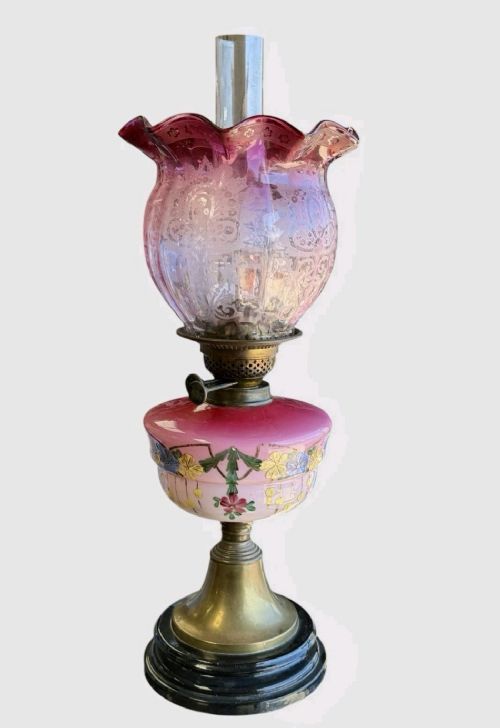
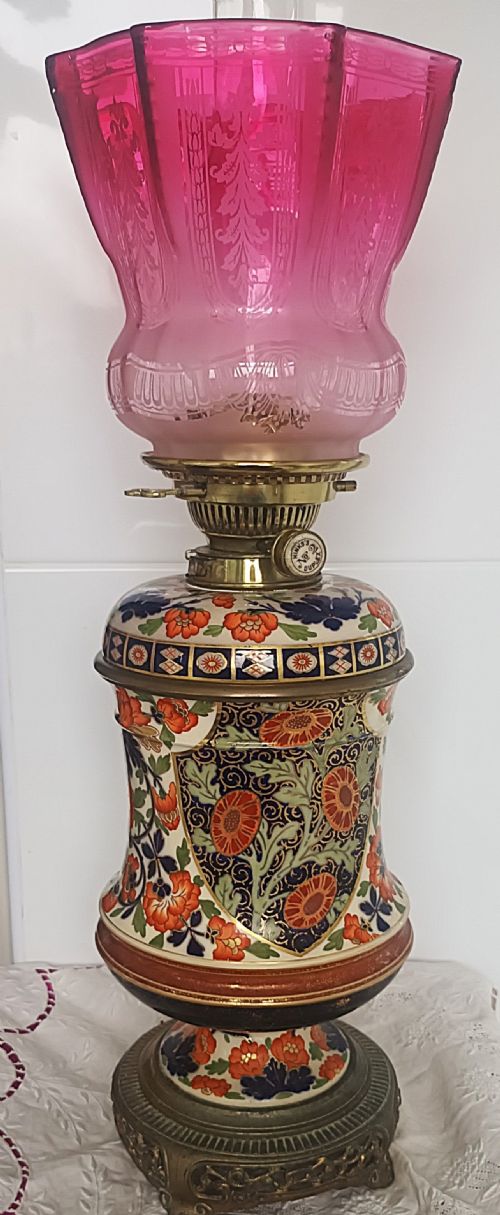
You are most likely to meet Victorian and Edwardian table lamps featuring brass or ceramic bases paired with pink, cranberry or milk glass fonts. These domestic pieces combine functional metal burners with decorative painted glass bodies originating from British and continental workshops.
How they were made
Maker workshops combined cast brass, bronze and iron bases with blown or moulded glass fonts and shades. Artisans applied enamel and hand-painted pigments directly onto cranberry, opaline or milk glass surfaces before firing.
Structural components incorporated Corinthian columns, ceramic reservoirs and duplex burner mechanisms. Gilt decoration and hand-painted floral or snow winter scenes were added to the glass and porcelain bodies to finish the pieces.
Listings feature brass, cast iron and bronze paired with cranberry, milk, opal and crystal glass across the nineteenth and early twentieth centuries.
What varies in quality
The standard of a painted glass oil lamp rests upon the crispness of the hand-painted decoration and the weight of the metal and glass components. Pieces featuring finely rendered enamel scenes or substantial cast brass columns stand apart from plainer utilitarian examples.
The integration between the glass font, ceramic base and metal burner assembly dictates the overall refinement of the object. Intact hand-painted details on cranberry or opaline glass retain their original vibrancy on the finest survivals.
Hinks·Taylor Tunnicliff
The Painted Glass Oil Lamp Glossary
- Font
- The oil reservoir of the lamp, typically formed from coloured glass, ceramic or opaline glass and frequently decorated with hand-painted motifs.
- Duplex burner
- A double-wick mechanism that produced a brighter flame and required a wider gallery to hold the matching glass shade securely.
- Opaline glass
- A translucent white or tinted glass developed during the nineteenth century, often serving as a canvas for hand-painted enamel decoration.
- Corinthian column
- An architectural column design utilised in nineteenth-century lamp standards, featuring ornate classical capitals cast in brass.
- Peg lamp
- A small oil lamp fitted with a tapered lower metal peg designed to drop directly into a candlestick or wall sconce rather than standing independently.
Painted Glass Oil Lamp: Frequently Asked Questions
How do I operate a vintage oil lamp safely?
These domestic lighting fixtures utilise paraffin or lamp oil drawn through a cotton wick via a mechanical burner. Modern placement relies on keeping the reservoir secure and utilising the piece strictly for ambient display.
Ensure burners are cleaned properly and avoid filling reservoirs to the brim. Many surviving examples have been professionally converted for modern electrical use while retaining their original burners.
How do I distinguish Victorian from Edwardian lamps?
Victorian examples frequently display rich cranberry glass, heavy brass Corinthian columns and ornate hand-painted floral details. Edwardian pieces often shift toward softer opaline shades and lighter porcelain or ceramic proportions.
Examining the burner mechanism and the style of the painted decoration helps clarify the period of manufacture. Art Nouveau variations introduce enamelled botanical motifs and organic silhouettes dating around nineteen hundred.
What is a duplex burner on an old lamp?
A duplex burner uses two parallel flat wicks housed within a shared gallery to generate a wider, brighter flame. This mechanical improvement dominated domestic lighting during the latter half of the nineteenth century.
Lamps featuring this system require wider chimneys and matching shades to accommodate the increased heat output. The burner thumbwheels often bear the maker name or patent details.
Can I convert an old oil lamp to electricity?
Many collectors choose to run electrical wiring through the central collar or burner without damaging the structural integrity of the brass or glass body. This allows the antique lamp to function safely as a table light.
Professional conversion preserves the original font and painted shade while removing the requirement for oil and wicks. Reversible wiring methods ensure the historic piece remains unaltered.