



Brass Newspaper Rack
A brass newspaper rack brings useful metalwork and rich timber to a room, holding daily reading in a sturdy, handsome frame.
Brass Newspaper Rack
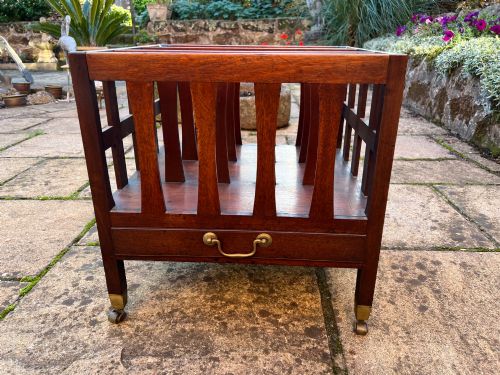
A brass newspaper rack is a functional holder for periodicals, journals, and daily sheets, appearing across several distinct design periods from the nineteenth century into the twentieth. These items range from compact wall pockets and music stands to multi-division canterburys and revolving stands.
Buyers meet forms constructed from bright tubular brass or cast sheet brass, frequently paired with mahogany, oak, walnut, or rosewood. On this page, pieces span Regency, Victorian, Edwardian, and later twentieth-century styles including Arts and Crafts and Hollywood Regency.
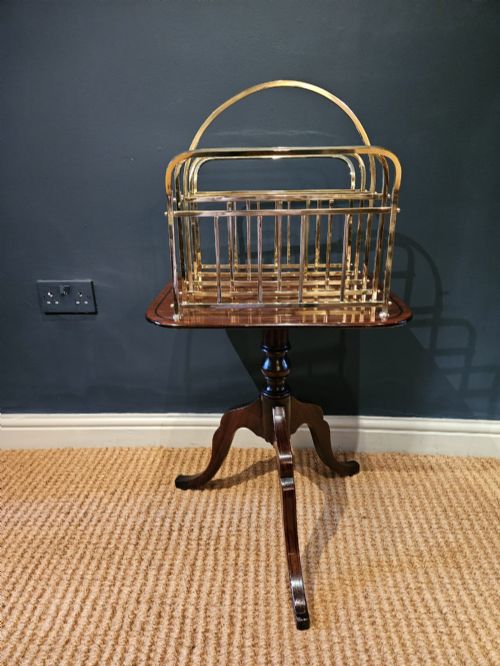
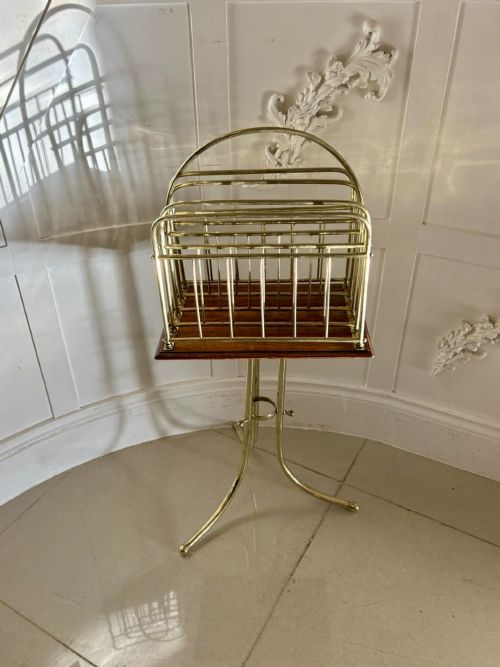
The traditional canterbury and the freestanding revolving stand dominate the selection, offering dedicated slots or pivoting compartments for sorting papers. Wall-hanging versions provide a space-saving alternative, utilising brass wire and sheet metal alongside timber backplates.
How they were made
Craftsmen built these pieces by combining worked metals with dense cabinet timbers, utilising brass for structural frames, decorative rods, and pierced sheet panels. Oak, mahogany, walnut, and rosewood form the main bodies, often shaped into boat designs or turned uprights.
Makers employed casting, tubular bending, and joinery techniques to secure metal elements to wooden bases. Inlays, fretwork, and bamboo-style turning add decorative detail to the structural brass frames and wooden dividers.
Brass Newspaper Rack Retail Price Guide 2026
Typical asking prices for brass newspaper rack among the pieces listed under this phrase on Sellingantiques today, from the lower quarter to the upper quarter. They describe what is for sale here now, not the wider market.
Listings feature brass combined with mahogany, oak, walnut, rosewood, and copper across Regency, Victorian, and Edwardian periods.
What varies in quality
Quality shows in the weight and thickness of the brass components, where cast sheet metal and heavy tubular frames outlast light wire constructions. The choice of timber also dictates standard, with figured mahogany, burr walnut, and rosewood marking out finer workshops.
The sophistication of the joinery and the execution of details such as revolving mechanisms and turned spindles separate standard utility items from superior examples. Attribution to known cabinetmakers elevates certain pieces through accomplished carving and proportion.
Gillows of Lancaster·Maison Jansen·J.C.Loudon
The Brass Newspaper Rack Glossary
- Canterbury
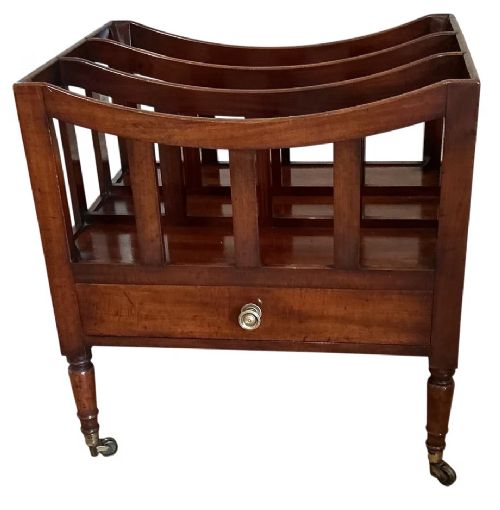
- A low wooden stand with upright divisions, originally designed for sheet music and newspapers. These pieces often feature carrying handles and small castors.
- Revolving stand
- A rotating rack mounted on a central pivot, allowing multiple sides of compartments to be accessed easily. They appear in brass and timber configurations.
- Wall pocket
- A hanging receptacle designed to hold letters, newspapers, or small publications against a vertical surface. They frequently incorporate embossed sheet brass.
- Tubular brass
- Hollow metal tubing used to form the lightweight yet rigid frames of many late nineteenth-century stands. It allowed for complex curved designs without excessive weight.
- Arts and Crafts
- A design movement favouring visible construction and hand-worked materials, often combining plain oak with beaten copper and brass. Pieces from this tradition focus on honest utility.
Brass Newspaper Rack: Frequently Asked Questions
What is a canterbury?
A canterbury is a partitioned stand designed to hold papers, magazines, and folios off the floor. They typically feature carrying handles and upright dividers.
These versatile stands originated in the eighteenth century and continued in production through the Victorian and Edwardian periods in various woods and metals.
How do revolving stands work?
Revolving stands use a concealed central pivot mechanism beneath the tier of compartments. This allows the entire rack of slots to turn smoothly for easy access.
Such stands are typically built with a sturdy wooden or metal base to maintain balance while turning.
Where were wall pockets used?
Wall pockets were hung in hallways, studies, and drawing rooms to keep correspondence and daily newspapers tidy and close to hand. They saved valuable surface space on tables.
Their backs are usually flat timber or fabric-backed board, while the front uses brass wire or stamped metal to form the pouch.
How do I date a piece?
Dating relies on combining the stylistic details of the timber framework with the manufacturing methods of the metal components. Regency pieces show classical boat shapes, while Edwardian examples often feature lighter oak and brass combinations.
Turning styles, joinery methods, and fastening types provide further clues to the decade of manufacture.