
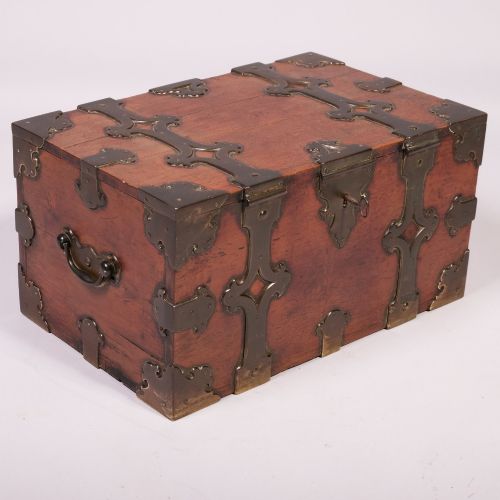
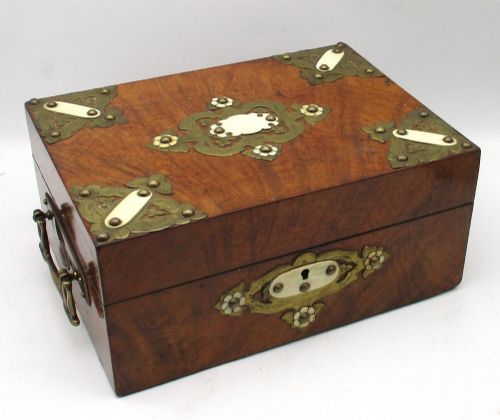
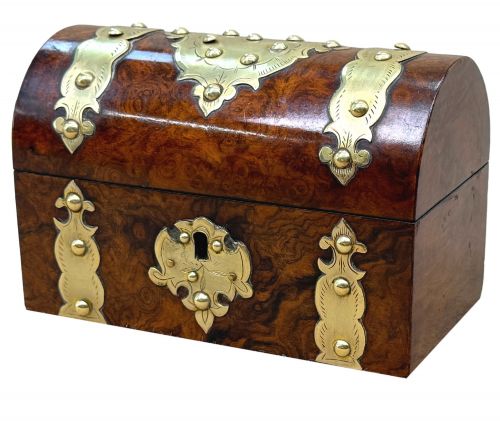


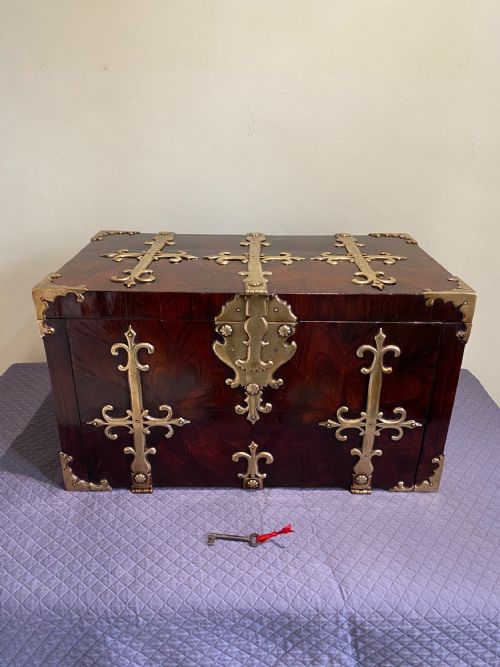


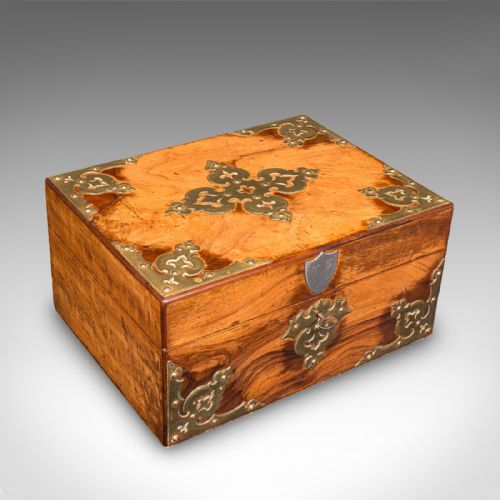
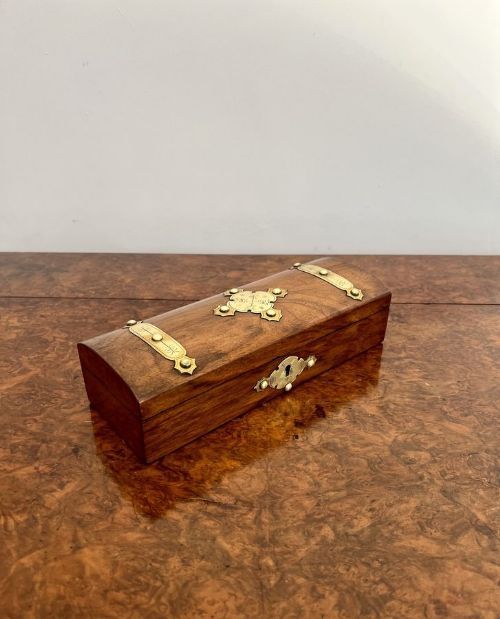


Brass Mounted Wooden Casket
A brass mounted wooden casket brings together heavy timber and polished metal to secure letters, cards and jewels.
Brass Mounted Wooden Casket
A brass mounted wooden casket serves as a sturdy container for valuables, letters, and games across various periods of domestic life. Buyers searching this phrase meet domestic receptacles designed to sit on desks, tables, or dressing chests.
The pieces appearing on this page stem predominantly from the nineteenth century, including Victorian examples alongside earlier Georgian creations. Woods such as walnut, mahogany, and oak form the primary bodies, whilst brass mounts reinforce the corners, edges, and lids.
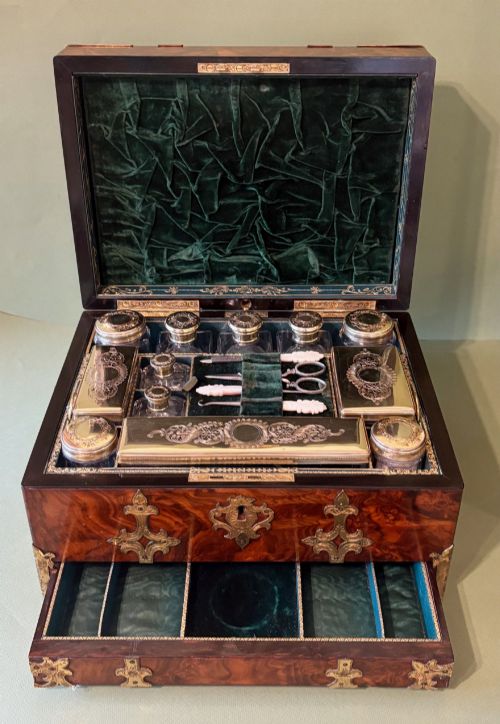
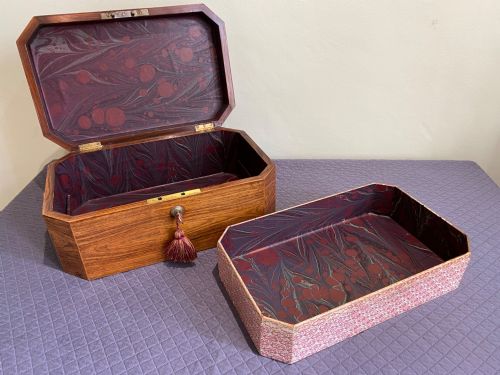
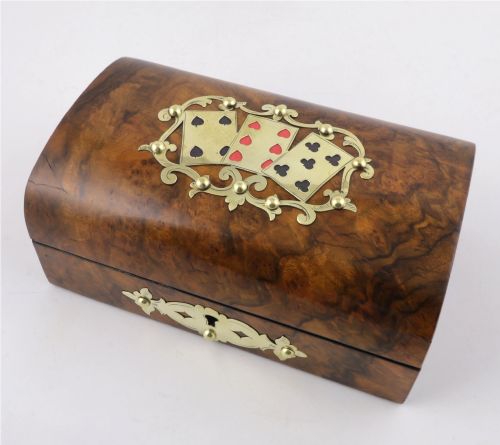
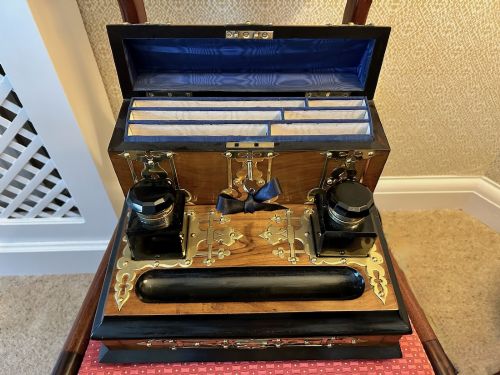
Forms range from stationery boxes and jewellery chests to games compendiums and tea caddies. Victorian walnut boxes mounted in brass dominate the selection, often featuring domed lids or fitted interiors for specific domestic tasks.
How they were made
Cabinet makers utilised dense hardwoods like walnut, mahogany, and oak, frequently applying decorative veneers such as burr walnut, kingwood, or coromandel over a solid timber carcase. These rich grains provide the foundational texture of the box.
Brass hardware functioned both as structural reinforcement and decorative embellishment. Heavy brass corners, strapwork, escutcheons, and hinges secured the joints and protected vulnerable edges from daily handling and travel.
Secret compartments tucked behind false partitions in these boxes remind us that Victorians loved hiding their diary keys.
What varies in quality
The selection of timber veneer determines much of the initial visual impact, with figured grains like burr walnut or oyster-cut kingwood demanding greater skill in matching and application than plain planks. Finer examples display continuous grain wrapping smoothly across the lid and sides.
Internal complexity and the retention of original fittings separate standard pieces from superior ones. Boxes containing velvet linings, secret drawers, matching glass inkwells, or complete card and gaming sets demonstrate higher standards of original commission.
The Brass Mounted Wooden Casket Glossary
- Burr walnut
- A highly figured timber taken from the gnarled growth of a walnut tree, prized for its swirling, organic patterns. Cabinet makers prized this wood for veneering the principal surfaces of high-status boxes.
- Escutcheon
- A protective plate surrounding a keyhole, usually fashioned from brass. This metal shield prevents the surrounding wood from splitting through repeated use of the key.
- Stationery box
- A specialised desk accessory featuring tiered partitions or sloping compartments designed to hold writing paper and envelopes. These upright containers often incorporate brass carrying handles.
Brass Mounted Wooden Casket: Frequently Asked Questions
What did people store inside a wooden casket?
These containers held personal valuables, including letters, jewellery, playing cards, sewing implements, and writing paper. Different internal compartments dictated whether the box served a domestic, social, or administrative function.
Stationery boxes organised correspondence, whilst smaller caskets secured keepsakes or visiting cards. Many retained fitted trays to separate delicate items.
How do I date a Victorian box?
Dating relies upon timber choices, construction techniques, and brass hardware styles typical of the mid to late nineteenth century. Walnut and coromandel gained immense popularity during the Victorian era.
Makers often employed specific lock stamps, brass hinge types, and internal paper linings characteristic of the period. Dome-top stationery boxes and campaign-style brass mounts point towards this expansive manufacturing era.
Are these boxes suitable for daily use?
Most pieces remain robust enough to hold modern stationery, jewellery, or trinkets on a desk or dressing table. Solid hardwood construction and metal reinforcement ensure structural durability.
Care should be taken with antique hinges, locks, and delicate wood veneers when opening and closing the lid. Maintaining stable indoor humidity prevents timber movement.
How do I distinguish between Georgian and Victorian pieces?
Georgian caskets typically feature simpler architectural lines, using mahogany or satinwood with understated brass escutcheons. Proportions tend to reflect classical furniture design principles.
Victorian pieces frequently display heavier brass mounts, elaborate coromandel or burr walnut veneers, and complex internal mechanisms. The introduction of mass production techniques during the nineteenth century also increased the variety of fitted accessories.