


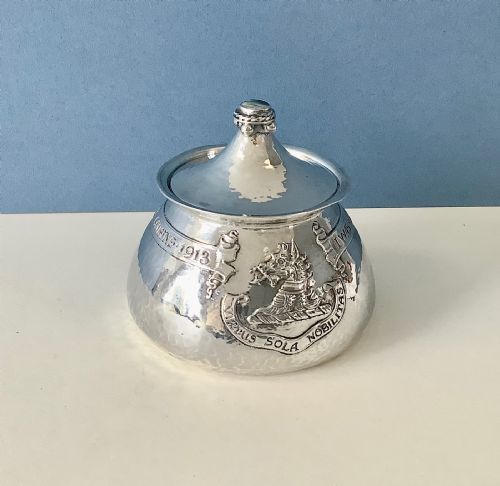


Arts Crafts Trinket Box
An arts crafts trinket box brings tactile honesty to a dressing table, offering hand-worked metal and timber shaped by early twentieth-century hands.
Arts Crafts Trinket Box
When you search for an arts crafts trinket box, you are looking at small containers designed for personal treasures, desktop use, and domestic tidiness during the late Victorian and Edwardian eras. These items embody a philosophy that prized honest manual labour over mass production, resulting in objects meant to be handled and admired up close.
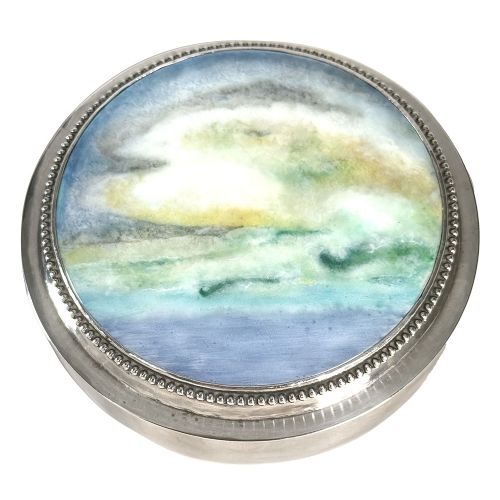
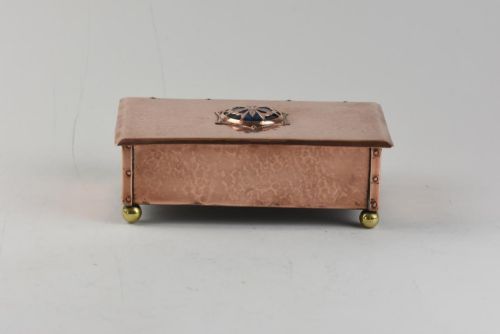
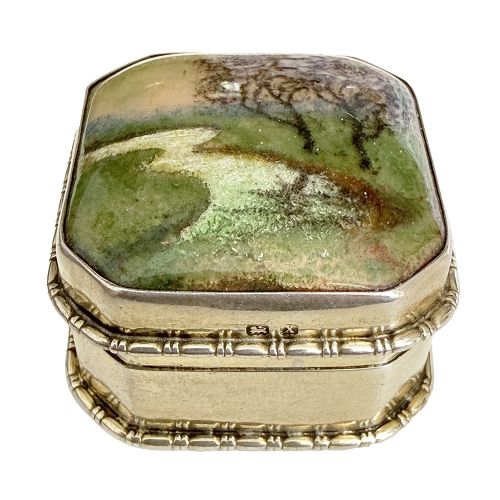
The versions you are most likely to meet on this page date predominantly from around nineteen hundred to nineteen twenty, alongside pieces originating in the nineteenth century. They span utilitarian desk accessories and small jewellery boxes to heart-shaped caskets and pill boxes, predominantly reflecting the Arts and Crafts movement or related Victorian styles.
Assessing quality
The distinction between ordinary and exceptional pieces rests upon the crispness of the hand-beating and the integration of decorative elements like enamel panels. Superior examples display confident hammer marks and harmonious proportions without relying on excessive ornamentation.
Quality also shows in the security of the mounts and the finesse of the metalwork overlays, where careful riveting and thoughtful design elevate a simple container into a piece of applied art.
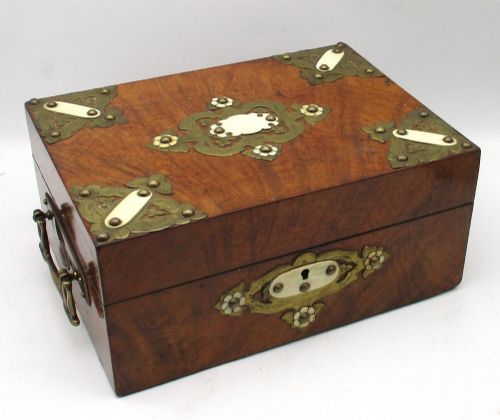
One curious wooden jewellery box originates from nineteenth-century Napoleonic prisoners crafting straw work while far from home.
Fleetwood Varley·Liberty and Co·Nathan and Hayes·Omar Ramsden·Nelson and Drake·J W Tiptaft
The Arts Crafts Trinket Box Glossary
- Planished
- Finished by hammering with a small, flat-faced tool to create a textured, light-reflecting surface. This technique leaves subtle facets across copper or silver plates.
- Repoussé
- Pushed out from the reverse side with punches and hammers to form a raised design in relief on metal. It is a signature method for achieving tactile depth on boxes.
- Cabochon
- A gemstone or enamel piece shaped and polished with a smooth, convex top rather than faceted edges. These often sit centrally on box lids as focal points.
- Pokerwork
- The art of decorating wood or other materials by burning designs with heated metal points. Victorian stationers and box makers used this method for intricate surface patterns.
- Cloisonné
- Enamel work created by soldering fine metal wires to a metal base to form compartments filled with vitreous paste. These compartments are then fired and polished flat.
Arts Crafts Trinket Box: Frequently Asked Questions
What were arts and crafts boxes used for?
These small containers served practical domestic purposes, holding trinkets, stamps, playing cards, cigars, or cuff links on desks and dressing tables. They kept personal items organised while displaying artistic craftsmanship in everyday life.
Owners valued them as much for their decorative presence in a room as for their utility in storing small valuables out of sight.
How do I date an arts and crafts box?
Dating relies on hallmarks stamped on silver examples, stylistic clues such as repoussé copper work, and construction methods typical of the period around nineteen hundred. Maker marks and registration numbers often provide precise chronological markers.
Unmarked pieces require stylistic comparison with documented works from the movement, looking at specific motifs and material combinations characteristic of the era.
Are these boxes made of solid silver?
Many of the metal boxes listed are fashioned from sterling silver, often carrying clear Birmingham or Chester hallmarks from the Edwardian years. Others utilise base metals like copper, brass, or pewter, sometimes enhanced with silver plating or overlays.
Each material was chosen for its specific working properties, allowing artisans to achieve different textures and patinas across various price points and functional requirements.