


Edwardian Wooden Vanity Box
These edwardian wooden vanity box selections bring together portable timber caskets designed for personal grooming and keepsakes.
Edwardian Wooden Vanity Box
An edwardian wooden vanity box encompasses timber receptacles made for dressing tables, housing mirrors, bottles, and personal items. While the search points toward the Edwardian era, the pieces on this page draw from a broader range of periods including the Victorian age, the nineteenth century, and the nineteen-twenties.
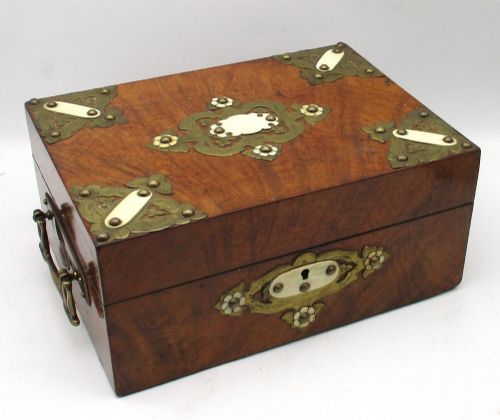
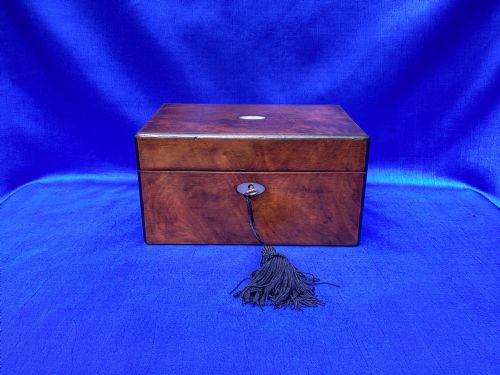
The assortment includes related forms such as jewellery chests, sewing boxes, glove boxes, keepsake cases, and bureau mirrors. Buyers encounter items fashioned in walnut, burr walnut, coromandel wood, mahogany, and black lacquer, often complemented by brass mounts, mother-of-pearl, silk, and velvet linings.
Stylistic influences span Arts and Crafts, Chinese Export, Chinoiserie, Queen Anne taste, and Art Deco. These containers served domestic and travel purposes, keeping personal treasures secure and organised in private chambers.
How they were made
Cabinet makers utilised dense exotic timbers like coromandel and figured woods such as burr walnut to construct the foundational carcass of each box. These woods were chosen for their rich grain patterns, which provided a decorative surface without requiring excessive carving.
Metalwork played a structural and decorative role, with brass straps, hinges, and mounts securing corners and lids. Interiors were fitted with tailored compartments and lined with silk or velvet to cushion delicate grooming instruments and jewellery.
Object types on this page include jewellery boxes, glove boxes, sewing cases, bureau mirrors, and dedicated vanity boxes.
What varies in quality
The standard of an edwardian wooden vanity box rests on the selection of timber veneers and the precision of the cabinet work. Pieces featuring book-matched burr walnut or solid coromandel demonstrate a higher grade of manufacture than plain timber variants.
Internal organisation and the preservation of original silk and velvet linings distinguish superior examples. Furthermore, the integration of heavy brass mounts and functional locking mechanisms indicates the tier of workshop production.
The Edwardian Wooden Vanity Box Glossary
- Burr walnut
- A wood harvested from the warted excrescences of walnut trees, displaying swirling grain patterns highly prized for decorative veneer work on fine boxes.
- Coromandel wood
- A dense, heavy southeast Asian timber featuring dark brown and black stripes, frequently utilised for luxury nineteenth-century boxes and dressing cases.
- Tunbridge Ware
- A type of decorative woodwork characterised by tiny mosaic tiles formed from naturally coloured woods to create pictorial or geometric designs.
- Glove box
- A narrow rectangular wooden receptacle specifically manufactured to store and protect fine leather gloves when not in use.
- Brass bound
- A method of reinforcing box corners, edges, and lids with strips of brass to withstand travel and heavy domestic handling.
Edwardian Wooden Vanity Box: Frequently Asked Questions
What is an edwardian wooden vanity box?
An edwardian wooden vanity box is a portable timber container designed to hold personal grooming items, cosmetics, and small treasures upon a dressing table.
While named for the Edwardian period, similar pieces on this page span Victorian and later twentieth-century eras, reflecting various woodworking traditions.
How were these boxes used?
These boxes served as secure repositories for personal effects, keeping jewellery, sewing implements, and dressing accessories organised and protected from dust.
Many contained fitted interior trays, velvet linings, and specialised compartments tailored to specific grooming tools or letters.
How do I care for wooden vanity boxes?
Wooden vanity boxes require stable indoor humidity away from direct sunlight and heat sources to prevent the timber and veneers from warping or cracking.
Gentle dusting with a dry cloth preserves the polished surface, while internal silk and velvet linings benefit from minimal handling and protection from moisture.
How do I tell different periods apart?
Periods are identified through a combination of timber selection, construction methods, and stylistic cues such as brass mounts or lacquer work.
Victorian and nineteenth-century pieces often feature heavy burr walnut and coromandel, whereas Arts and Crafts or Art Deco examples show simpler lines or distinct geometric hardware.