
Antique Desk Document Box
An antique desk document box keeps papers in order with the quiet dignity of past centuries.
Antique Desk Document Box
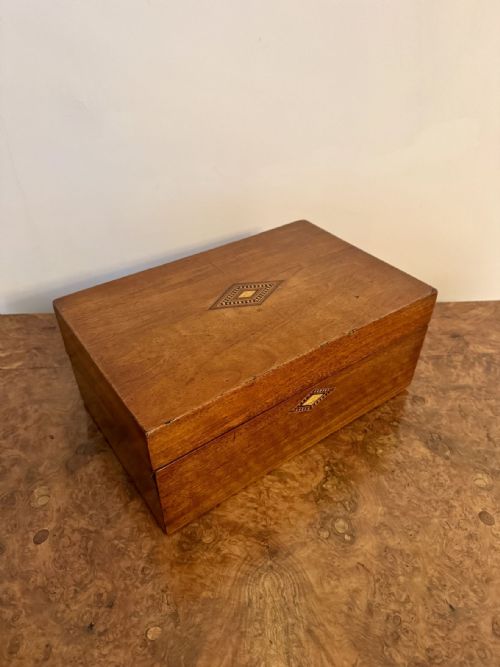
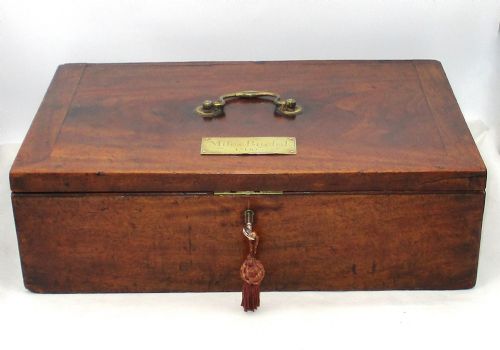
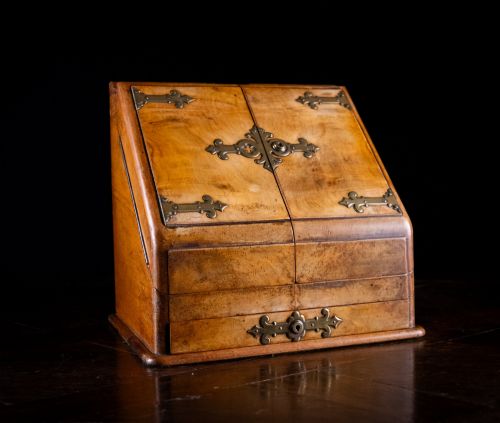
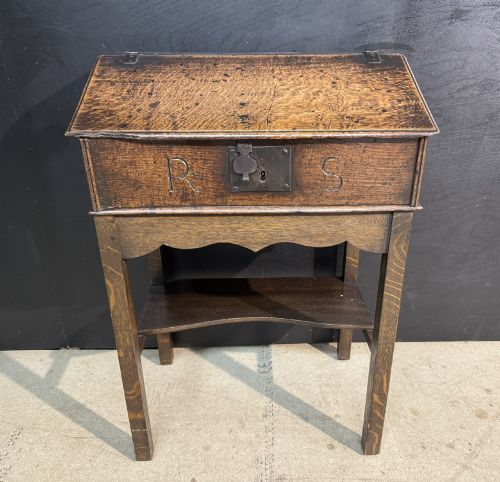
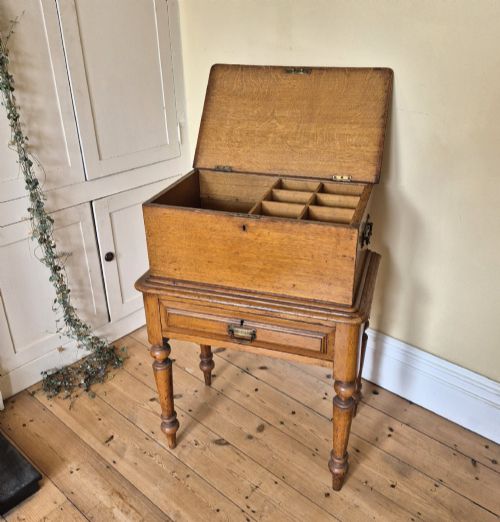
An antique desk document box is a portable container designed to hold letters, deeds, and stationery securely. These pieces range from early oak bible boxes to refined Victorian stationery cabinets and folding writing slopes.
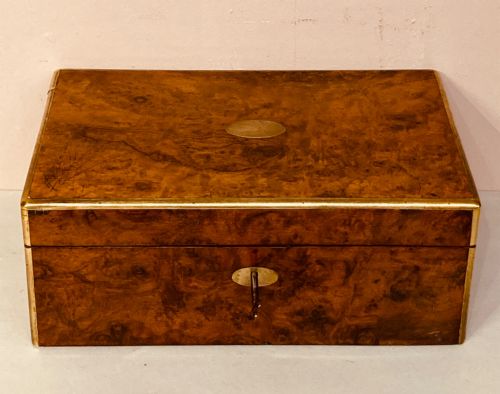
The versions most commonly met on this page span the seventeenth century through to the late Victorian period. They appear in durable hardwoods like oak, mahogany, walnut, and rosewood, often fitted with interior compartments.
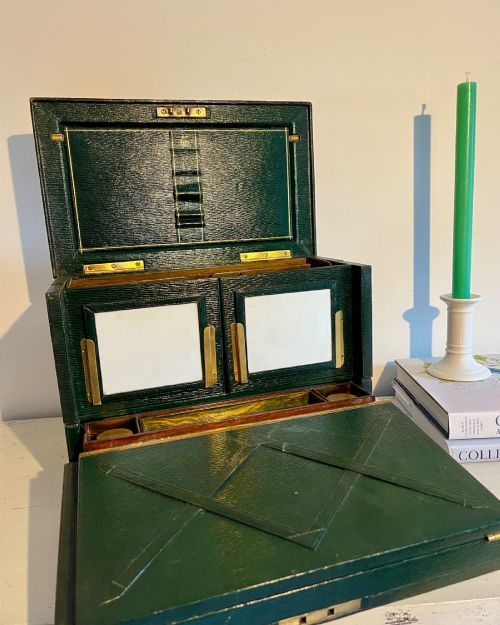
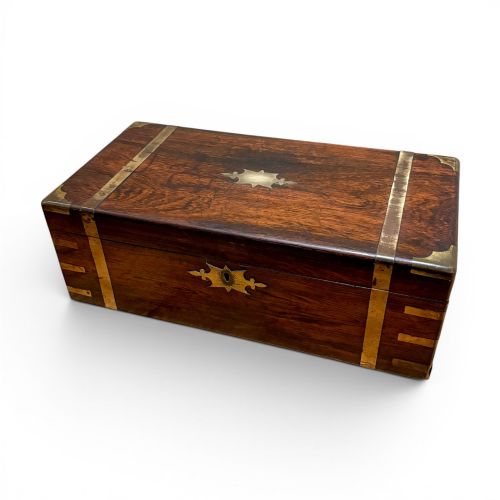
Many examples double as writing surfaces when opened, folding out to reveal fitted interiors for pens and ink. Others function as stationary boxes or specialised deed chests intended for desktop use.
Materials and Construction
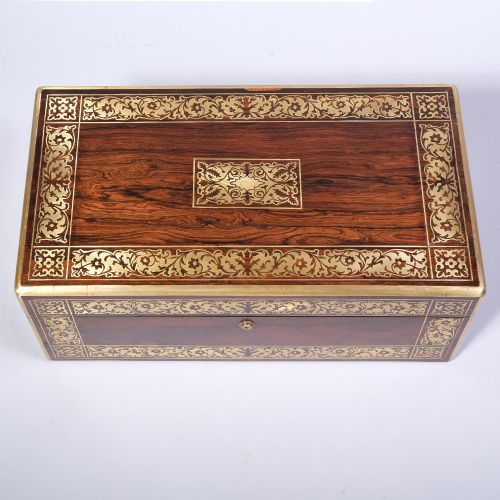
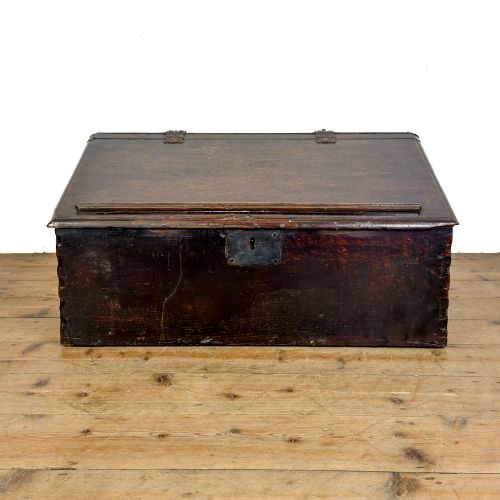
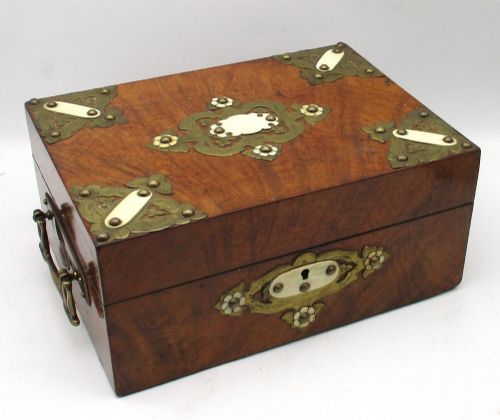
Joinery methods shift across the periods, moving from pegged solid oak construction in seventeenth-century pieces to refined veneered carcasses in Georgian and Victorian examples. Cabinet makers applied mahogany, walnut, and rosewood veneers over secondary woods to create decorative exterior surfaces.
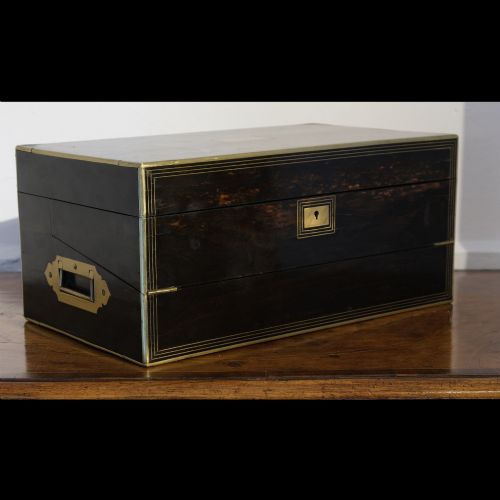
Metalwork plays a vital structural and decorative role, with brass bound edges, escutcheons, and complex steel locks appearing frequently. Leather, velvet, and silk linings often grace the interior writing surfaces and document sleeves.
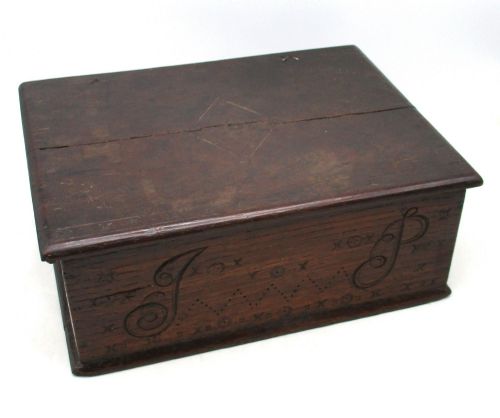
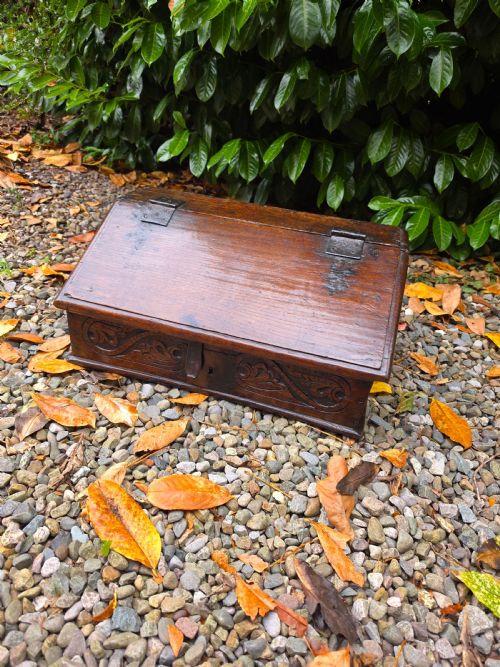
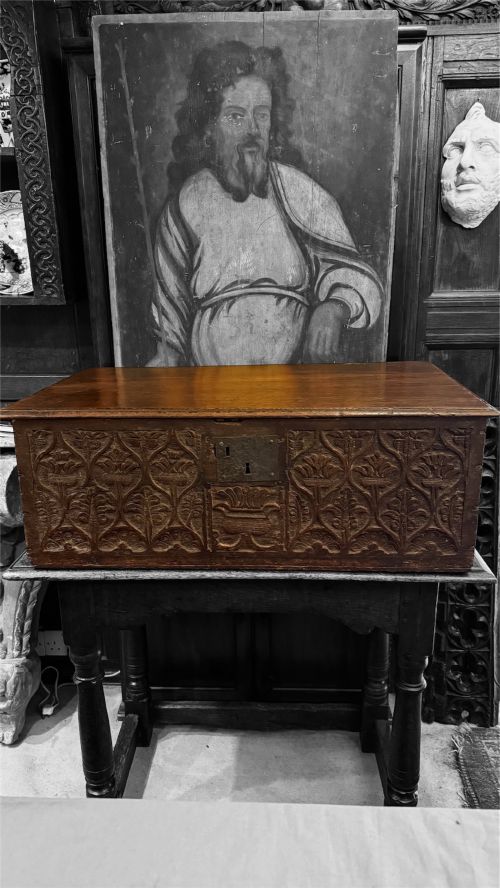
Decorative techniques include intricate brass inlay, carved geometric motifs on early oak panels, and specialised surface treatments like Tunbridge ware or Japanese lacquer.
Quality and Craftsmanship
The distinction between ordinary and exceptional pieces lies in the selection of timber and the precision of the joinery. Figured grain patterns, such as burr walnut or flame mahogany, elevate the visual impact of a box.
Internal complexity marks the upper tier of production, particularly boxes featuring secret drawers, spring-loaded compartments, and original working locks with matching keys. The integrity of the secondary woods and the neatness of dovetail joints signal superior workshop practice.
William Austin·Edmund Nye
The Antique Desk Document Box Glossary
- Writing slope
- A portable box with a hinged lid that slants downward to provide an angled writing surface when opened. Inside, it contains compartments for inkwells, pens, and paper.
- Bible box
- A sturdy wooden box from the seventeenth century or earlier, often featuring a sloping lid, originally used to store household religious texts and important documents.
- Stationery box
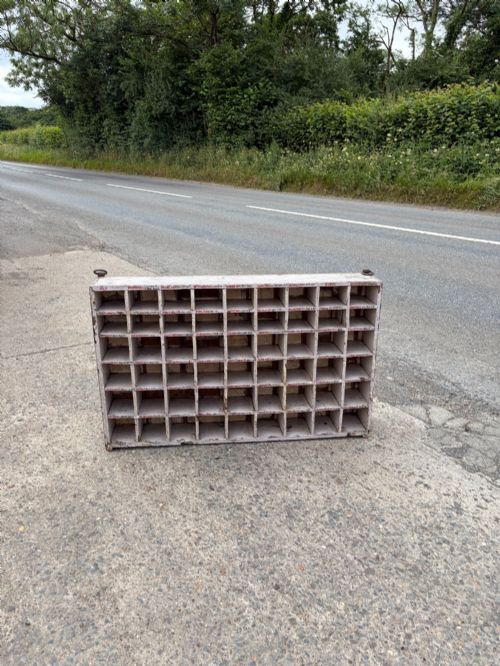
- An upright cabinet or desk accessory with tiered partitions or pigeon holes designed to hold letters, envelopes, and writing paper.
- Escutcheon
- A flat plate of brass or other metal surrounding a keyhole to protect the surrounding wood from wear.
- Campaign box
- A sturdy portable desk or chest constructed for travel, often featuring flush brass handles and reinforced corners.
Antique Desk Document Box: Frequently Asked Questions
What is an antique desk document box?
An antique desk document box is a portable container built to store correspondence, legal papers, and writing implements safely on a table or desk.
These pieces reflect the writing habits of past eras, often including dedicated slots for letters and compartments for ink and quills.
How were writing slopes used?
A writing slope opens to reveal an inclined writing surface lined with leather or velvet, providing a stable platform for correspondence away from a full-sized desk.
The lower section stores paper and letters, while the upper portion holds inkwells, sanders, and pens securely during transport.
How do I date an oak document box?
Early oak boxes from the seventeenth century typically feature pegged frame-and-panel construction, hand-carved details, and heavy iron or steel locks.
Later pieces shift towards machine-cut dovetails, thinner board construction, and polished mahogany or walnut veneers.
Can I use these boxes for modern stationery?
Many antique document boxes and stationery cabinets accommodate modern letters, envelopes, and small notebooks quite naturally.
Measuring the internal compartments ensures contemporary paper sizes fit comfortably within the historic partitions.