

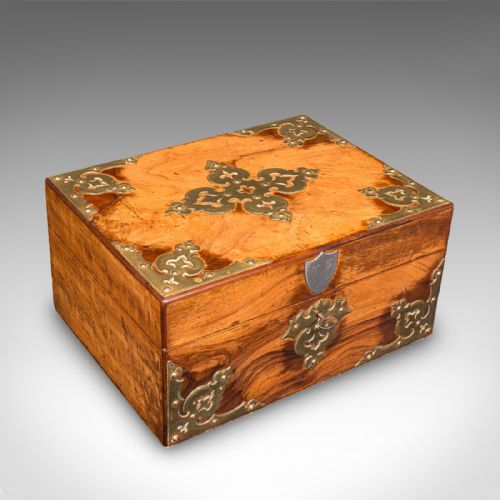


Brown Walnut Jewellery Box
A brown walnut jewellery box brings rich timber grain and period craftsmanship together to secure your keepsakes.
Brown Walnut Jewellery Box
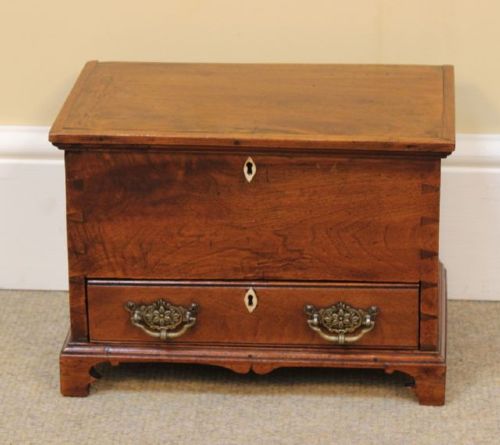
A brown walnut jewellery box combines functional storage with the deep, figured tones characteristic of this dense timber. When searching for a brown walnut jewellery box, buyers encounter an array of forms from the Victorian era onward, including table cabinets, caskets, and inlaid work boxes.
The selection ranges from simple table boxes to elaborate Victorian jewellery chests featuring fitted interiors. Most examples date from the nineteenth century, showcasing the period's preference for decorative woodwork and organised compartmentalisation.
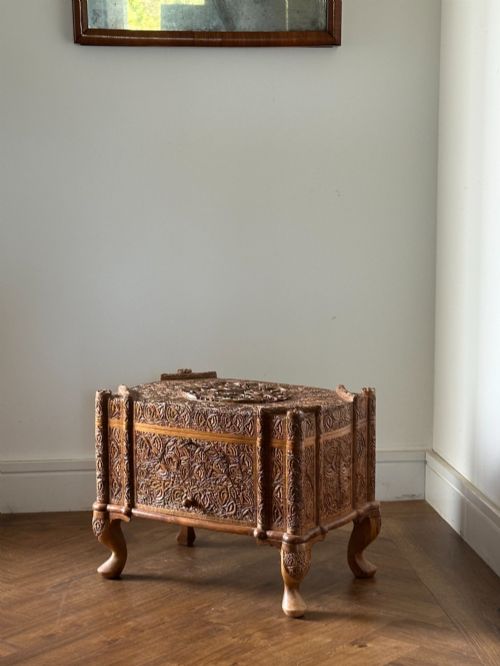
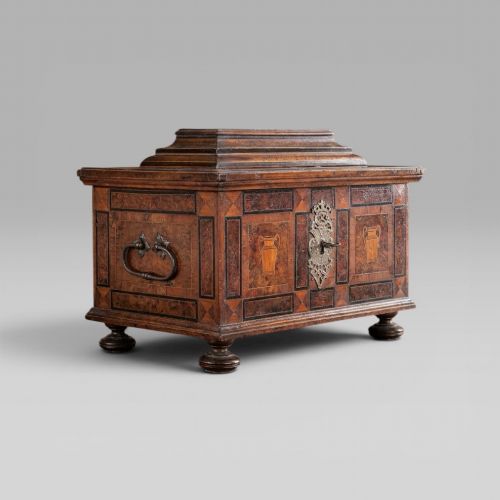
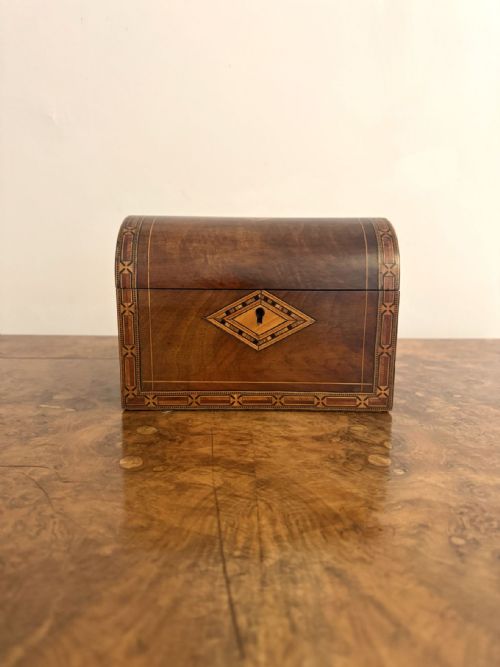
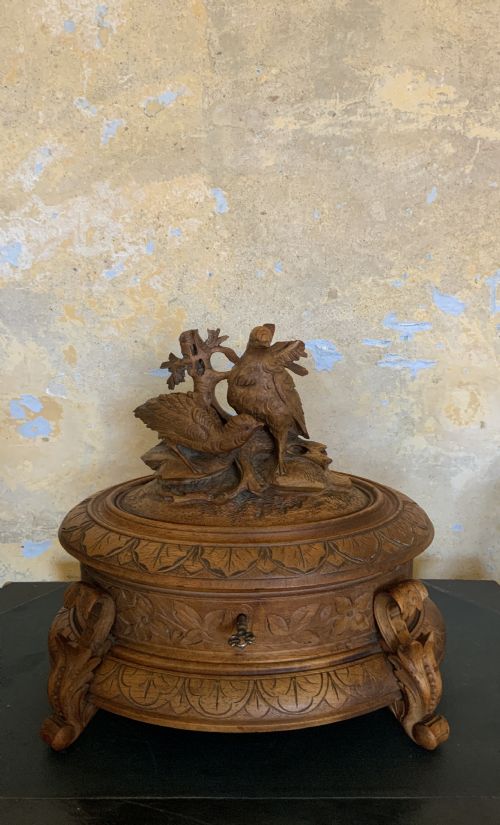
Makers utilised various regional styles, producing items with Tunbridge inlay, parquetry, or carved details. These pieces served as dressing table accessories or desktop companions for storing valuables and correspondence.
Materials and construction
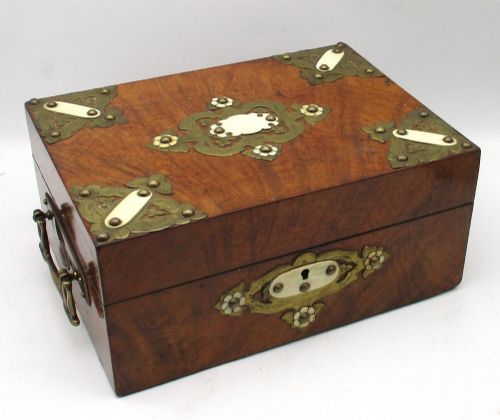
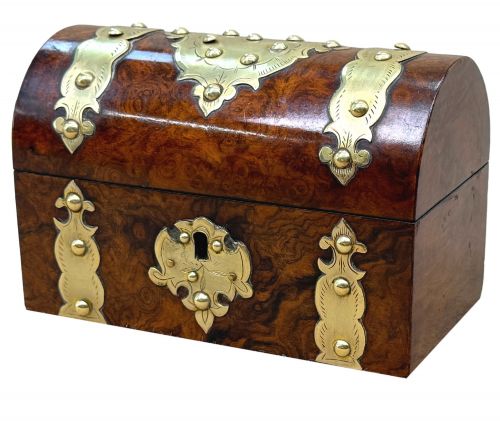
Craftsmen built these pieces using solid walnut or applied burr walnut veneers over secondary timbers to highlight the striking grain patterns. Carpenters incorporated boxwood, mahogany, and brass hardware to accentuate the structural lines and secure the lids.
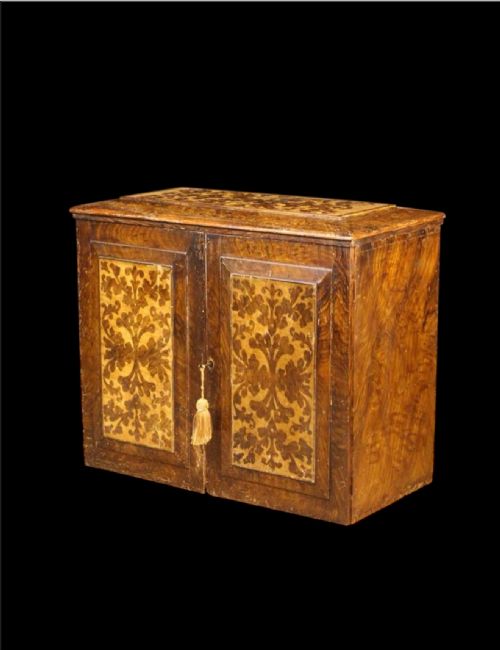
Surface decoration frequently involved precise wood inlay, parquetry, and floral marquetry techniques applied by hand. Interior compartments were often lined with velvet to protect delicate contents.
Listings feature walnut, burr walnut, mahogany, and boxwood combined with brass fittings and velvet linings across Victorian and seventeenth-century periods.
Distinctions in quality
Quality rests on the selection of the timber, particularly the liveliness of the burr walnut figure and the precision of the parquetry or Tunbridge inlay. Superior pieces exhibit seamless mitred joints, fully integrated locking mechanisms with working keys, and meticulously fitted internal trays.
The complexity of the form also dictates standing, with serpentine shapes, multi-tiered cabinets, and specialised boxes such as bijouterie tables representing higher tiers of craftsmanship.
The Brown Walnut Jewellery Box Glossary
- Burr walnut
- A type of timber veneer taken from the warted growth on a walnut tree, prized for its swirling, highly figured grain patterns. It forms the primary decorative surface on many high-status nineteenth-century boxes.
- Tunbridge inlay
- A meticulous form of mosaic woodwork originating in Kent, using thousands of tiny coloured wood blocks to create pictorial or geometric motifs. It frequently adorns the lids of Victorian boxes.
- Parquetry
- Geometric wood inlay work arranged in patterns such as cubes, chequers, or stripes to decorate a flat surface. It provides a structured contrast to the organic movement of walnut grain.
- Marquetry
- The art of applying veneer pieces in floral or pictorial designs onto a structural carcase. Seventeenth-century examples often display elaborate floral arrangements.
- Bijouterie table
- A glass-topped display table or box designed for showing smaller decorative items and jewellery. These pieces elevate storage into a visible showcase.
Brown Walnut Jewellery Box: Frequently Asked Questions
How do I date my walnut box?
Dating relies on examining the construction methods, hardware, and decorative styles visible on the piece. Nineteenth-century examples often feature machine-sawn elements and velvet linings, whereas earlier pieces show hand-cut joinery.
Secondary woods and lock types also provide clues. Comparing the decorative motifs, such as Gothic Revival or Arts and Crafts styling, helps narrow the decade of manufacture.
How were these boxes used?
These boxes served as secure storage for personal valuables, correspondence, sewing implements, and jewellery on dressing tables or writing desks. Many included lift-out trays and specialised compartments tailored for rings, watches, and documents.
More elaborate models functioned as portable stationery cases or music boxes, reflecting the domestic habits of the period.
What is Tunbridge ware?
Tunbridge ware is a specialised type of decorative woodwork characterised by mosaic patterns assembled from thousands of tiny, naturally coloured wood segments. Craftsmen used this technique to depict local landmarks, butterflies, and geometric borders on box lids.
Originating in Tunbridge Wells, this regional specialty dates principally to the nineteenth century.