
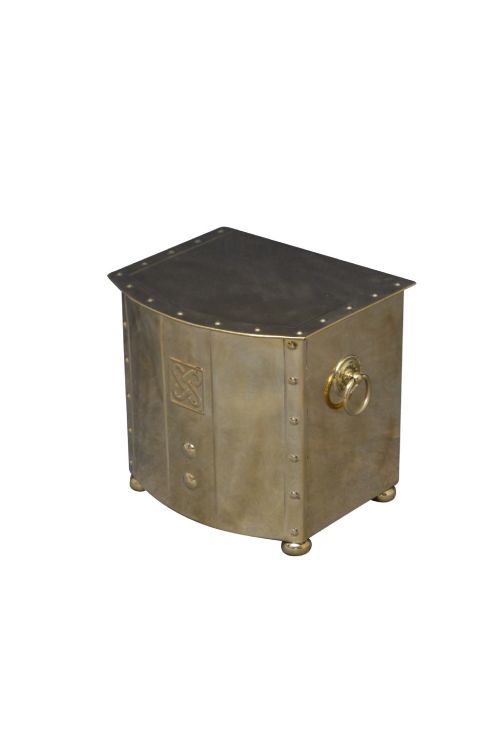


Arts Crafts Brass Box
An arts crafts brass box brings handcrafted metalwork into daily use, offering sturdy utility with characteristic period detail.
Arts Crafts Brass Box
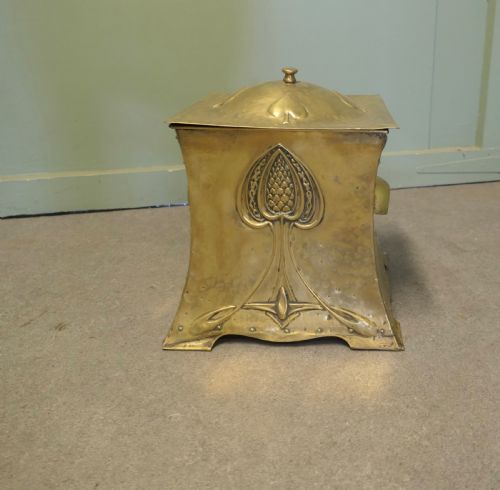
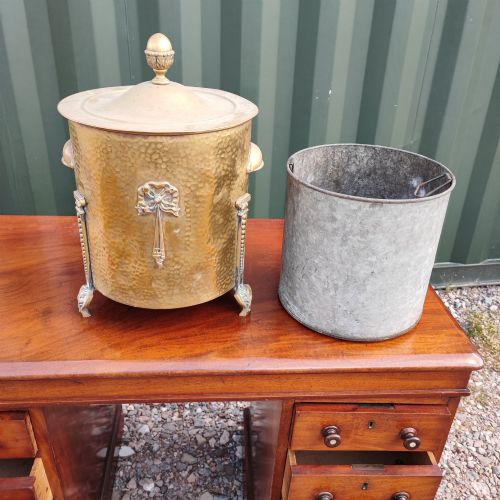
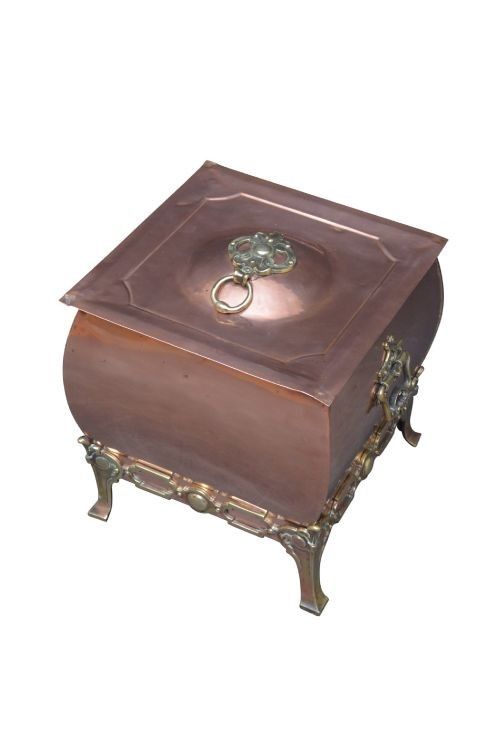
An arts crafts brass box principally appears on this page as a coal box, log bin, or fireside container designed for hearth use. These domestic vessels range from large scuttles and purdoniums to smaller lidded receptacles.
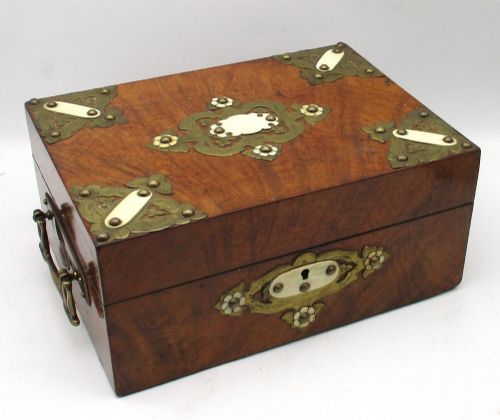
Beyond the fireside, the selection includes smaller desk accessories and receptacles such as stamp boxes, cigarette boxes, letter racks, and jewellery boxes. Oak and mahogany frequently form the wooden carcasses or accents for these metal-clad pieces.
The objects span the late nineteenth century through to the early twentieth century, incorporating Victorian, late Victorian, and Art Nouveau stylistic influences alongside explicit Arts and Crafts execution.
Quality and Craftsmanship
The standard of an arts crafts brass box depends upon the depth and control of the hand-beaten repousse work and the integrity of the underlying construction. Pieces featuring crisp, deliberate hand-hammering stand apart from plain or mechanically finished equivalents.
Material thickness and the quality of the timber carcasses, such as solid oak or rosewood rather than thin veneers, separate the more substantial examples from standard utilitarian items.
Listings feature items spanning the nineteenth century, the Victorian period, and up through nineteen thirty, incorporating both oak and walnut timbers.
The Arts Crafts Brass Box Glossary
- Repousse
- Metalworking technique where the design is hammered into relief from the reverse side. This method allows artisans to create tactile pictorial or geometric motifs on box lids and panels.
- Purdonium
- A specialised household coal container featuring a sloping front and a hinged lid. These items often include a built-in shovel compartment at the back.
- Coal Scuttle
- A deep metal bucket or container used for carrying and storing domestic coal near the fireplace. Many examples incorporate swing handles and decorative brass bodies.
- Slipper Box
- A covered fireside container shaped like a slipper, traditionally utilised for storing matches or kindling. They frequently combine brass panels with wooden structures.
- Art Nouveau
- A decorative art style characterised by flowing, organic lines and plant-inspired motifs. This aesthetic heavily influenced the surface decoration of metalwork from the turn of the twentieth century.
Arts Crafts Brass Box: Frequently Asked Questions
What is an arts crafts brass box used for?
These boxes serve practical domestic functions ranging from fireside storage for coal, logs, and kindling to desktop organisation for letters and stamps.
Smaller variants function effectively as jewellery or cigarette containers, integrating functional metalwork with decorative interior accents.
How do I date an arts crafts brass box?
Dating relies on stylistic markers such as Victorian proportions, late nineteenth-century copper plating techniques, and the organic curves associated with Art Nouveau design.
Construction methods like hand-beaten metalwork and timber choices also help narrow the production era between eighteen eighty and nineteen thirty.
Are these boxes made entirely of brass?
Many examples combine brass panels or overlays with secondary materials such as copper, iron, and galvanized metal.
Wooden carcasses constructed from oak, walnut, mahogany, or rosewood frequently form the structural base of larger coal boxes and smaller stationery chests.
How should I clean a brass box?
Maintenance typically involves dusting with a soft, dry cloth to preserve the existing surface patination accumulated over decades.
Aggressive metal polishes are generally avoided by collectors who prefer to retain the darker, aged characteristics of nineteenth and twentieth-century copper and brass.
What defines the Arts and Crafts style?
The aesthetic emphasises visible hand craftsmanship, honest materials, and surface ornamentation inspired by natural forms and traditional metalworking techniques.
Objects from this movement often feature hand-hammered textures and understated decorative motifs rather than machine-produced regularity.