



Brass Mounted Walnut Chest
A brass mounted walnut chest brings rich grain and crisp metalwork together, offering both commanding presence and practical storage.

Identifying a brass mounted walnut chest
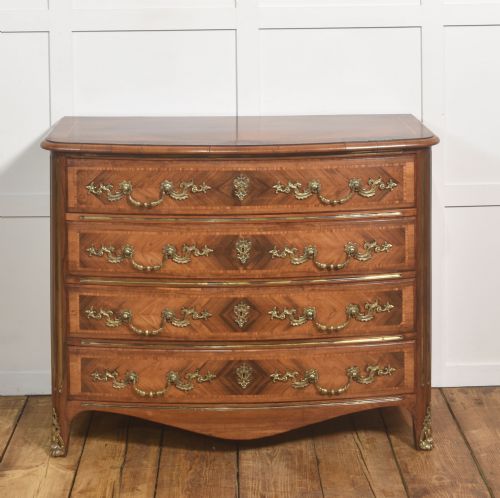
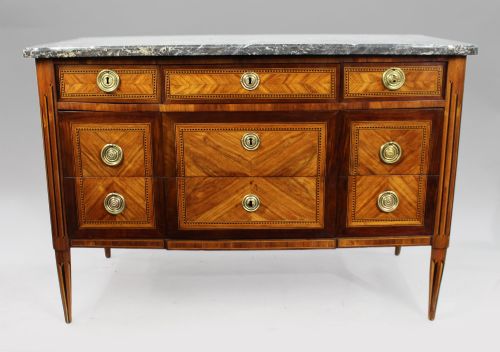
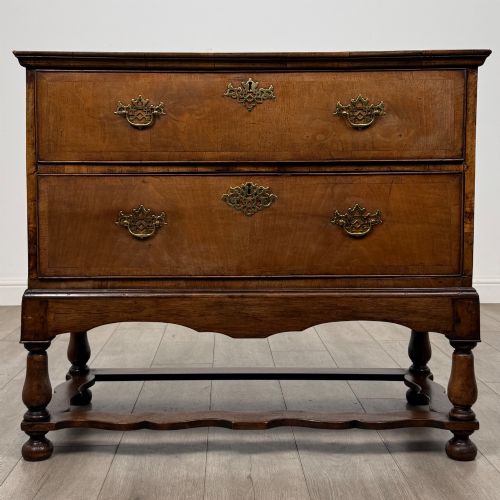
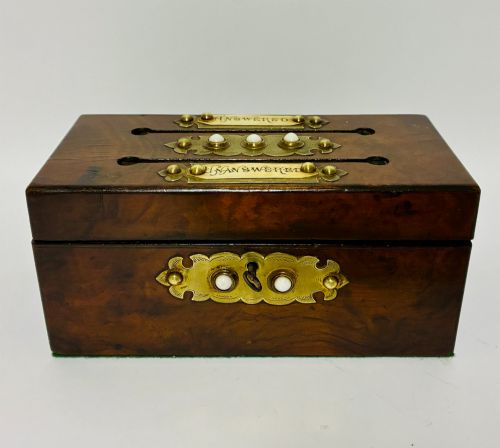
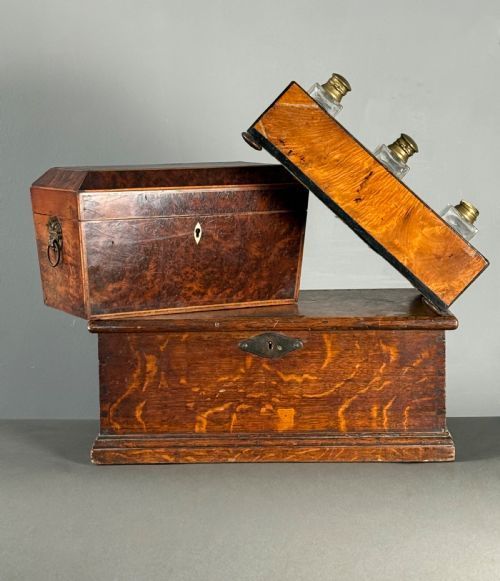
A brass mounted walnut chest combines timber construction with metal reinforcement, uniting rich grain with structural hardware. These storage pieces appear across multiple eras, ranging from early English forms to continental examples.
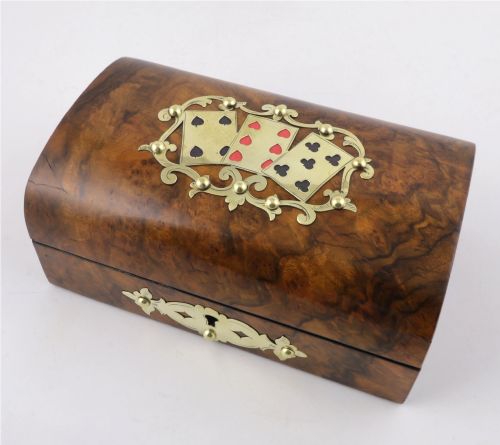
Makers utilised various timber treatments, employing burr walnut alongside plain walnut to create visual depth. Surviving examples demonstrate how cabinetmakers adapted these forms for drawing rooms and domestic chambers.
Construction and materials
Makers constructed these carcasses primarily using walnut and burr walnut, frequently incorporating secondary timbers such as oak for drawer linings and internal framing. Boxwood stringing occasionally provides linear contrast against the darker field of the primary wood.
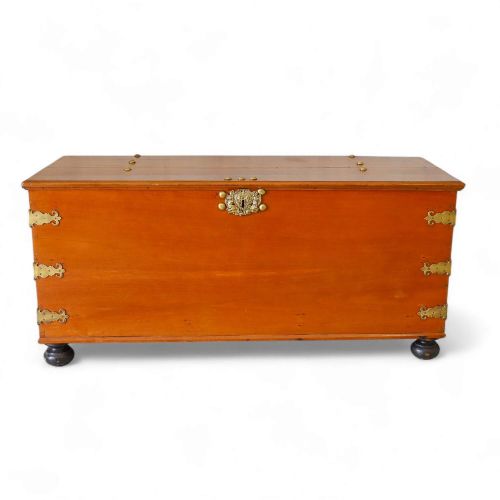
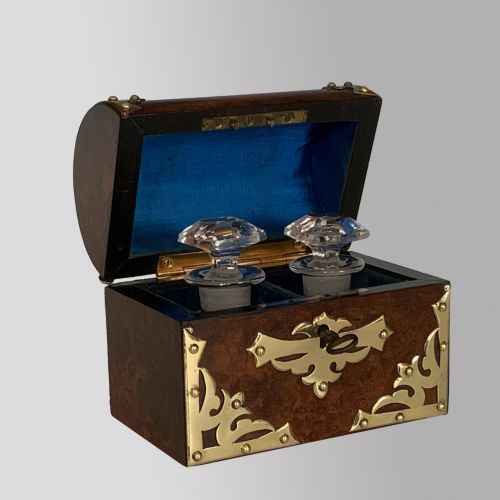
Brass fittings provide structural reinforcement and decorative accent, securing corners, drawers, and lids. These metal components range from heavy carrying handles to delicate escutcheons fixed with hand-finished pins.
Retail Price Guide 2026
Typical UK retail prices for brass mounted walnut chest, calculated from the Sellingantiques database of over a million retail prices indexed since 2003. This retail price guide relies exclusively on Sellingantiques data; no external sources or auction records are used, so the figures do not describe the wider market.
Materials recorded across the selection include solid walnut, burr walnut veneers, oak internal framing, and boxwood inlay.
Assessing quality and character
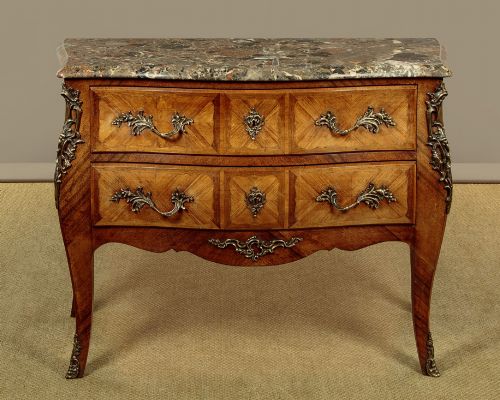
Quality rests upon the selection of timber veneers and the precision with which brass mounts are integrated into the carcass. Superior examples display harmonious grain patterns across drawer fronts, where timber sections match visually.
The integration of metalwork marks the distinction between standard production and finer cabinetmaking. Well-fitted brass corners and flush mounts indicate careful hand assembly by skilled artisans.
The Brass Mounted Walnut Chest Glossary
- Walnut
- A dense, dark hardwood valued for its rich colour and distinctive figuring. Cabinetmakers prized this timber for high-status furniture throughout the seventeenth and eighteenth centuries.
- Burr walnut
- Timber harvested from walnut tree growths, producing swirling, intricate grain patterns. This material was frequently sliced into thin veneers for prominent drawer fronts and cabinet doors.
- Commode
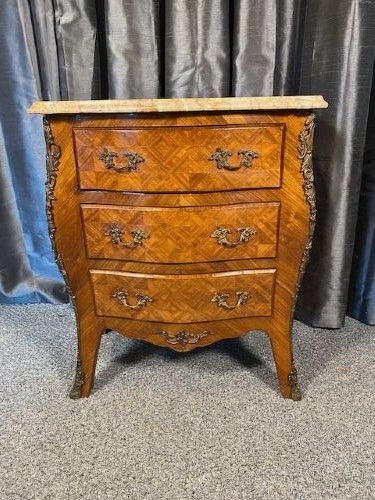
- A low French chest of drawers or cabinet designed for domestic interiors. Eighteenth-century versions often feature serpentine fronts and pronounced bronze or brass mounts.
- Chest on stand
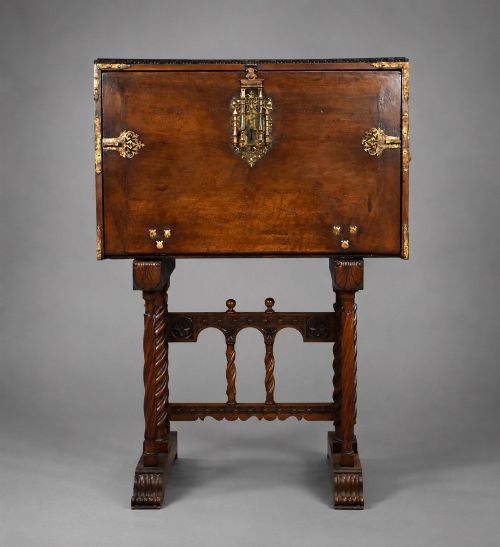
- A tall storage form comprising an upper chest resting upon a separate supporting base with legs. This configuration elevated the storage space and lightened the overall visual mass.
Frequently Asked Questions
What periods do these chests come from?
The available selection includes pieces originating from the eighteenth century, the Regency period, and the Victorian era. Later interpretations often revive earlier aesthetics, such as William and Mary styling.
Each period imparts distinct proportions and construction methods, visible in the handling of timber veneers and metal mounts.
How were these chests used historically?
These pieces served primarily for domestic storage, holding textiles, garments, and valuables within bedchambers and drawing rooms. Chests on stands and commodes also functioned as display surfaces for decorative objects.
Their robust construction allowed owners to transport personal belongings securely during travel, particularly in colonial contexts.
Which woods appear in these pieces?
Walnut and burr walnut form the primary visual surfaces, offering varied grain patterns and deep warm tones. Oak frequently appears in internal elements such as drawer linings and structural framing.
Boxwood accents provide fine linear detail, creating contrast against the darker walnut grounds.
How do styles differ across the listings?
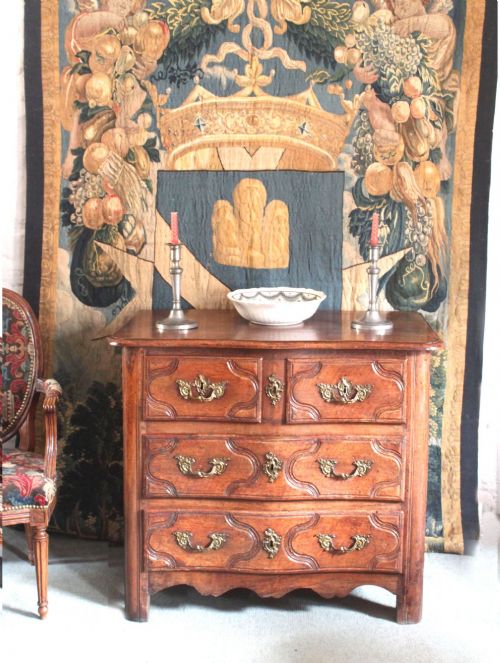
Styles range from English colonial interpretations to French provincial commodes and William and Mary revival designs. Regional cabinetmakers adapted these forms to suit local domestic fashions and available materials.
Differences manifest in the silhouette of the base, the prominence of the brass mounts, and the overall scale of the piece.