



Brass Mounted Table Lamps
These brass mounted table lamps bring period character and ambient light to a room, offering tactile metalwork and rich material contrast.
Brass Mounted Table Lamps
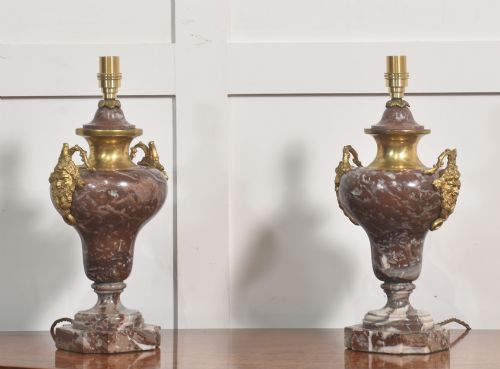
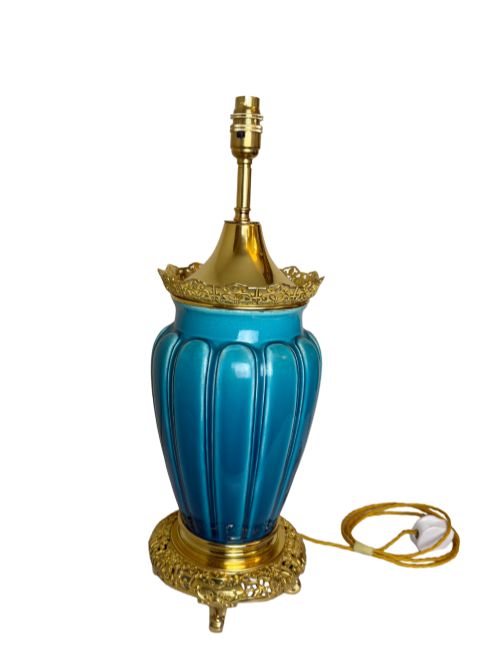
Brass mounted table lamps combine functional lighting with decorative containers or columns from the nineteenth century, including converted vases and classical columns. When you search for brass mounted table lamps, you find pairs formed from imported ceramic vessels, glazed earthenware, and carved stone fitted with electrical or original burner hardware. These decorative objects transform decorative urns and decorative vases into upright room lighting through secure metal collars and bases.
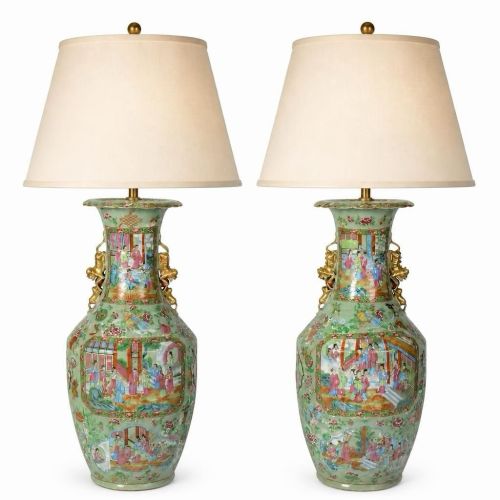
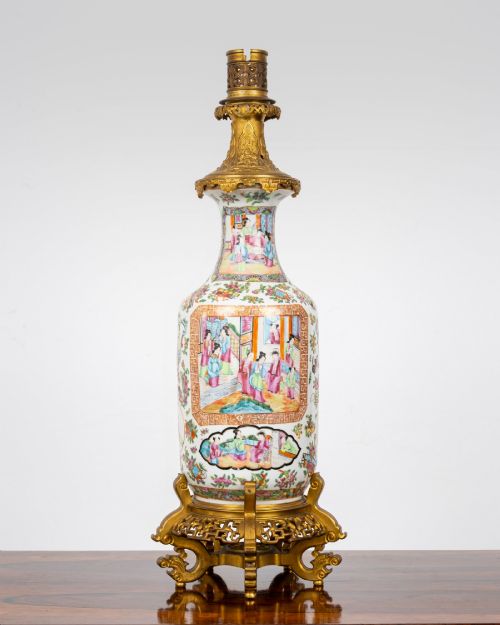
The pieces appearing on this page span the late nineteenth century and the early twentieth century, featuring influences from Japanese Meiji craftsmanship to Italian Renaissance Revival. You encounter Chinese Rose Medallion porcelain, Japanese cloisonne enamel, and Italian maiolica earthenware, each securely held within brass or ormolu mounts. These variations reflect a Victorian appetite for adapting foreign and classical forms into functional domestic illumination.
How they were made
Maker workshops constructed these lamps by combining turned or cast brass and ormolu mounts with bodies of porcelain, ceramic, glazed earthenware, marble, and alabaster. Metal fitters secured the stone or ceramic columns and urns with collars, bases, and handles cast in brass, gilt-brass, or ormolu. Fabric components and shades complete the upper structure, though many examples began life as decorative vases before later conversion.
The decorative surfaces demonstrate diverse artisan techniques, from the detailed wirework of cloisonne enamel to the hand-painted polychrome scenes on Rose Medallion porcelain and Italian maiolica. Stonework elements such as white alabaster and marble are shaped into smooth columns or urn bodies, offering a heavy, stable foundation for the metal mounts.
Victorian households loved turning exotic foreign vases into lamps so much that potters eventually started making vases with pre-drilled holes just for the wiring.
What varies in quality
Quality in these lamps rests upon the weight and crispness of the brass or ormolu mounts, where finely chased detail distinguishes superior metalwork from simple stamped brass. The integration between the ceramic or stone body and the metal mounts dictates the structural integrity of the piece, showing whether the fittings were custom-cast for the specific vessel.
The artistic merit of the central body - whether hand-painted maiolica, intricate cloisonne enamel, or translucent alabaster - drives the overall distinction of the pair. Uniformity across matched pairs determines their success as decorative objects, as balanced proportions and matching glaze tones elevate the work of the lamp maker.
The Brass Mounted Table Lamps Glossary
- Ormolu
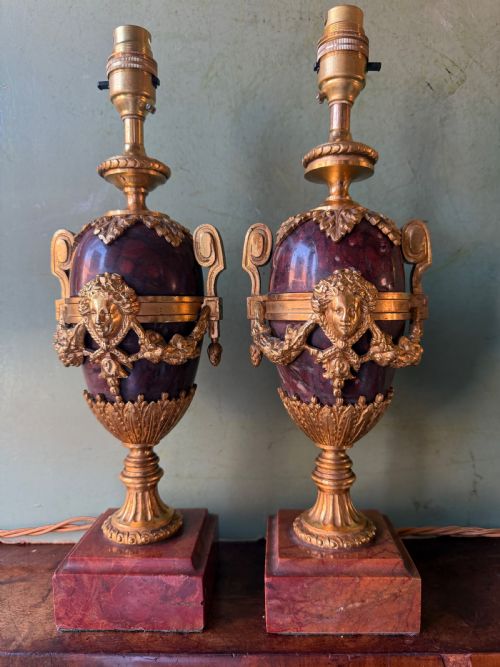
- Gilded bronze or brass mounts applied to furniture, vases, and lamps to provide decorative borders and structural support. This technique creates a rich, gold-coloured finish that contrasts with porcelain and stone.
- Cloisonne enamel
- A decorative metalwork technique where enamel paste is applied within compartments created by soldered flat wires on a metal base. This method produces intricate, multi-coloured patterns seen on Japanese pieces.
- Maiolica
- Tin-glazed Italian earthenware painted with colourful designs before firing. These glazed ceramic bodies often serve as the main column or base of nineteenth-century lighting.
- Rose Medallion
- A distinct style of Chinese export porcelain featuring panels filled with figures, birds, and flowers in pink and green enamels. Vases decorated in this manner were frequently mounted as lamps in the nineteenth century.
- Alabaster
- A fine-grained, translucent stone used to carve smooth architectural columns for table lamps. Its soft texture allows light to catch the natural veining of the material.
Brass Mounted Table Lamps: Frequently Asked Questions
Are these lamps converted from old vases?
Many nineteenth-century lighting fixtures began as decorative vases, urns, or jars that were later fitted with metal mounts and wired for electricity. Workshops adapted exotic and domestic vessels to meet the growing Victorian demand for practical table illumination.
This conversion process often preserved the original ceramic or stone body while updating the object for domestic interiors. As a result, the mounts act as both decorative enrichment and structural adaptation.
How do I identify a matched pair?
Matched pairs display consistent height, matching hand-painted motifs, and identical brass or ormolu mount configurations. Slight variations in hand-painted ceramics or natural stone veining indicate traditional crafting methods rather than mass production.
Examining the base construction and the weight of the metal mounts helps confirm that the pair originated together as a coordinated set.
What periods do these lamps come from?
The listings include pieces from the late nineteenth century, specifically around eighteen seventy to nineteen hundred, alongside early twentieth-century examples. These dates align with Victorian interior trends favouring eclectic, globally sourced decorative arts.
Styles span from Meiji period Japanese enamelwork to Italian Renaissance Revival alabaster columns and Chinoiserie porcelain.
How do I care for alabaster and marble?
Clean stone columns and bases gently with a dry or very slightly damp cloth, avoiding harsh chemical cleaners that can damage the polished surface. Alabaster is particularly sensitive to moisture and acidic liquids, so care must be taken during dusting.
Checking the stability of the brass mounts periodically ensures the stone body remains secure within its metal collar.