

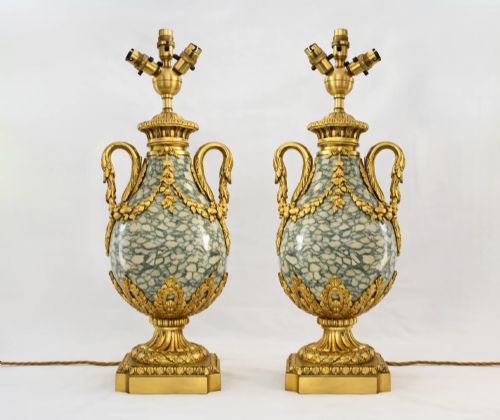


Mounted Vase Lamps
Mounted vase lamps combine historical ceramic vessels with cast metal mounts to create functional lighting.
Mounted Vase Lamps
Mounted vase lamps are domestic light fittings built by converting decorative vessels into bases. The process uses ceramic bodies such as Chinese export porcelain, Japanese Satsuma ware, and European earthenware.
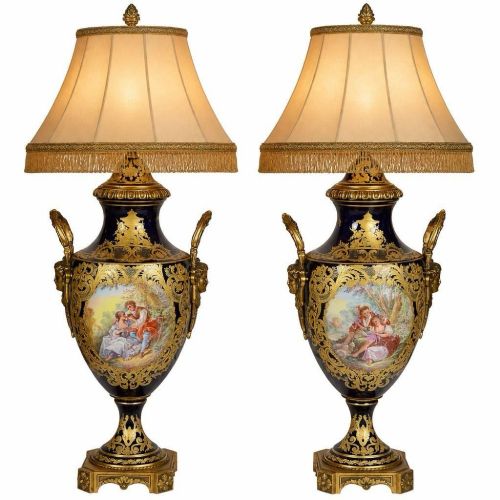
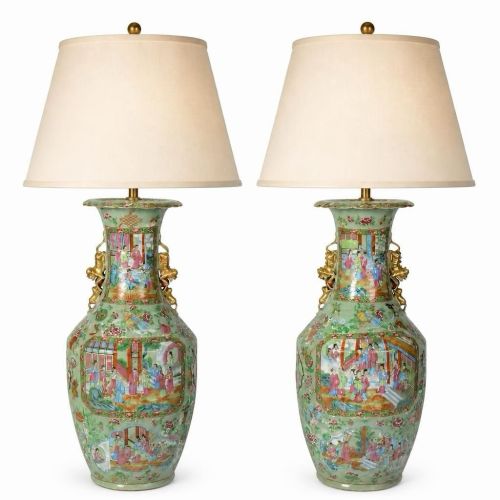
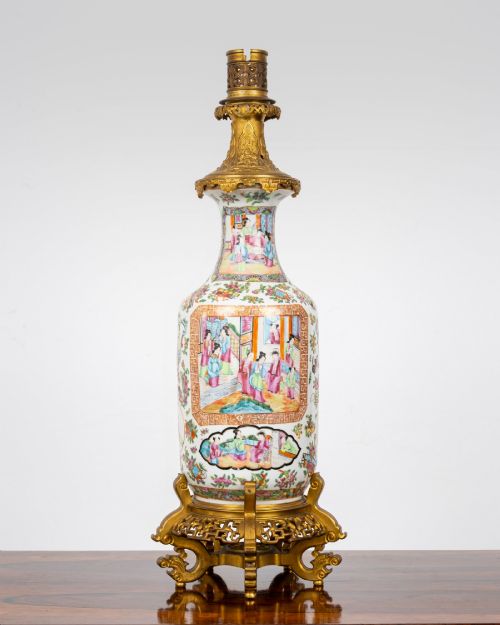
The most common examples on this page are nineteenth century pieces pairing Asian ceramics with French ormolu and gilt bronze mounts. These objects bridge the gap between ornamental pottery and functional interior lighting.
Makers adapted older vessels or produced new bodies specifically for electrical or oil conversion. The resulting tables lamps often survive in pairs, retaining their original proportions beneath fabric or silk shades.
How they were made
Craftsmen built these lamps using fired ceramic bodies fitted with cast metal collars, bases, and handles. Ormolu and gilt bronze components were shaped and chased to secure the ceramic without causing structural damage.
Workshops utilised brass fittings to secure electrical wiring through drilled or adapted vessel bases. Silk and fabric shades were subsequently added to complete the lighting assembly.
Materials recorded across the inventory include porcelain, earthenware, ormolu, gilt bronze, brass, wood, and silk.
What varies in quality
Quality depends on the harmony between the ceramic vessel and the metal mounts. Superior examples feature individually cast ormolu mounts that complement the glaze and form of the porcelain rather than masking it.
The precision of the metalwork and the preservation of the original ceramic glaze dictate the standing of each piece. Finer items show crisp chasing on the bronze and balanced proportions in the overall conversion.
The Mounted Vase Lamps Glossary
- Ormolu
- Gilded bronze used for decorative mounts and fittings. The technique involves applying a gold amalgam to a bronze base before heating.
- Cloisonne
- Enamel work created by soldering wire partitions onto a metal base and filling the compartments with paste. This technique appears on nineteenth century Japanese and Chinese examples.
- Cassolette
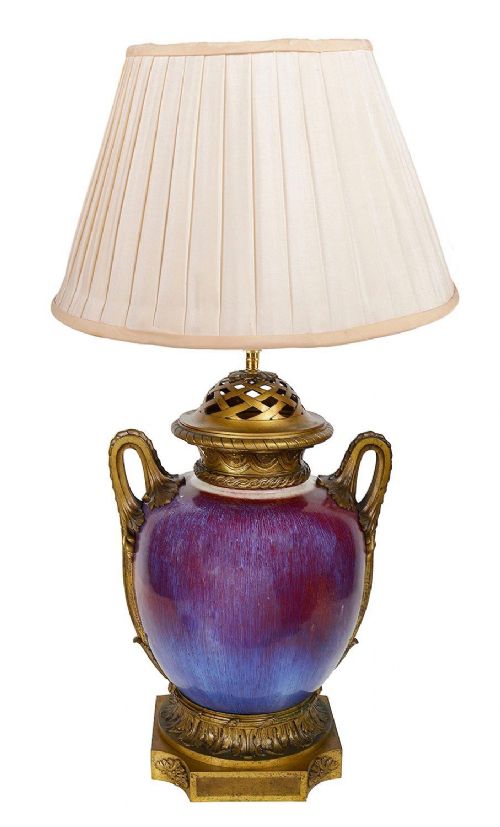
- A decorative vessel shaped like a perfume burner, often adapted into a lamp base with metal mounts. These forms frequently follow Louis XVI style designs.
- Sang de Boeuf
- A deep red copper-based glaze found on Chinese ceramic vessels. The rich colour results from controlled firing conditions in the kiln.
Mounted Vase Lamps: Frequently Asked Questions
Are mounted vase lamps suitable for daily use?
These lamps function effectively for regular domestic illumination when fitted with appropriate modern wiring. Many surviving examples have been rewired to meet current safety standards while preserving their historical mounts.
Placement should avoid areas of heavy traffic or direct sunlight to protect fragile silk shades and delicate ceramic glazes. Careful positioning ensures the decorative character remains a focal point in the room.
How do I identify the period of a vase lamp?
Dating relies on examining the ceramic body, the style of the metal mounts, and the manufacturing techniques visible underneath. Nineteenth century French mounts often reflect Louis XVI revival tastes paired with Asian or European porcelain.
Secondary indicators include the presence of hand-chased details in the ormolu and the composition of the internal fittings. Comparing the glaze palette to known historical periods helps confirm the age of the base vessel.
Can I find these lamps sold in pairs?
Many listings feature symmetrical pairs of lamps created from matching vases or balanced decorative urns. These paired sets are particularly sought after for mantelpieces or matching side tables.
Individual lamps also appear frequently, often originating from larger garniture sets separated over time. Single pieces offer strong decorative impact when used independently on smaller surfaces.
What styles of ceramic are most common?
Chinese export porcelain and Japanese Satsuma ware dominate the available selection of ceramic bodies. Styles range from blue and white designs to intricate Famille Rose and Famille Verte polychrome decors.
European factories like Sevres and Paris porcelain also contributed significant pieces featuring classical motifs. These diverse origins allow the lamps to suit both traditional and eclectic interiors.