



Antique Enamel Table Lamps
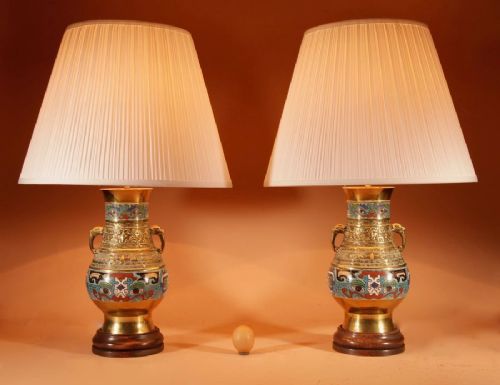
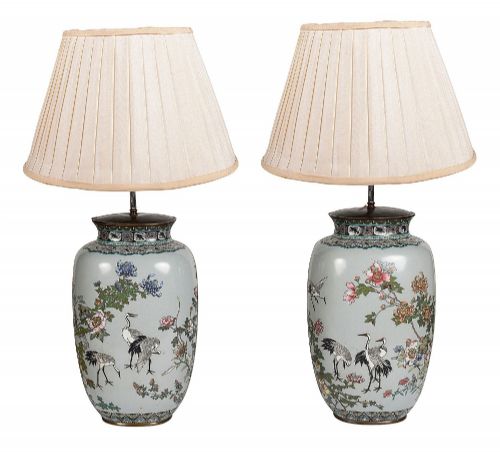
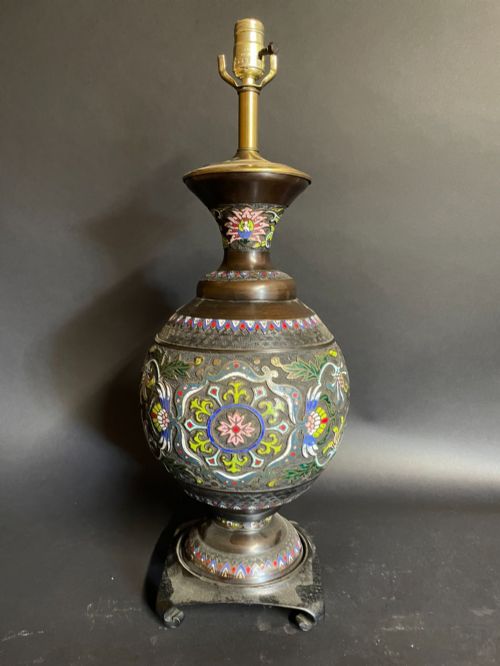
These antique enamel table lamps bring rich colour and patterned metalwork directly onto a desk or side table.
Antique Enamel Table Lamps
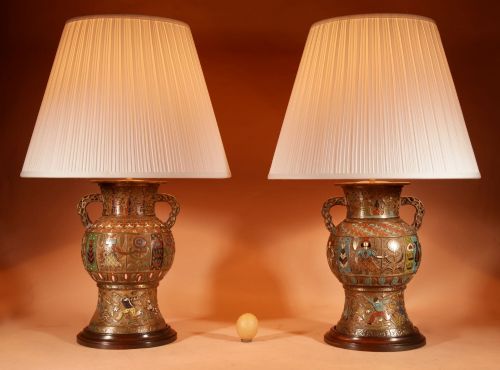
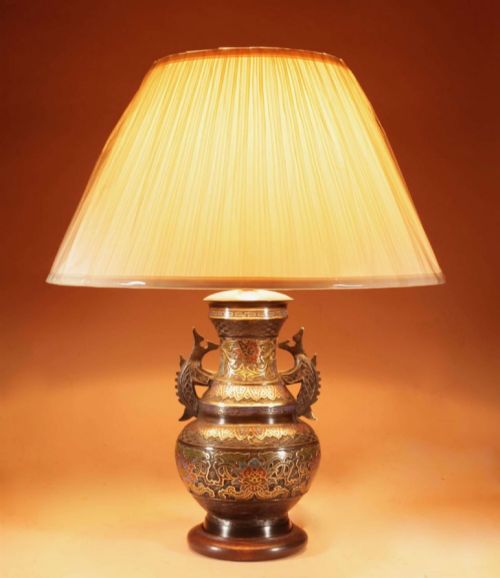
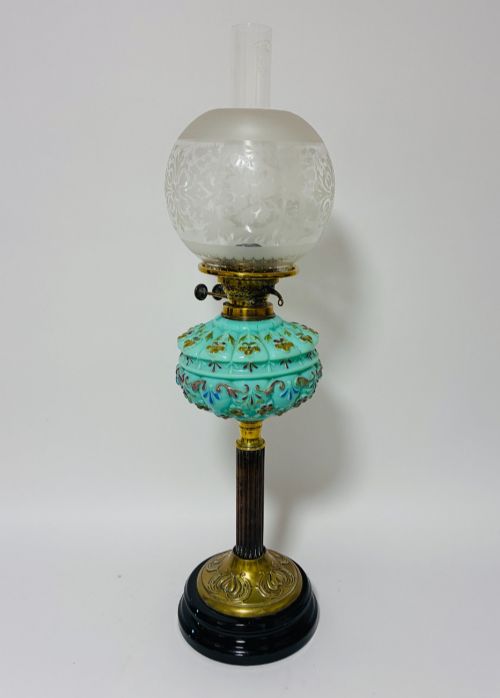
When a buyer searches for antique enamel table lamps, they encounter a diverse selection of lighting formed from converted vases, oil lamps, and decorative bronze or brass vessels. The objects originate from periods spanning the Victorian era through the Art Deco decades, incorporating Chinese Export, Japanese Meiji, and European aesthetics.
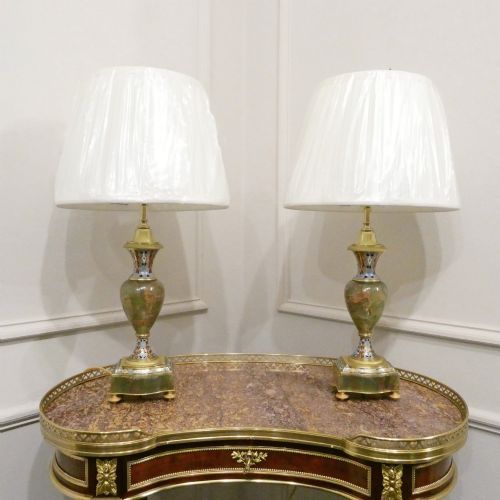
The most common formats on this page include pairs of Japanese and Chinese cloisonné or champlevé vessels mounted for electricity alongside French or English glass and iron designs. Many examples began life as vases, ginger jars, or oil lamps before being wired for modern domestic interiors.
How they were made
The construction of these pieces relies heavily on metalworking techniques such as cloisonné and champlevé, where wire partitions or recessed troughs hold coloured enamel pastes upon bronze, brass, or copper foundations. Subsequent firing and polishing create durable decorative surfaces across the body of the vessel.
Mounting hardware utilises cast or gilt brass, ormolu, and wrought iron to secure the ceramic or metal bodies, while glass components involve blown, frosted, or enamelled techniques. Vases and oil lamps frequently undergo later adaptation, receiving electrical fittings while retaining their original nineteenth or early twentieth-century metal bases.
Listings feature items spanning the 1870s to the 1930s, incorporating Victorian, Art Nouveau, and Art Deco styles.
What varies in quality
Quality rests upon the precision of the enamel work and the crispness of the underlying metal casting, particularly in Japanese and Chinese cloisonné where cell regularity determines the visual impact. The integrity of the original vessel before conversion also dictates the standing of the piece.
The sophistication of the secondary mounts, such as ormolu or cast bronze fittings, separates standard utilitarian conversions from finer sculptural examples. Maker attribution, such as signed glass or specific artistic periods, further influences the standing of individual items.
Karl Palda·Daum
The Antique Enamel Table Lamps Glossary
- Cloisonné
- An enamel technique where thin metal wires form raised cells on a metal body to contain coloured glass pastes before firing. This method produces intricate geometric and floral patterns.
- Champlevé
- A technique where troughs are dug or cast directly into a metal surface to hold enamel before firing. It leaves thicker metal walls visible between the coloured areas.
- Ormolu
- Gilded bronze mounts applied to decorative objects and lamp bases, originating in French furniture and metalwork. It provides a bright metallic trim to ceramic vessels.
- Famille Rose
- A palette of Chinese ceramic glazes dominated by opaque pink enamel, prominent on porcelain pieces adapted into lighting. The style dates back to the Qing dynasty.
- Gimbal
- A pivoted ring mounting that allows a lamp or clock to remain level despite motion, common in naval equipment. It keeps the light stable on moving surfaces.
Antique Enamel Table Lamps: Frequently Asked Questions
What are antique enamel table lamps made from?
These lamps incorporate materials such as bronze, brass, iron, and porcelain decorated with vitreous enamel. Many pieces combine cloisonné or champlevé metalwork with glass or gilt mounts.
Secondary elements include fabric shades, wooden bases, and nineteenth-century ormolu fittings that support the electrical wiring.
Were these always electric lamps?
Most of these objects began as decorative vases, ginger jars, or oil lamps during the nineteenth and early twentieth centuries. They were subsequently converted into table lamps to suit modern domestic lighting needs.
This conversion process typically preserves the original antique body while adding internal wiring and bulb sockets.
How do I identify the period of a lamp?
Dating relies on stylistic clues such as the distinctive motifs of the Meiji period, Art Nouveau curves, or the geometric lines of Art Deco. Materials, mounting techniques, and historical signatures also point toward specific decades.
Comparing the manufacturing style of the enamel and the metal casting helps narrow down the era of production.
How do I live with antique lamps safely?
Living with these pieces involves placing them on stable surfaces where their weight and converted wiring are securely supported. Regular dusting keeps the delicate enamel surfaces clear without moisture.
Electrical components should be checked periodically by a professional to ensure the vintage wiring meets modern safety standards.