



Brass Mounted Oak Box
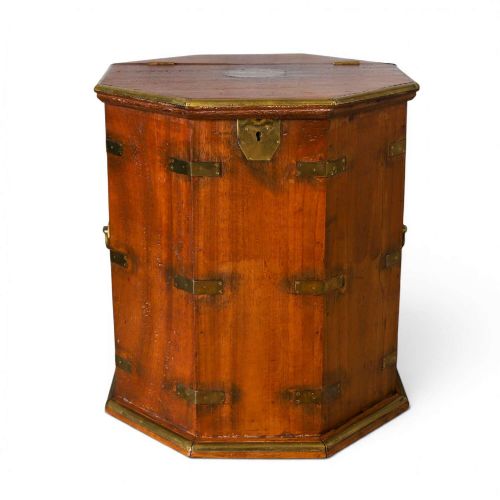
A brass mounted oak box offers robust construction and practical storage, making it a dependable addition to any desk or mantelpiece.
What they are
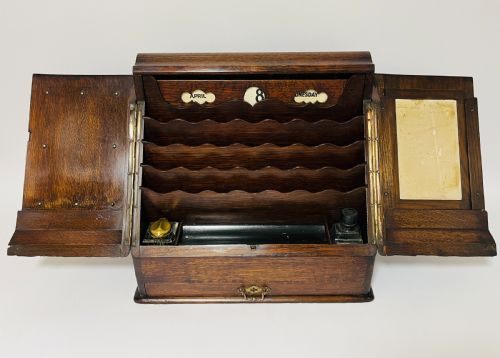
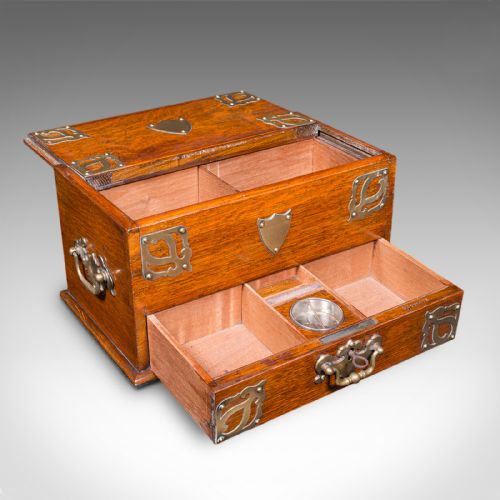
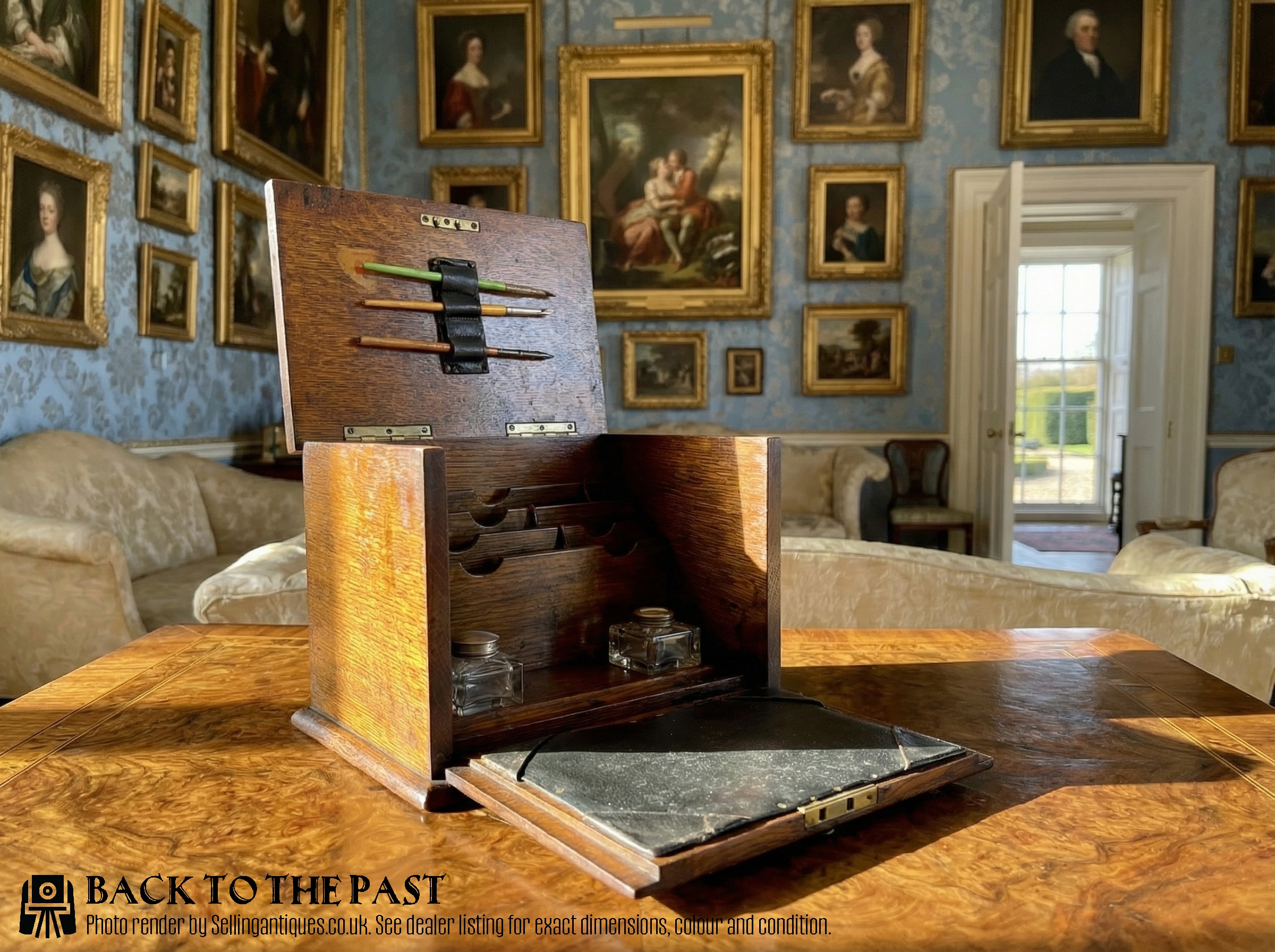
A brass mounted oak box combines sturdy English hardwoods with metal reinforcement designed to withstand daily handling. These containers serve various utilitarian purposes, frequently appearing as stationery cabinets, letter boxes, and cigar humidors.
The pieces on this page span the nineteenth century, the Victorian era, the Edwardian period, and nineteen-twenty. Buyers encounter forms ranging from dome top stationary boxes to tambour cigar cabinets and book form cribbage boxes.
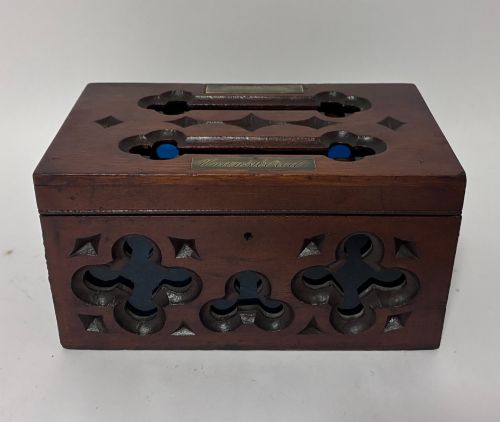
Makers utilised both standard oak and pollard oak, often accented with bevelled glass panels or iron fittings. Aesthetic period and Victorian Gothic Revival influences shape several of the surviving designs.
How they were made
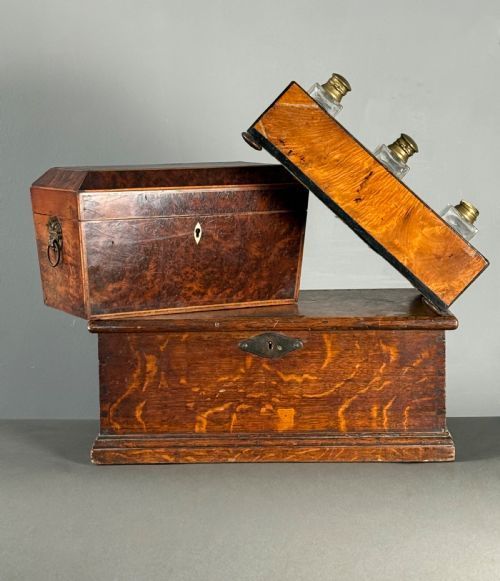
Craftsmen built these containers using solid oak timbers, occasionally selecting pollard oak for decorative grain patterns. Brass mounts, hinges, and escutcheons were screwed or pinned to the wood to reinforce corners and lids.
Interior compartments featured fitted stationery dividers, glass panels, or automated mechanisms for cigars. Surfaces received polishing to highlight the natural figure of the timber alongside polished metalwork.
Retail Price Guide 2026
Typical UK retail prices for brass mounted oak box, calculated from the Sellingantiques database of over a million retail prices indexed since 2003. This retail price guide relies exclusively on Sellingantiques data; no external sources or auction records are used, so the figures do not describe the wider market.
Some nineteenth-century gentlemen secured their leisure time inside a book-shaped oak box designed specifically for keeping cribbage scores.
What varies in quality
Quality rests upon the selection of timber figures, such as pollard oak, and the precision with which brass hardware is fitted into the wood. Heavier gauge metalwork and integrated mechanisms like tambour doors or automated cigar lids elevate the execution.
Design ambition separates standard desk accessories from pieces displaying distinct Victorian Gothic Revival or Aesthetic period detailing. Superior examples integrate bevelled glass panels and complex internal dividers seamlessly.
The Brass Mounted Oak Box Glossary
- Pollard oak
- Timber taken from trees that were cut back to promote a dense head of branches, producing a heavily figured grain pattern. This wood was selected for decorative surfaces on finer boxes.
- Tambour
- A sliding door constructed from narrow strips of wood glued to a fabric backing, allowing it to curve around a drum. This mechanism appears on select twentieth-century cabinets.
- Escutcheon
- A flat plate of brass surrounding a keyhole to protect the surrounding wood from wear. These fittings form part of the metal mountings on secure boxes.
- Humidor
- A moisture-controlled box designed for storing cigars, often fitted with interior linings. Several examples in the archive utilise oak and brass for this purpose.
Frequently Asked Questions
How were these boxes used?
These containers served practical domestic and office functions, holding correspondence, writing paper, and post.
Other variants operated as humidors for cigars or housed playing cards in book form cribbage sets.
What periods do these pieces date from?
The selection spans the nineteenth century through to the Edwardian era and nineteen-twenty.
Victorian examples frequently display Gothic Revival or Aesthetic period characteristics in their brass mounts.
Are the interiors fitted out?
Many stationery cabinets feature internal dividers, slots for letters, and compartments for inkwells or pens.
Cigar boxes and humidors often retain specialised wooden or glass linings designed to keep contents organised.
What materials are used?
Oak forms the primary structure of these pieces, sometimes complemented by pollard oak for decorative effect.
Brass provides the structural mounts, hinges, and handles, occasionally accompanied by iron or bevelled glass.